Starting intervals

A recent Thursday workout was a combination of fast intervals – 600, 400s, 200s. The first came in at 2min05. The 400s both pleasingly scraped under 1min20 while the 200s were a final gasping all-out effort to get on target. Arriving home the 400s and 600 were what stuck out in my mind because they were close to the times I used to clock when running round Poole Park cricket pitch. In fact, when I looked them up I discovered the workouts I did were exactly a decade ago. How times move on.

In September 2011, I wasn’t the committed runner I am now. My first six months of the year had only seen me bank less than two hundred miles but I could run a 21:30 parkrun. In July I started doing a proper warm-up which knocked over thirty seconds off taking me sub-21. I then entered New Forest half marathon for late September and this triggered my “train harder” instinct.

My belief about getting faster at running then was based around the same idea as most people – run faster in training. But, as a sports and exercise science graduate, I’d also read up on the ideas of increasing VO2max through hard interval training and Lactate Threshold through tempo runs and through Stephen Seiler’s MAPP website thought this was the way to train. It was unsophisticated stuff but to the untrained runner it has initial benefits.


I decided hard intervals, aiming for a 19-min parkrun pace, were the way forward. After all, if I wanted to run nineteen minutes I needed to train at the pace. It didn’t seem insurmountable as I’d run a 5:55 mile in the summer which is a similar pace.

I didn’t own a GPS watch but had a sportswatch to time my runs and used a heart-rate monitor. The watch could store some basic info with the lap button but I’d often simply commit numbers to memory and write them down when I got back to the office! I have many spreadsheets filled with this sort of data.

I found a website (Gmap-pedometer) which allowed me to measure distances and found a lap of the cricket pitch to be a third of a mile. Starting from a particular blue bin and running to the pavilion is 400m. I still use these measurements to this day.What I did next is some maths. I calculated with the cricket being about 530m, I’d need to run nine or ten laps to cover the 5,000m distance of a parkrun. Nine laps would fall short at 4,770m; ten would come in at 5,300m and ensure I had a little extra in the tank. With a 19-min parkrun being about six minutes per mile, each of these lap would need to be covered in two minutes, 400m in 1min30. I’d give myself one minute’s recovery between laps and push hard on the efforts. After all, if I could run them faster it must be better and lead to improvement?

This was my plan for improving and it had worked for me on the rowing machine many years before.  But there were two immediate flaws with what I did.

  1. With my then-parkrun pace at around 6:40/mile, I was asking a lot to jump down to running 6min/mile with nothing to bridge the gap. Certainly I was capable of the pace but to do ten intervals with only sixty seconds’ recovery was asking too much of myself. When I succeeded on the rower I’d been aiming a few seconds faster than my existing times. It’s why when I became a successful parkrunner six months later, and got my time down to nineteen minutes, it was because I only ran intervals at a few seconds faster than my existing parkrun pace.
  2. I tried to cover the distance rather than do enough work to stimulate improvement. These days I’d wouldn’t do more than 3,200m worth of work at mile pace and around 1,600 – 2,400m is more usual. A full 5,000m is simply too much stress on the body to recover from. Think about it, when you train for a marathon, you only do a long run of 20-22 miles maximum. If you’re doing 10K training then the elites will only do 6-8K at race pace. It’s a mistake to believe just because the race distance is relatively short, you need to cover it in training.

The biggest flaw though is that, when I began doing these intervals ten years ago, I didn’t lack speed. As I wrote in filling in the gaps, you have to figure out what’s missing. My issue was endurance and lack of aerobic capacity. My parkruns improved three months later after I’d logged many easy miles with just the occasional fast parkrun thrown in. I already had the top end speed, it was the endurance base that was missing.

Short sprint – Non-endurance?

Pandemic over, a friend posted he’d taken part in his “first non-endurance race” in two years. I was stunned. This is someone who coaches and, as one of the faster runners, has others looking up to him.

My shock was because his race was a five miler and he’d taken over thirty minutes. That’s an event of endurance. Somewhere around 95% of the energy comes from aerobic sources. If you’re of a metric disposition, it’s a touch over 8K; lying somewhere between the 5K parkrun and 10K races.

I’m sure he referred to it as an event of non-endurance because it’s not a half-marathon or marathon which require a higher volume of training miles. I guess it’s partly because he’s regularly capable of running five or six miles in a training session that he thinks there’s no endurance involved.

But it reveals a huge misconception that many runners make because they don’t understand how important endurance is in distance racing. And by publicising his five mile race as non-endurance, he wasn’t pointing anyone to the correct ways to train.


Parkrun is an event of endurance but many think the fast pace of front runners is created by speed training. And to an extent it is. You have to be capable of running at five minutes per mile pace if you’re going to run a parkrun in sixteen minutes. You need some speed training to cover ground quickly.

But speed can only be sustained for 1-2 minutes before you begin to huff and puff. Running a bit slower than top end speed will allow you to last longer but it doesn’t actually build the body’s endurance mechanisms. I’m not going to go into the best ways to build endurance, but I guarantee running fast, gasping for breath and hoping to hang onto it is not the way to do it.

Deliberately building endurance is the key reason why so many people who’ve spent six months training for a marathon are stunned when they return to parkrun and run a PB. They can’t figure out how they can be faster through only doing slower miles.

But, for as long as people think of parkrun or the 10K as “non-endurance” it’s going to be impossible to reach their potential. By process of elimination, if they think of these distances as “non-endurance” then they will train for speed to get faster at them. It simply doesn’t work.

The closest events get to being “non-endurance” are the sprints (100m – 400m) which are trained for by concentrating on speed. Even then their coaches talk about speed endurance. Any event beyond the sprints, starting from the 800m, has a large aerobic component that is improved by working on endurance.

The Ageing Runner – Part 5 The Facts

If you missed part 1 you can find it here, part 2 is here, part 3 is here, part 4 is here.

There’s no doubt that some decline occurs as we age but, in the past, it was thought to be purely a genetic thing. To still be racing well beyond fifty, if not forty, was something only those who were blessed and lucky could do. This myth has lasted well into the 21st century and is only beginning to be broken down in recent years. Often it’s used as an excuse or rationalisation by runners who either don’t know how to train, can’t be bothered to train or simply fear not being up the front.

The reality is decline, as experienced in the past, was more often a circumstantial thing. The people who went running usually competed for clubs. They started when they were young, had a high level of commitment and/or natural talent and continued on for some years. As their lives took on family responsibilities, they often found themselves racing slower and beginning to turn to the longer distance events.

Even twenty years ago training knowledge was less sophisticated. Plans, advice and methods were simpler than today’s but also often consisted of runners exhorting each other to “run hard” and “train hard” if they wanted to be fast. That’s a surefire recipe to having creaky knees and injuries.

Players of other sports went through the same process and once reaching their forties, some genetic loss began to kick in and once-committed sportsmen (and women) would hang up their football boots or running vests for a quieter life.  As I grew up men and women in their fifties and sixties rarely looked as fit and healthy as many do today. Some of it is better preening but, there is often, also a better focus on staying fit through alternative means like cycling or going to the gym. Playing something like golf may keep you active but it won’t keep you fit because of the Primary Rule.

Primary Rule – Use it or lose it

The primary rule for the Aged Runner to remember is if you stop using it, you lose it. This is fundamentally the issue that causes most people to age poorly, put on weight, lose strength and stiffen up. They stop exercising as regularly or intensely as they once did. A sport like golf does little to push the muscles to their limitations, most of the time is spent walking which is easily achieved without too much extra exertion. Walking miles every day isn’t going to help you when your body is already efficient at it.

The more muscle your body has, the higher the “running costs” of living. Your body burns more calories simply by needing to keep that muscle alive. An athlete burns more calories sat on the sofa watching TV than the habitual couch potato who hasn’t toned their muscles up.

Many of the aches and pains older people suffer from are because the few muscles they do have are straining to do the simple tasks. A regime of getting stronger quickly gets rid of many minor aches and pains.

Your ageing body tempts you to stop doing difficult things and if you stop doing them, you decline quicker. Then it becomes a downward spiral as your body tempts you to do even less. You either “use it or lose it”.

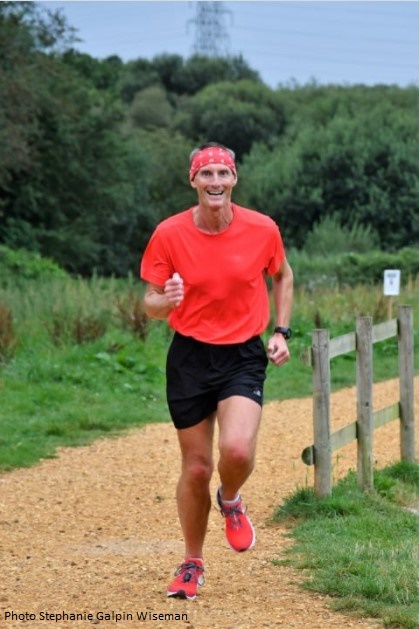
Fit, healthy and running strong at fifty

Distance runners suffer a loss of top end speed because they rarely practice sprints or fast finishes. This is true of both young and old runners but becomes more noticeable with ageing. To access the faster speeds requires a dedicated programme of strides, hill sprints and short intervals to recruit and build the muscle. The occasional session is not enough to build up, it takes weeks of building session on session to maximise the gains.

Running is an activity which is very good at propelling the body forwards. While this keeps the lower body toned, what it doesn’t do is very much for the upper body (e.g. chest / shoulders / arms) unless you are a sprinter. The core muscles are worked if you have good running form. But with running being a straight ahead activity there’s also potential loss of strength for lateral movements (e.g. the types of movements that tennis, badminton or football players use regularly to sidestep or go left and right). These are all areas which will fall prey to the “use it or lose it” rule.

If your only sport is running, it is advisable to take up circuit, weight training or cross train to keep these other muscles active.

Secondary Rule – Recovery takes longer

The second rule for the Aged Runner is to understand that recovery takes longer.  When you are young and full of hormones, you can train hard at least three times per week and recover from it. Sometimes more.

In middle and older age, you have to be sure the body has recovered enough before taking on the next workout. You’ll know you’re not getting enough recovery if you start feeling tired or getting aches or tightness setting in. The consequence of slower recovery is older runners cannot do as many workouts in a three month training period as younger ones. So the older runners have less speed or endurance when it comes to race day.

Another consequence of slower recovery is that injuries take longer to repair. If forced to take a break it can mean the athlete is no longer “using it” so potentially they are “losing it”. Once healthy, the temptation becomes to cram in training to try and rebuild quickly which is more likely to prolong the injury cycle. With a spiralling level of fitness, it’s easy to believe it’s purely an age-dictated decline rather than one which is in large part caused by impatience and bad habits.

Staying fast

Some decline is inevitable but it will be very gradual if you maintain good training habits. We saw in the Ageing Sprinter, there are men like Steve Peters or Charles Allie who at seventy years old are capable of running times that runners half their age do not achieve. The basis of all running events is strength which produces high cadences and long stride length which combine to produce high speeds. The people who are fastest over the shortest distances tend to be the fastest over longer distances.

  • Good training becomes about ensuring you do regular bouts of high intensity work like strides, hill sprints or short intervals to keep the fast-twitch muscle recruited. Having this muscle toned and active will also keep the fat off.
  • Ageing requires you to be patient and listen to your body, to understand how long it takes to recover. It is better to do one or two key workouts each week from a well-rested state than to do them badly in an under-recovered state.

You can’t be in denial about ageing taking some toll but, equally, simply throwing up your hands and accepting a big decline as inevitable is a mistake. Other people will be all too quick to tell you it’s age and encourage you to accept it but hopefully you now know better. If you’re to continue being fit, healthy and fast into older age, you have to find a realistic, common sense position somewhere between these extremes.

For the runners who’ve been to the pinnacle of the sport, of course the only direction is down. But for many runners who never achieved their potential at a younger age there is no reason to discount the possibility of improving as they get older. Even if they don’t improve, any decline can be minimised to allow them to keep running well into their seventies and beyond.

The Ageing Runner – Part 4 Long distance

If you missed part 1 you can find it here, part 2 is here, part 3 is here.

When we started Poole parkrun the attendance was well below two hundred runners each week which made it easy to get to know everybody. As the London Marathon rolled around in the April, I was excited to follow runners like Liz Yelling, who was aiming at an Olympic place, and Steve Way, who’d run three consecutive 2hr19s. But it wasn’t just the elites who caught my interest, I’d got to know runners of all abilities and using the online tracking kept an eye on a variety of people who’d be running from over four hours through to those attempting to run sub-3.

One of the success stories was Dave Cartwright, who ran a sub-2hr55 marathon on his way to being the fastest man in the 60-64 age group that day. Footage of him crossing the finish line was doubly amusing as he was shown on BBC TV patting model Nell McAndrew on the shoulder who, despite being over twenty years younger, had finished only just ahead of him. Now in his seventies, Dave is still running round Poole parkrun in under twenty-two minutes and completing Blackmore Vale half marathon in under 1hr40. These times are fantastic to most people and yet, they’re not close to the times of the best in his age group as we shall see.

Recently two V55s, Andrew Ridley and Duncan Cooper came 8th and 9th in a field of over seven hundred runners. Their times were 16:27 and 16:35 respectively. Andrew’s age-graded time equates to 95% but his efforts also give insight into how slow decline can be. He set his Poole parkrun PB of 16:15 having only just turned fifty, yet here he is seven years later running only twelve seconds slower. Barely two seconds decline per year. I know Andrew trains very hard to keep his speed intact for 800m racing.

Age group world records for 5000m

TimeAthleteDateTimeAthleteDate
World Record12:35Joshua Cheptegei14-Aug-20 14:07Letesenbet Gidey07-Oct-20
V3512:54Bernard Lagat22-Jul-11 14:34Edith Masai02-Jun-06
V4013:07Bernard Lagat20-Aug-16 15:05Joanne Pavey05-Jun-14
V4514:24Lucien Rault19-Jun-82 15:56Nicole Leveque01-Jun-96
V5014:53Sean Wade25-Mar-16 16:51Gitte Karlshøj23-Jun-09
V5515:30Keith Bateman05-Jan-11 17:29Silke Schmidt27-Jun-15
V6015:56Yoshitsugu Iwanaga14-Nov-20 17:59Silke Schmidt20-Sep-19
V6516:39Derek Turnbull13-Mar-92 20:08Kathryn Martin28-Oct-16
V7018:16Ron Robertson09-Jul-11 20:56Angela Copson25-Jun-17
V7519:07Ed Whitlock23-Jul-06 23:31Lavinia Petrie28-Apr-19
V8020:20Jose Vicente
Rioseco Lopez
04-Sep-21 25:40Yoko Nakano12-Sep-18
V8524:04Ed Whitlock30-Jul-16 27:38Yoko Nakano23-Nov-21
V9030:00Yoshimitsu Miyauchi20-Sep-14 
V9539:43Antonio Nacca04-May-19 

Age group world records for the 10,000m

TimeAthleteDateTimeAthleteDate
World Record26:11Joshua Cheptegei07-Oct-20 29:01Letesenbet Gidey08-Jun-21
V3526:51Haile Gebrselassie24-May-08 30:53Joanne Pavey03-Aug-12
V4027:49Bernard Lagat01-May-16 31:25Sinead Diver28-Sep-19
V4529:44Kevin Castille17-Mar-17 32:34Evy Palm04-Sep-88
V5030:49Sean Wade01-Apr-16 35:06Fiona Matheson16-Oct-11
V5531:52Keith Bateman26-Mar-11 36:47Sally Gibbs11-Nov-19
V6033:40Yoshitsugu Iwanaga28-Nov-20 37:58Mariko Yugeta14-Nov-20
V6534:42Derek Turnbull15-Mar-92 41:40Angela Copson05-Aug-12
V7038:04Ed Whitlock09-Jul-01 44:25Angela Copson28-Jul-17
V7539:25Ed Whitlock21-Jul-06 50:01Melitta
Czerwenka-Nagel
28-Aug-05
V8042:40Ed Whitlock09-Jul-11 51:47Yoko Nakano06-May-18
V8551:08Ed Whitlock12-Aug-16 1:26:15Vladylena Kokina21-Sep-14
V901:09:28Gordon Porteous17-Oct-04 

Age group world records for the marathon

TimeAthleteDateTimeAthleteDate
World Record2:01:39Eliud Kipchoge16-Sep-18 2:14:04Brigid Kosgei13-Oct-19
V352:03:59Haile Gebrselassie28-Sep-08 2:19:19Irina Mikitenko28-Sep-08
V402:06:25Ayad Lamdassem24-Feb-22 2:19:52Helalia Johannes06-Dec-20
V452:14:23Bernard Lagat29-Feb-20 2:28:34Catherine Bertone23-Sep-17
V502:19:29Titus Mamabolo20-Jul-91 2:31:05Tatyana Pozdnyakova06-Mar-05
V552:25:56Piet van Alphen19-Apr-86 2:50:40Jenny Hitchings03-Nov-19
V602:30:02Tommy Hughes25-Oct-20 2:52:13Mariko Yugeta31-Jan-21
V652:41:57Derek Turnbull12-Apr-92 3:07:51Kimi Ushiroda15-Dec-19
V702:54:48Ed Whitlock26-Sep-04 3:24:48Jeannie Rice29-Sep-19
V753:04:54Ed Whitlock15-Apr-07 3:53:42Yoko Nakano23-Nov-12
V803:15:54Ed Whitlock16-Oct-11 4:11:45Yoko Nakano26-Feb-17
V853:56:38Ed Whitlock16-Oct-16 5:14:26Betty Jean McHugh09-Dec-12
V906:46:34Ernest Van Leeuwen06-Mar-05 8:53:08Mavis Lindgren28-Sep-97

Notes on Masters world records

All data was updated from Wikipedia in mid-June 2022. The aim is not to create a comprehensive set of records but to give readers an indication of what is possible. I will periodically update these when I can.

The Ageing Runner – Part 3 Middle distance

If you missed part 1 you can find it here, part 2 is here.

Typically the 800m and 1,500m are the commonly run middle-distance races, but I’ve used the mile because it’s more relatable for most runners than the 1,500. This article also includes times for 3,000m which is on the cusp of being middle distance. For elite men, it takes around 7½ minutes and puts them on the edge of their aerobic limits whereas for women it’s almost a minute slower. But one reason why I’ve included them is to have three balanced articles containing records for three distances!

With all the women’s records from here onwards, many of the older age group times have good potential to be broken. Some of the over-ninety records don’t even exist. It was only in the 1980s that women began to compete at Olympics and World Championships in the longer distances and so many of the older age category records are held by women who started running later in life.

Katharine Switzer still running at Boston in her seventies

Of course there were women who ran distance before the eighties but they were fewer and far between. Katharine Switzer, who was the first woman to run the Boston marathon, was born in 1947 and opened the door for other women at the distance. In fact, many of the pioneers are younger and barely turning sixty at the time of writing.

The consequence of all this is the older age groups records have never been seriously trained for, or contested, by lifetime runners. To an extent this is also true of some of the older male records as few kept going past seventy but certainly with the women’s records we can expect some of their records to fall as the generation that started running distance in the late sixties are now hitting their seventies and the ones who followed them will have benefitted from increased participation and training.

Age group world records for 800m

TimeAthleteDateTimeAthleteDate
World Record1:40.9David Rudisha09-Aug-121:53.8Jarmila Kratochvilova26-Jul-83
V351:43.4Johnny Gray16-Aug-951:56.5Lyubov Gurina30-Jul-94
V401:48.1Tony Whiteman12-Jul-141:59.3Yekaterina Podkopayeva30-Jun-94
V451:49.9Tony Whiteman19-Aug-172:02.8Yekaterina Podkopayeva26-Jun-98
V501:58.6Nolan Shaheed13-May-002:12.5Eva Trost03-Aug-18
V552:02.9Peter
Oberliessen
07-May-162:19.6Anne Gilshinan08-Jun-19
V602:08.6Nolan Shaheed23-Apr-112:33.1Lidia Zentner14-Sep-13
V652:14.3Earl Fee18-Jul-952:39.6Sabra Harvey31-Oct-16
V702:20.5Earl Fee17-Jun-992:50.7Sabra Harvey19-Jul-19
V752:30.6Jose Vicente
Rioseco Lopez
18-Jun-163:07.3Jeanne Daprano23-Oct-11
V802:41.6Jose Vicente
Rioseco Lopez
30-Apr-213:25.8Yolande Marchal10-Oct-20
V853:06.7David Carr28-Jun-173:58.2Yoko Nakano23-Oct-21
V903:34.9Earl Fee22-Jun-195:01.3Melitta
Czerwenka-Nagel
30-Sep-20
V954:51.4Antonio Nacca09-Jun-199:30.5Hollyce Kirkland10-Jun-17

Age group world records for the mile

TimeAthleteDateTimeAthleteDate
World Record3:43Hicham
El Guerrouj
07-Jul-99 4:12Sifan Hassan12-Jul-19
V353:51Bernard Lagat06-Aug-11 4:17Maricica Puica21-Aug-85
V403:58Bernard Lagat25-Jul-15 4:24Yekaterina Podkopayeva09-Jun-93
V454:10Davide Raineri05-Sep-20 4:48Yekaterina Podkopayeva13-Sep-97
V504:20Brad Barton31-May-19 4:58Nicole
Weijling-Dissel
27-Aug-17
V554:35Keith Bateman18-Dec-10 5:08Anne Gilshinan07-Aug-19
V604:48Håkan Eriksson28-Aug-21 5:40Lesley Chaplin Hinz14-Jul-18
V654:56Derek Turnbull29-Feb-92 5:55Angela Copson19-Jul-15
V705:20Joop Rüter11-Jul-03 6:38Sharon Gerl06-May-18
V755:42Ed Whitlock28-Jul-06 6:58Jeanne Daprano21-Jul-12
V805:57Jose Vicente
Rioseco Lopez
18-Jul-21 7:35Yolande Marchal12-Oct-19
V856:40Manuel
Alonso Domingo
22-May-21 10:55Blanche Cummings20-Jun-15
V909:43Gunnar Linde17-Feb-19 12:49Heather Lee11-Jan-20
V9511:56Antonio Nacca07-Apr-19 13:46Colleen Millman07-May-22

Age group world records for 3000m

TimeAthleteDateTimeAthleteDate
World Record7:21Daniel Komen01-Sep-96 8:06Wang Junxia13-Sep-93
V357:29Bernard Lagat29-Aug-10 8:28Maricica Puica07-Sep-85
V407:43Bernard Lagat14-Jul-15 9:03Nuria Fernandez24-Jun-17
V458:16Vyacheslav Shabunin17-Jul-15 9:17Yekaterina Podkopayeva22-Jun-97
V508:41Christian Geffray07-Jul-04 9:47Gitte Karlshøj19-May-09
V558:57Keith Bateman13-Nov-10 10:04Silke Schmidt10-Jul-15
V609:21Yoshitsugu Iwanaga26-Sep-20 10:29Silke Schmidt22-Aug-19
V659:47Derek Turnbull08-Feb-92 11:43Kathryn Martin03-Sep-17
V7010:42Siem Herlaar02-Jul-99 12:13Angela Copson01-Sep-18
V7511:10Ed Whitlock25-Jul-06 13:56Yoko Nakano21-Sep-12
V8011:56Jose Vicente
Rioseco Lopez
04-Sep-21 14:27Yoko Nakano27-Oct-17
V8514:13Julian Bernal Medina20-Feb-05 16:39Yoko Nakano23-Oct-21
V9016:42Yoshimitsu Miyauchi19-Oct-14 
V9522:46Antonio Nacca16-Dec-18 

Notes on Masters world records

All data was updated from Wikipedia in mid-June 2022. The aim is not to create a comprehensive set of records but to give readers an indication of what is possible. I will periodically update these when I can.

The Ageing Runner – Part 2 Sprinters

If you missed part 1 you can find it here

This series grew out of my attempts to write about Sports Psychology because it’s a topic which dominated my reading for a couple of decades. I wanted to impart the wisdom I’d learned along the way, but it’s a big topic ranging across all sorts of areas such as goal-setting, attributions, mental skills, relaxation and learning among many more; so being unsure of how to start writing it, I did the obvious thing and gave up for the time being!

During my research however, I looked up Dr Steve Peters to sharpen up on the details of his work. He’s famous for writing The Chimp Paradox; a best seller that brings together many of the ideas and methods he used while working as a sports psychologist for Great Britain Cycling to support their successful Olympic programme of the past two decades. Given his association with the cycling programme I was surprised to find out he’s been a highly successful Masters athlete in sprinting, to the extent that he won multiple gold medals at the World Masters Championships in the M50, M55 and M60 categories between 2005 and 2015.

Steve Peters competing in the British Masters

On the UK Athletics’ website, The Power of 10, there are records of his performances in the 100, 200 and 400 since 1996 when he was age forty-three up to pre-pandemic. It makes for interesting viewing to see the decline, or should I say lack of decline in his sprinting over that period. Even in his late sixties, he’s still running under 13s for 100m, under 26s for 200m and breaking a minute for 400m. There’s been a noticeable decline in the last couple of years which is more likely due to lack of competition or injury than age itself.

Would you have thought those times were possible for someone who was never an elite sprinter in the first place? At fifty I can’t even run the times he’s achieving in his late sixties. Not because it’s necessarily beyond me but because I’ve never trained specifically for them. How you train is a bigger determinant of your performance than your age.

Steve Peters is the World Champion for his age group, so he is obviously something of an outlier, but there are many former Olympians who are no longer competing who could be faster. Steve isn’t even the world record holder in his age categories. Below are tables of the age-graded world records for both men and women, updated in June 2022.

Age group world records for 100m

TimeMaleDateTimeFemaleDate
World Record9.58Usain Bolt16-Aug-09 10.49Florence Griffith Joyner16-Jul-88
V359.87Justin Gatlin30-Jun-19 10.74Merlene Ottey07-Sep-96
V409.93Kim Collins29-May-16 11.09Merlene Ottey03-Aug-04
V4510.72Willie Gault24-Jun-06 11.34Merlene Ottey12-Aug-06
V5010.88Willie Gault07-May-11 11.67Merlene Ottey13-Jul-10
V5511.3Willie Gault07-May-16 12.24Julie Brims13-Feb-21
V6011.7Ronald Taylor04-Jun-94 13.63Karla Del Grande18-Jul-14
V6512.31Damien Leake16-Jun-18 13.91Karla Del Grande11-Aug-18
V7012.77Bobby Whilden06-Oct-05 14.73Ingrid Meier30-Jun-17
V7513.25Kenton Brown03-Oct-20 15.03Carol LaFayette-Boyd04-Aug-18
V8014.35Payton Jordan10-May-97 16.26Kathy Bergen06-Jun-21
V8515.08Hiroo Tanaka25-Jun-17 18.49Christa Bortignon07-May-22
V9016.86Hiroo Tanaka01-May-21 23.15Mitsu Morita06-Oct-13
V9520.41Frederico Fischer30-Jun-12 30.16Elena Pagu28-Aug-21

Age group world records for 200m

TimeMaleDateTimeFemaleDate
World Record19.19Usain Bolt20-Aug-09 21.34Florence Griffith Joyner29-Sep-88
V3520.11Linford Christie25-Jun-95 21.93Merlene Ottey25-Aug-95
V4020.64Troy Douglas09-Aug-03 22.72Merlene Ottey23-Aug-04
V4521.8Willie Gault26-Apr-08 23.82Merlene Ottey27-Aug-06
V5022.44Willie Gault07-May-11 24.33Merlene Ottey18-Jul-10
V5523.24Willie Gault07-May-16 25.07Julie Brims07-Mar-21
V6024.00Ronald Taylor10-Jun-94 28.11Karla Del Grande22-Oct-13
V6524.65Charles Allie26-Jul-13 28.53Karla Del Grande05-Aug-18
V7025.75Charles Allie21-Jun-18 31.3Ingrid Meier02-Jul-17
V7527.73Robert Lida05-Aug-12 31.56Carol
LaFayette-Boyd
09-Sep-18
V8029.54Hijiya Hisamitsu16-Sep-12 35.34Kathy Bergen06-Jun-21
V8531.69Hijiya Hisamitsu17-Sep-16 41.58Emiko Saito12-Nov-17
V9036.02Hiroo Tanaka23-May-21 55.62Mitsu Morita30-Jun-13
V9548.69Friederich
Ernst Mahlo
10-Sep-07 1:12.99Diane Friedman22-Jul-17

Age group world records for 400m

TimeMaleDateTimeFemaleDate
World Record43.03Wayde
van Niekerk
14-Aug-16 47.60Marita Koch06-Oct-85
V3544.54Chris Brown30-May-15 49.46Allyson Felix06-Aug-21
V4047.81Enrico Saraceni25-Jul-04 52.50Geisa Aparecida Coutinho09-Apr-21
V4549.09Allen Woodard18-Mar-17 56.14Angee Henry-Nott23-Jul-21
V5050.51Juan Luis
Lopez Anaya
16-Jul-21 57.66Marie Lande
Mathieu
14-Sep-07
V5552.24Charles Allie12-Jul-03 59.36Julie Brims23-Jan-21
V6053.88Ralph Romain22-Jul-95 1:04.3Caroline Powell12-Aug-15
V6556.09Charles Allie18-May-13 1:08.0Karla Del Grande12-Jul-19
V7057.26Charles Allie11-Sep-18 1:11.8Barbara Blurton10-Dec-20
V751:02.4Guido Müller28-Jun-14 1:19.5Christa Bortignon22-Aug-13
V801:10.0Hisamitsu Hijiya09-Sep-12 1:29.8Rietje Dijkman09-Sep-19
V851:17.1Earl Fee12-Jul-14 1:41.6Emiko Saito29-Apr-17
V901:29.2Earl Fee19-Jul-19 2:16.2Melitta
Czerwenka-Nagel
14-Sep-20
V952:21.8Orville Rogers12-Jul-13 3:21.0Diane Friedman27-Jul-19

It’s my guess that most runners, male or female, can’t even run the times being set by the 80-year-old women; let alone run close to the times for their own age or gender. It’s only when these runners get into their eighties that the times begin to noticeably degrade and I suspect this is as much down to circumstance, as it is ageing. There are fewer of these runners competing and most of them probably took it up later in life.

Lots of facts and figures so far but here’s a chance to enjoy watching M70 Charles Allie in action over 200m.

You can read Part 3 by clicking here

Update on my 800m training – Aug 2021

I’d say the past six weeks have been the most difficult block of training since I started in December. I knew this was going to be tough because the same block in January-February was tough. But it was tough for different reasons. Last time, it was tough because I got aches, pains and tightness as the training hit ‘new’ muscles and pushed me to my limits. This time, I just found myself struggling to hit target times and paces in many sessions. When I ran well, I ran really well but when it was poor, it was really poor!

There’s a few possible explanations for this. Firstly I came into it recovering from a strained hamstring, so fitness in the first week was below par, but the injury never recurred, and I’ve been strong since. I took the first week carefully and deliberately didn’t do some of the faster work.

Secondly I pushed the paces up to the level I felt I was achieving rather than following Jack’s guidelines. Maybe I expected too much? I don’t think so as when I’ve been on form, I’ve been smashing target times and numbers by a decent margin.

The most likely explanation is simply that I’m under-recovering. As I say, last time around I got tight with aches and pains; this time the body is used to using those muscles but they were still recovering from previous sessions.

The other reason for being under-recovered may be the return of parkrun. I’ve attended each week since it returned on July 24th and while I’ve been careful not to race them, I have been running close to my steady pace. This may just have been taking more out of my legs than I realised especially as it’s an undulating course on uneven paths.

The training itself has been a mix of three sessions – long intervals, short intervals and threshold runs.

Long Intervals

Long intervals have been the centrepiece of the work, starting at three minutes in the early weeks and lengthening out to five minutes by the last. I’ve been aiming to run these at 6:30/mile pace and when I’ve been on form, they’ve been fine.

In February I was on target, for 6:50/mile pace, 33 out of 34 times – just one effort too slow. This time it’s been about half. Weeks one, five, six have been complete misses while weeks two, three, four have all been on-target. This all-or-nothing phenomena supports why I believe the legs were under-recovered. At my best in week four I ran 5x1K all at sub 4-min pace (6:17-24/mile) but when I struggled I’ve barely been able to reach 6:35/mile pace.

Short Intervals

As ever these have ranged from 200 – 600m aiming for either 6min/mile or 5min30/mile pace. I’ve usually felt confident about achieving the slower of these efforts even when the interval length is longer but the reality is that often I’ve just been a touch slow – closer to 6:10/mile. The faster efforts have generally been daunting, because they usually crop up at the end and you wonder how you’ll ever complete them, yet quite often I’ve found something extra to give to them.

I’ve noted that while Jack gives you three mins jog recovery between these efforts, I’m usually recovering my pace and heart-rate within a minute to ninety seconds. Many years ago, when I was on the way to my first sub-40 10K, I was successfully running these sort of intervals with a 200m jog recovery that equated to 1min10.

Tempo / Marathon pace

The plan had three of the standard Sunday long runs replaced by these sessions. As it happened I only did the two Tempo efforts because I ran an all-out parkrun during the block. The Tempo runs seemed to come in comfortably around 7-min/mile which was what I was aiming for.

As I say, parkrun returned. I’ve been consistently hitting 7:20-25/mile paces without undue effort which seems to fit with my marathon pace prediction.  At the end of week five, I ran my all-out parkrun which came in at 21:24. I was expecting quicker – something in the 20:30-45 range – but the time reflected that my legs seem to have been missing something. The first kilometre was slower than my best interval efforts and the last two miles were slower than the pace of my Tempo runs.

To accommodate the Saturday morning effort, I ditched the plan’s 400m intervals on the Thursday and ran for 30-mins at Poole Park. I intended it to be an easy run but it turned out to be around marathon pace. On reflection it was probably too close to the parkrun for my legs to fully recover but it did effectively replace the planned 40-mins at marathon pace scheduled for the Sunday.

Strength and Conditioning

I’m going to write a separate post detailing the strength and conditioning I’ve been doing over the last couple of months. It’s not a massive amount – some corework, press-ups and bicep curls. They seem to have been beneficial in burning off a layer of body fat, which I didn’t know I had. No-one would ever have called me fat. On the heavy weights days I’ve found myself getting tired in the afternoons and I wonder if the energy used for recovering from these sessions has affected my recovery from running.

Running Form

As I’ve written in previous updates, I’ve been working on sprint drills and techniques during my short interval efforts and strides. I felt like it’s been heading in the right direction and in recent weeks I’ve noticed its effects coming through. I’m beginning to get up on my toes more, my core stabilising my running and best of all, finding myself trampolining down the road with each step. On a couple of occasions I felt the back of my shoulders get very painful towards the end of runs, which I see as a good sign – I’m engaging previously unused muscles that needed to develop the strength and endurance to hold the new running form together.

Summing Up

Writing all that up has given me some good insight as to what’s been going on. Week one, I struggled but was coming off the hamstring problem so accepted my fitness was slightly down. The next three weeks I began to really motor and feel confident about how I was progressing. It felt like I’d filled in a missing link that had stopped me from achieving my best in the time trials. But the combination of sessions, pushing them too hard, extra effort and parkrun may have been too much to run well in the final two weeks.

My mileage remains about the same as previously and the six weeks resulted in 43 / 43 / 44 / 46 / 41 / 48 miles. These have usually required about 6 hours training, but week five was 5hr30 as I tried to freshen my legs up and then week six came in at nearly seven hours!

Target timeOn targetMissedEffortsFastest
200m45s7310(2km)38.06s(5:06/mile)
41s88(1.6km)
300m1min01639(2.7km)58.99s(5:16/mile)
400m1min30516(2.4km)1:19.7(5:18/mile)
1min2211(0.4km)
500m1min5311(0.5km)1:53.9(6:07/mile)
600m2min156410(6km)2:07.4(5:42/mile)
I-Pace6min30211334(27.7km)
T-Pace7min0277(11.2km)
Total612586(54.5km)
Stats for those who love them!

Despite all the missed I-paced targets I feel positive. I’ve run my fastest 300s and 400s and not necessarily in perfect conditions. My very last session of the block was a repeat of one I did at the beginning. It began with three 600m efforts. In January, I ran these at around 2:20-24, in February it was 2:17-18, in July they were 2:15-16 and then this past week they came in at 2:07-08. My fastest in the last block, as I came to my peak, was only 2:05. It’s very gratifying to see some tangible progress and this wasn’t my hardest effort possible. There is more to come!

The Ageing Runner – Part 1

When I began parkrunning I was in my thirties. I’d never been a serious runner but my Saturday morning endeavours motivated me to get training and as I began my forties I started recording Personal Bests at all distances. As I approached forty-five I ran my first sub-40 10K. I was getting better with age.

Now as I move into the VM50-54 category at parkrun, I still believe there’s more to come. This is not to say that age doesn’t see a decline in your capabilities, only that I never fulfilled my potential when I was younger.

I’ve never believed the limitations of the human body are as pronounced as other people like to believe and in this five-part series of posts I’ll detail how fast older runners, both men and women, can be as they go up through the age categories and over different distances. I think you’ll be surprised to find out it’s much more than you can imagine.


There’s no doubt a fifty-something runner is not going to be capable of the times they could have achieved in their twenties, but there is a belief that this decline is rapid. It’s generally agreed athletes peak at around twenty-seven but it can be a couple of years either side. Becoming a world class athlete takes a decade of development and while the body finishes its growth by eighteen years old, there are still maturation processes going on within the brain and hormones that continue into the twenties.

Here’s a question to ponder for a moment …

If an athlete’s peak is twenty-seven and they begin to decline after this, at what age are they achieving the same standards as when they were seventeen? For example, if your parkrun PB at seventeen was twenty minutes and you continued training for the rest of your life hitting a lifetime best of fifteen minutes at twenty-seven; what is the age when you will last be able to record twenty minutes again?

I’ll give you the answer at the end of the article.

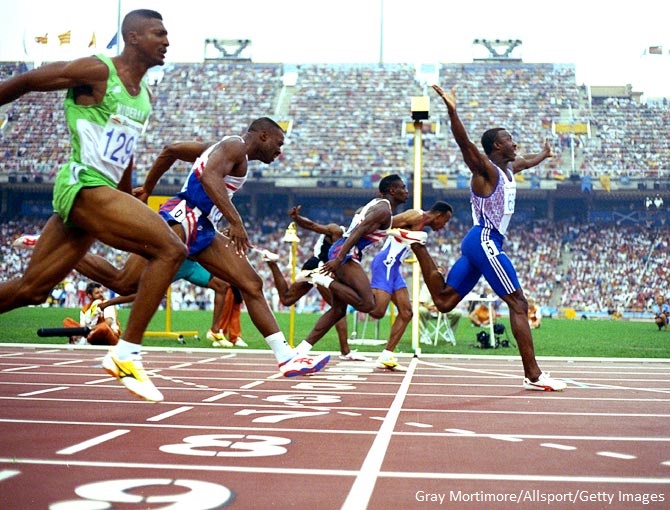
Ageing in sport is one of those myths that is slowly being deconstructed. In most professional sports, athletes are usually finished in their mid-30s with just the occasional highly skilled technician or specialist (think golfers, goalkeepers or quarterbacks) making it into their forties. I recall watching the Barcelona Olympics where Linford Christie became the oldest sprinter ever to win the Olympic Gold at the advanced age of 32!

32-year-old Linford Christie becomes Olympic Champion

In recent years we’ve seen athletes extending their careers into their late thirties despite professional sport now being played at a higher level than it was. In tennis we see Roger Federer and Serena Williams still near the top as they close in on forty; while sprinter Justin Gatlin won the World Championship in 2017 at age 35 and is still running sub-10 second 100 metres. Eliud Kipchoge just won his second Olympic marathon at 36.

As you’d expect these elite athletes are gradually losing their ability to compete at the top of their sports. I often meet runners who, having given up for twenty years or, never run when they were young, believe that because they’re older, the faster times are going to be beyond them. Now while well-trained elite runners are never going to be as fast as when they were younger, for those of us who start late, didn’t train or got poor coaching there’s every chance we can be faster and fitter than we’ve ever been before.


Within this series of articles I’m going to give you the facts and figures about what runners over the age of thirty-five are achieving. While you won’t necessarily be able to match them, what it should give you is a realistic view of how slow the decline is and how quick it’s possible to stay running well into what most people consider old age. I want you to come away from this series feeling inspired about what is possible. Whether you decide to get the best out of yourself is your choice, but age is not going to be an excuse if you don’t!

  • In part 2 I’ll examine the Masters sprinters (100m / 200m / 400m)
  • In part 3 It’s the turn of the middle-distance runners (800m / Mile / 3,000m)
  • In part 4 We’ll look at the long distances (5,000m / 10,000m / Marathon)
  • In part 5 I’ll give a brief overview of what’s happening as the body ages and what you can do to delay the effects

Answer to the quiz questionthe old age equivalent of being seventeen is sixty-five years old. That’s right. Your physical maturity peaks at age twenty-seven but the decline is so gradual that over thirty years later you’re still capable of doing what you could at seventeen years old. This, of course, requires you to stay healthy and training.

Mental toughness

In Is this sustainable? I quoted Chris Boardman talking about how it feels during a race. He said “There’s a constant calculation going on between … How far is it to go? How hard am I trying? Is this sustainable? And if the answer is yes [to the sustainable question], you’re not going hard enough. If the answer is no, it’s too late [because you’ve dropped time by not going harder] so you’re looking for maybe”. I was thinking about this as I ran parkrun and it occurred to me that how you respond to this question shows your level of mental toughness.

The difference between the mentally tough and the ordinary person is that the ordinary person gives up when they realise something isn’t sustainable. The mentally tough person doesn’t accept No for an answer. As I wrote in Denial, they dig in and try to gut it out. They’ll keep trying, hoping to find some kind of energy reserve – they may find it, they may not. In a race against opponents (especially mentally weak ones) not knowing your limitations can make the difference between winning and losing.

It’s fairly obvious that the mentally weak are happy to continue when the answer is Yes and they’ll give up for a No; but I’d venture that it’s the Maybe answer which is enough to get them shutting it down and giving up. As soon as the answer changes to “I’m not entirely sure this is sustainable” which Boardman says is the very thing you’re looking for; the doubt begins to creep in and they give up and fall back to a safe zone.


In recent years, theories of fatigue have moved on from it being caused by a build-up of waste products in the muscles; to being about the brain taking feedback about those build-ups and subconsciously allowing the athlete to keep going, or the mind tempting them to slow down by experiencing build-ups as pain. Therefore elite distance runners are beginning to add mental stress to training sessions to teach the brain, it can cope with more and it’s safe to continue going. You could liken it to walking up a street in the dark. The first time you do it, you’re tentative with each step because you don’t know what’s ahead. But if you repeat the experience and know you managed ten steps safely, you walk those steps quickly the second time.

If you can push through pain in training or races, it’ll give you an extra dimension to your running – it’ll teach your brain that it’s safe to release the unused reserves. This is the bit where mentally weak athletes have a disadvantage. If they aren’t willing to push through the pain, their brain isn’t going to feel safe to allow them to break into their reserves. I’ve met a good many runners who always play it safe. They start off slowly, start at the back of the field, or ease off when exhaustion or heavy breathing threaten. They don’t try to push through the temptation of giving up, they simply give up.

I believe the role of the mental side of running is overplayed in modern literature. No matter how much you want or desire to be the Olympic champion, you still have to train before you can get close to that stage. Physical limitations are still limitations to be addressed by training, not by thinking you can run harder.  But, when Eliud Kipchoge ran the first two sub-2 hour marathon, it’s possible the knowledge of getting within twenty-five seconds on his first attempt was enough to help him find the extra seconds. That’s what mental toughness and training is about, having a confidence to push through Maybe and give it your all.

When the going gets tough, there’s probably more to be eked out than you realise. Pushing hard occasionally in training and races will help the mind know it’s possible.

Short sprint – Hitting top speed

The last three weeks at Upton House I’ve been taking the parkruns at a comfortable pace. It’s never felt too effortful as I run times in the mid-20s. About a mile into the run we have a steep downhill into the mini-loop and I just let my legs do whatever they want. I don’t go at it, I just take the brakes off and fly down the hill past those with more caution. I’ve seen myself hitting pace around 5:20-30 over the weeks. This interests me because a few years back I simply couldn’t go this fast even on downhills.

I was coming off a core muscle injury that forced me to take three months off. I’d tried to keep running but eventually I admitted defeat and took time off for it to heal. When I returned, I began to build up carefully. I deliberately didn’t do any speed sessions as I wanted to test whether I could build Endurance from the ground up – much like Maffetone suggests – long story short, you can’t but that’s for other days.

At the end of my second week I ran a tentative 33-min parkrun and the following week it was 29-minutes. I then went to visit friends and gave Chichester parkrun a try. It’s a surprisingly tough course, mostly on grass, around rugby pitches, with a gradual climb uphill before you run down a path back to the start-finish three times over. At the end of the third lap, I was sweating and came charging down into the finish trying to break twenty-seven minutes but couldn’t quite do it. What was surprising was my top end speed on this final downhill, going as fast as I could, trying to sprint, I could only hit 6:30/mile. Free energy yet I had nothing like the downhill speed I’m getting nowadays.

I’m not entirely sure what the reason behind this is other than it’s connected to being stronger and fitter than I was three years ago. I don’t think it’s that my legs are more resilient on the downhills but I do think they may be striding longer because of all the strides and speedwork I’ve been doing with my 800m training. I also have a much better aerobic base. My recent parkruns have felt comfortable while being faster than Chichester. At the latter, with all the hills and effort I was putting in I was working more anaerobically, which creates by-products that causes the legs to tie up. It may be this. Either way it’s nice to fly down the hills effortlessly.