New parkrun world record set

Last Saturday, Andrew Butchart, ran the fastest parkrun of all-time clocking 13:45. Edinburgh parkrun, where he ran, describes itself as a course designed to be enjoyable, rather than for pure ‘PB’ speed!! It’s scenic, flat and run on generally wide footpaths along the promenade on the Firth of Forth. On a tough day, it’s exposed, windy and cold and looking at the photos it’s not hard to imagine how bleak it could be in the depths of winter.
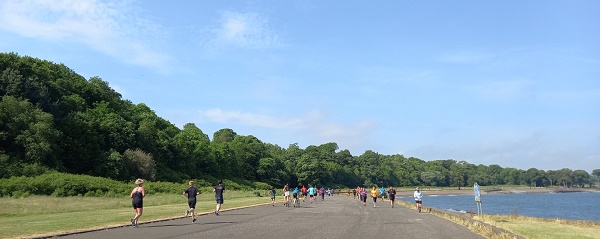
Edinburgh parkrun on a blue sky day

Fortunately Butchart turned up at the height of summer with good running conditions. Putting his time into perspective, if you’re a 23min parkrunner you’re just reaching the 3K point of your parkrun and for those running 27-28mins you’re halfway round. Even a 17 minute parkrunners is still a kilometre behind as Butchart finishes. Running at 2:45/km or 4:26/mile is fast and most of us wouldn’t even beat him off the start line which shouldn’t surprise anyone given he has competed at the Olympics.
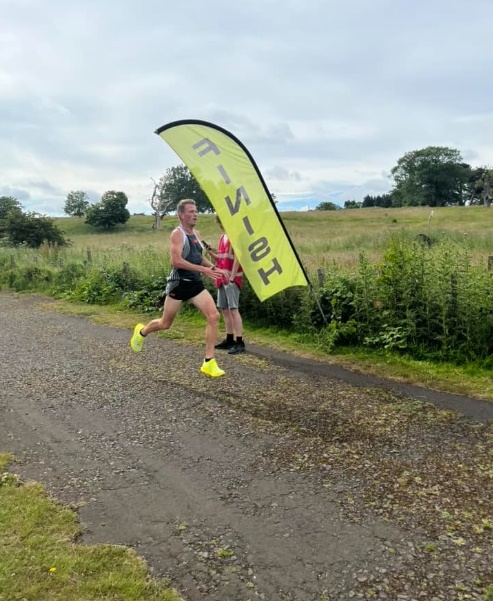
Andrew Butchart sets the record

The previous world record of 13:48 was set by Andrew Baddeley at Bushy Park in August 2012 – the week after competing in the Olympic 1,500 metres. That broke Australian Craig Mottram’s record of 14:00 which had stood since 2006.

The progression of the parkrun world record was fairly easy to track down because when Mottram set the record, Bushy Park was the only parkrun. In setting the world record in Edinburgh, Butchart becomes the first man to do so away from Bushy and the 10th to hold it.

I went back through the results and, of course, the record was initially set at the first event by Chris Owens at 18:47. Over the next year it was broken seven more times until Mottram smashed 39 seconds off to record exactly fourteen minutes in June 2006. Mottram was a world class 5,000m runner who took silver that same year at the Melbourne Commonwealth Games having won a bronze at the World Championships the year before.

In the early days at Bushy Park, where it all started, attendances were often less than 100 people and in setting the world record Mottram only finished ahead of 158 other runners. It wasn’t even a parkrun then – it was Bushy Park Time Trial. It typically attracted club runners whereas these days the bulk of 1,000+ runners turning up won’t be attached to a club. If you pick a random week from the early days you’ll find barely anyone taking longer than thirty minutes and an average time closer to twenty-three minutes. In some ways it was more competitive, especially as First Finishers were still referred to as Winners.

Among those humble beginnings we can find illustrious names such as Mo Farah logging a 15:06 in November 2005, Ireland’s World Champion Sonia O’Sullivan winning regularly as well as reducing the women’s world record twice (16:38 and 16:22). I’ve read there was a contingent of Kenyan internationals who lived near Bushy Park which included Bernard Kiptum (15:04 parkrun WR), Collins Kosgei, Johnson Kiptanui, Simon Arusei, Dennis Ndiso, and another World and Olympic champion in Vivian Cheruyiot – who held the women’s world record briefly at 17:52.

One little quirk of the early records is when David Symons set it at 16:39 in the 3rd ever parkrun event, the women’s world record was also set at 19:57 by Kate Symons. I assume they are married but may just be related.

DateRunnerTimeParkrun location
02-Oct-04Chris OWENS18:47Bushy Park, London
16-Oct-04David SYMONS16:39Bushy Park, London
06-Nov-04David SYMONS16:29Bushy Park, London
27-Nov-04Kevin QUINN16:10Bushy Park, London
05-Mar-05Dermot CUMMINS15:54Bushy Park, London
14-May-05Bernard KIPTUM15:04Bushy Park, London
17-Sep-05Phil SLY14:54Bushy Park, London
01-Oct-05Noel POLLOCK14:39Bushy Park, London
10-Jun-06Craig MOTTRAM14:00Bushy Park, London
11-Aug-12Andrew BADDELEY13:48Bushy Park, London
24-Jun-23Andrew BUTCHART13:45Edinburgh, Scotland

The women’s world record progression is not so easily identified as while it was broken multiple times in the early years, once parkrun began to expand outside of London there was potential for it to be broken elsewhere. I recall Justina Heslop becoming the first woman to run sub-16 in late 2011 and as best as I can find it had always been set at Bushy Park until Hannah Walker recorded 15:55 at St Albans parkrun in July 2013. She has had the longest reign as it was 5½ years before Charlotte Arter took five seconds off at Cardiff in January 2019. She then broke her own record a year later by one second (15:49) just before the COVID-19 pandemic started.

Seasoned parkrunners will remember that events were cancelled due to COVID-19 and, when it came to reopening them, they restarted at different times around the world. Australia was one of the first countries to resume and the women’s parkrun world record went down in early 2021 as Lauren Reid ran 15:45 at Paramatta near Sydney followed seven months later by Caitlan Adams’ 15:38 at Lochiel parkrun near Adelaide.

It was quiet for a year until December 2022 produced a flurry of activity. Firstly Samantha Harrison, who finished sixth in the 2022 Commonwealth Games 10,000m final, reduced the world record to 15:37. She was only to hold on to it for three weeks as Melissa Courtney-Bryant ran 15:31 at my local parkrun in Poole on Christmas Eve. Sadly I missed this historic moment but I know it created tremendous excitement to have had a world record set there. Any week I run there I now know I have no excuses about the course.
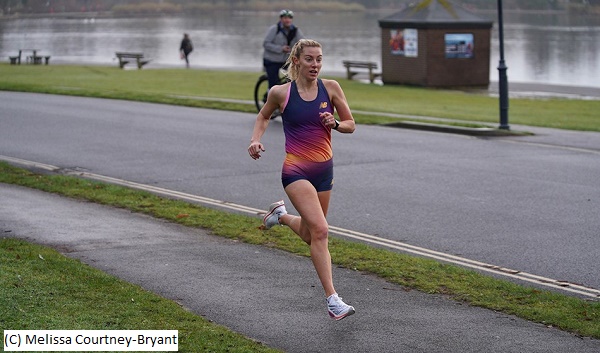
Melissa Courtney-Bryant on the way to the best Christmas present she could ever hope for!

Yet records are set to be broken and while Melissa is still the UK record holder, the women’s WR almost immediately returned to Australia. A week later on New Year’s Eve, Isobel Batt-Doyle recorded 15:25 at Aldinga Beach near Adelaide. It was the 3rd time in a month it had been broken and she became the 14th woman to hold it.

DateRunnerTimeParkrun location
02-Oct-04Rachel ROWAN21:01Bushy Park, London
16-Oct-04Kate SYMONS19:57Bushy Park, London
11-Dec-04Vivian CHERUIYOT17:52Bushy Park, London
28-May-05Sonia O’SULLIVAN16:38Bushy Park, London
18-Jun-05Sonia O’SULLIVAN16:22Bushy Park, London
03-Jan-09Katrina WOOTTON16:20Bushy Park, London
08-May-10Gladys CHEMWENO16:11Bushy Park, London
24-Nov-11Justina HESLOP15:58Bushy Park, London
27-Jul-13Hannah WALKER15:55St Albans, Hertfordshire
05-Jan-19Charlotte ARTER15:50Cardiff
01-Feb-20Charlotte ARTER15:49Cardiff
23-Jan-21Lauren REID15:45Paramatta, Sydney, Australia
07-Aug-21Caitlan ADAMS15:38Lochiel, Adelaide, Australia
03-Dec-22Samantha HARRISON15:37Long Eaton, Derbyshire
24-Dec-22Melissa COURTNEY-BRYANT15:31Poole, Dorset
31-Dec-22Isobel BATT-DOYLE15:25Aldinga Beach, Adelaide, Australia
23-Dec-23Ciara Mageean15:13Victoria Park, Belfast

Update: In December 2023 Ciara Mageean took another 12 seconds off the women’s world record running in Northern Ireland. It’s the last record we will officially know about as in February 2024, parkrun decided it was no longer going to keep track of male/female/age-group records on its website. With over 2,000 parkruns worldwide it’s an impossible manual task to keep track of them all – we will have to see if updates continue to filter through.
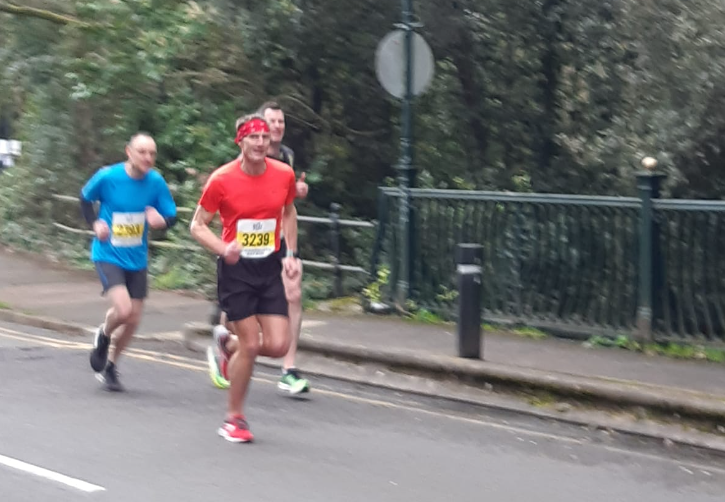
Update on my 800m training – Apr 2023

April has been a quiet month. Entering it I had high hopes of recording a decent time at Bournemouth Bay 1/2M but those were trashed when I ran three minutes slower than last year. I tapered better this year and my legs felt fresher on the day but, come the run it was a gradual slide with the first 2-3 miles coming in at just under seven minute miles. From mile five onwards the pace dropped to 7:25 and worse. I just had nothing and have easily done better runs in training. I documented last month how I ran six miles in 42-mins in training.

What was strange was how low my heart-rate was throughout the run. It ended up averaging 149bpm which when I consider I do Steady runs in the low 150s was very out of place. What it does go to prove is how little use a heart-rate monitor can be.

I took five days off after the half (no running at all) then went to Poole parkrun and ran 20:57. Both my calves and glutes were sore from it and I had a very slow, dreary Sunday 10-mile run. I ran thirty minutes each day through the following week and returned to Poole parkrun knocking my time down to 20:39. The following week was the same routine, a slightly faster but still drudgy ten mile run then thirty minutes each day. This resulted in a 20:17 parkrun! Three weeks of easy running, no speedwork and my racing simply got faster by forty seconds.

It now seems clear that I’d fatigued my legs too much in training. When I look back I’ve been doing fifty mile weeks since last summer and training hard in the week. The heart-rate monitor numbers were correct but the monitor itself can’t tell you how fatigued you are.


My overall feeling though is one of disillusionment – I’m simply not cut out for distance running. When I compare my training to others, I simply don’t get the results from training that they achieve off much less. I train hard with all sorts of different sessions but ultimately I’m physically not cut out for long distances.

I’ve known this for a while, it’s why I started training for the 800m. Thus far I haven’t really worked on developing my speed to a high level because I’ve been trying to keep the aerobic side in balance. As I’ve written in the Ageing series, the best male sprinters of my age are running under 11 seconds for 100m, 22s for 200m and 50s for 400m. While I’ve not gone all-out at any of these I’d be surprised if I could crack 14s for 100m, 30s for 200m or 1min15 for 400m – that’s just too far down and a gap I need to close up. It’s not because I’m not capable, it’s because I haven’t trained for it in years.

I’m beginning to conclude this has been where I’m going wrong. The first two iterations of training I followed JackD’s plan as he is a proven coach. It didn’t really help me. Last year I began hill training using a progression from Steve Magness’ The Science of Running and I felt this made a difference despite only doing one weekly session for three months.

I’m torn between entirely given up on the distance work until I’m notably nearer to the age-group records or trying to keep the two things in balance. All I know is when I started running seriously a decade ago, I was probably quicker on the speed side. I have little objective proof of this but my legs were much bigger and stronger. I was quickly able to build some of my best times at parkrun, 10K and half marathon on lower mileage than I’ve been doing recently because I had the speed first.


This summer’s plan is to repeat what I did last April / May / June. I combined Steve Magness’ hill sprints on a Monday with Jack Daniels’ 800m training plan on Wednesdays and Fridays. I lasted about nine weeks before I could see I’d peaked and my aerobic fitness was declining.

This year I’m intending to do the same but with some changes. Where I previously followed Jack’s plan for runners covering 30-40mpw, this year I’m downgrading to the 20-30mpw plan with shorter recovery and long runs. Actually Jack’s long run has always lasted only about an hour on these plans but I always did something in the 1hr30-40 range in an attempt to keep my aerobic system up.

The other change I’m going to make, as I’m not doing a time trial prior to starting training, is to be conservative on my numbers. I’m based my training level on my half marathon and fastest parkrun which basically have me running at the level of a 2:36 800m runner. It’s not that fast but I’m aiming to keep my legs fresher this year through less intensity and lower volume of training. Again this 2:36 start point is why I don’t think I’ve got the speedside sorted. It really isn’t that fast given how in shape and athletic I am. I just haven’t trained for speed enough in years.


I resumed faster training in the final week of April. I did 6x8sec hill sprints on Monday which felt great and I loved despite blowing hard at the end of each effort. On Wednesday I did 6x200m with 200m jog recovery aiming for 43s, they avg’ed 40.4sec. On Friday my legs were perking up and I repeated the session, this time with eight efforts, and they avg’ed 39.6sec. My body felt like it was hitting new territory. Or at least territory which it hasn’t been to in a long time. My breathing was gasping in the final efforts. I’ve been there before but this felt different for some inexplicable reason.

Before each of the workouts, I’ve been doing drills and strides to help warm-up and ingrain good form. I began these eighteen months ago and change has been gradual, notably beginning to kick in at the start of the year when I was doing my last block of short intervals. This explains why my glutes and calves hurt after the half marathon. It was the longest sustained effort I’ve done using that running form and therefore being powered by those muscles. My stride seems to be lengthening and when I begin an effort I can hit higher cadences than usual. This all suggests I can get quicker and build my speed up to the levels I desire.

Update on my 800m training – Aug / Sep 2022

In my last update I detailed that I had gone back to endurance training as all the hills and speedwork of the spring had toppled my aerobic base. It was somewhat disappointing but also necessary if I’m to sort out my 800m. I now realise I’m done for this year and it’s going to be a winter of building endurance and stamina. The introduction of hills and sprints was great fun but also introduced way too much naturally anaerobic fast-twitch muscle. As I haven’t been near these areas in years, things toppled quickly. Hopefully by next winter, my base will be bigger and I’ll be able to handle the anaerobic side better.

Having restarted endurance training in early July I found I wasn’t making much progress; then in early August I realised I was beginning to get aches and pains of the sort when you’re training too anaerobically. I had to reset AGAIN. My focus became to ensure I set off on runs at a slower pace and built up to my aerobic limits. That reset did the trick as the pains dissipated and the endurance began to build. Even so I was still a good 30+ secs/mile down on where I was back in March. It was a surprise to me how easy it is undo everything.

Mid-August I did an all-out parkrun at Poole and clocked 20:25. Quicker than running there at Easter (20:40) but slower than last Christmas (20:11). I cannot tell you how frustrated I am feeling at not being able to get back under twenty minutes. Another parkrun at Sandhurst Memorial parkrun in late September was even worse at 20:48 but it’s a tougher course and my legs were fatigued so that didn’t concern me.


I’ve entered a couple of 10Ks – Boscombe on Nov 27 and Christchurch two weeks later. I’ve gone back to using the training system I used on my only ever sub-40 run back in 2015. Controlled threshold work on a Tuesday, a Steady run on Fridays and a long run on Sunday. This is the same as I was doing in February and March this year.

My plan is to do intervals at Threshold pace (6:50/mile) for three weeks, then up the pace to 6:40 for three weeks and again to 6:30 which will take me through to the end of October. After that I’m going to do shorter intervals at 5K and 10K pace which will hopefully see me breaking forty minutes again. It’s an aggressive schedule but so far the body has been holding up.


Endurance-wise it took me until mid-September to get back to where I was in February. That said, my fasted Sunday morning long runs have all been coming in at a decent pace, usually sub-8 average for 12-miles, no stops. For whatever reason, I seem to be running these quicker than in February.

Possibly some of the drop off I’ve been experiencing is down to a change in running form. Since last October I’ve been working on my form using drills at least once per week and somewhere around late June, combined with the sprints I was doing, I began to feel I was running differently. Less hip rotation and more power from the glutes. Of course, using muscles that have never been involved in my running, meant they needed to be trained and quite possibly they had a lower lactate threshold due to this. Whatever it is, the form change is beginning to feel powerful at times and I just have to keep working at it.


Behind the scenes I’ve been wondering about whether I’m cut out for training like this. For all the miles and effort, I’ve put in over the years; my improvements have been sporadic. I’ve decided this winter will be the acid test. Hopefully when spring arrives next April, I will see a decent improvement in my half marathon time.  If I don’t then I’m scrapping the endurance focus and putting my training time into working on speed and to see whether I can get my 200/400 times down, even if it’s at the expense of longer distances.

I’m going to give it a fair crack of the whip and train the best way I know how to. The one sticking point is I entered the London Marathon ballot yesterday not realising the race is in six months’ time (April). If this were to be the year I get a place then my training would have to look at lengthening my long run out to twenty miles. Even so I’d expect the training I’ve got planned, to fit in well with how I would need to train. We’ll see when the ballot results are announced at the end of October. I’m currently doing just shy of fifty miles per week and have been for the past two years so the base is there for whichever direction I need to go.

Update on my 800m training – Apr 2022

April has been a month of weeks! Following on from Bournemouth Bay 1/2M on the 3rd, I took a few days break. That was the first week. Then I started training and it was a heavy-legged slog culminating with a not-too-great parkrun. That was the second week. It was followed by three workouts in a week and the legs finally beginning to lighten up. That was the third week. And finally, last week I’ve begun to feel back to where I was in March aerobically.

I’ve been wondering how to approach this block of training. While I liked the structure of JackD’s 800m training plan which I followed for two cycles last year, I didn’t feel I improved enough off of it. Having worked on my endurance all winter, I felt I would be safe to begin working on speed and wanted to use some of the concepts which Steve Magness talks about in his book – The Science of Running.  Most notably this would involve hills and breaking the interval work into sets of 800m.

Hills

Mondays has become hill sprint day. These are the tool espoused by Magness for improving speed and recruiting more muscle. It’s all about short, all-out efforts lasting only 8-10 seconds followed by long recoveries. By working as hard as possible on each effort, you maximise the speed and recruitment without having the legs tie up with fatigue. The long recoveries then allow the energy systems to recharge for the next effort.

My legs have lost a lot of muscle and size over the past ten years. When I was in my early twenties, the gym report states my quads were around 26”; these days they’re 23” at most. It’s no surprise my legs were so strong because every sport I played I went at full-force. Playing squash was lunging two or three steps in each direction. Running round a football pitch or basketball court was accelerations of 5-10 metres to close down an opponent. Playing volleyball gave my legs a good workout with constant jumping at the net or squatting down in the back court. When I went for a run, I started off at a sprint and held on to puff my way round. All of that is the antithesis to how I’ve been training for the past five years.

I followed Magness’ plan back in early 2016 but they were usually done on tired legs, after an hour effort run along the beach promenade. My training progressed during those months but I was doing other good effort sessions at the same time so I can’t quantify how effective they were.

I’ve certainly felt good on this year’s efforts and they have combined well with improved running form from the sprint drills I’ve done since October. The following day is always a little slow but that’s to be expected with the muscle fibres recovering.

Short intervals

My intention was to do my own version of speedwork on Wednesday and Fridays. For the first two weeks I decided to follow Jack’s plan of 200s and 400s until I was ready to implement my own ideas.

The reality is when I started doing these sessions, I found my pace was off-the-charts compared to last year. Having not run a recent 800 time trial, I had nothing to base my training on so I estimated, based on my half marathon training, that I was likely in around 2:36 form and therefore should be running efforts at 43secs per 200m. The first session of 200s all came in at 39-41secs despite having tired legs. The following week I was aiming for 1:26 for 400s and found myself running a couple at 1:17 and a couple at 1:22. This was a huge improvement over the same session in training last year when I was hanging on for 1:30-32. The previous cycle it was 1:35-36 hanging on.

Last year I would feel tired after sessions; this time I’ve been running far quicker than expected but not feeling torn down afterwards. Given I was so far ahead of my intended pace I’ve decided too stick with Jack’s plan and not change anything around in terms of the efforts and splitting it into sets. The only change I have made is not to adhere so stringently to the warm-up and cooldown durations.

The final session of April was two sets of 6x200m with 10-min jog recovery between. The first effort of the second set came in at 35.2 secs which is the fastest I’ve done. Compare this to the 48-secs I was running when I began 800m training in December 2020. It wasn’t just one fast effort, all but one effort was sub-40 and the average came in at 38.16sec.

Near disaster

Despite my success, I’m slightly concerned I may be overdoing these. At parkrun after the successful 200s session, my left Achilles ached and then popped on the Sunday long run. My first thought was “oh no” but I could run without pain and have just seen it as a warning sign. I’ve probably been doing these efforts closer to 800m pace than the intended mile pace and during May, I’m going to focus on pacing these at around 41½ sec per 200 (5:30 per mile).

Actual disaster (minor)

On arriving at Poole parkrun in mid-April, I cinched on my watch and the strap broke. I had to carry it all the way round. That evening I went away to a birthday party and danced until midnight. Next morning, waking early at 5:40am in a strange bed I went for my long run up the Basingstoke Canal. I intended to do my standard 10-12 mile run lasting 1hr20-40 and popped the watch in my back pocket. I didn’t mind running without the numbers but I had no indication of how fast or how far I was going. My legs were so tired from the all-out parkrun and a night of dancing that it was a trudge. The final miles back I gutted through, working mentally hard to avoid the urge to stop and walk. When I arrived back and pulled the watch out of my short’s back pocket, I was stunned to see I’d run for 2hr05 and 14+ miles. No wonder it was tough – that’s my longest run in time and duration in almost two years.

Can’t decide whether to change both parts of the strap!

I carried my watch around in my hand for the next two weeks. It’s impossible to know when to start or stop efforts in an interval session if you’re carrying it in your back pocket. What I noticed is the outsides of my shoulder aching towards the end of runs. I’m not sure if it’s down to carrying the (very light) watch with arms/hands locked in position or whether it’s just the effort of the sessions. I have had shoulder aches at other times when I’ve run fast. Nonetheless it got me wondering about those people who carry bottles which are much heavier.


It’s been a great month of running. I’m not sure whether it’s the hills or the winter training but something has improved about my running since the last cycle. I’m sure it’s down to improving my aerobic system over the winter and closing the gap between the fast paces and my general runs. Where last year the gap was the better part of 3-mins (9-min mile vs 6-min mile) now it’s closer to 2-mins (7:30 to 5:30).

I’m certainly finding it easier to recover between intervals and be ready for the next effort. But I also wonder if that’s partly because they’re being run quicker! Running an effort in 1:17 compared to 1:30 a year ago may not seem much but it’s 15% less time. Friday’s intervals, for example totalled around seven and a half minutes, a minute less than last June and ninety-seconds less than six months before that. While the individual efforts may be using as much concentration and energy, overall there’s less to recover from. This is why elite runners end up doing bigger workouts, they can do more as they get fitter. I could theoretically add a couple of more efforts to be doing the same volume of work as last year.

I’m looking forward to May’s training. My focus is on getting the pace right and ensuring I get enough recovery to avoid any injury.

parkrun’s Annual Points Competition

When I first went to parkrun there was an Annual Points Competition which awarded points by placing. The fastest finisher got 100 points, second got ninety-nine, all the way down to one point for finishing hundredth with everybody behind them also getting a point for attending. At the larger parkruns, the points began at 250 and went down from there. Of course with the front of the field being dominated by male runners, there was a separate set of points given out to the women thereby creating competitions for both male and female runners. To avoid deterring people from volunteering, you received maximum points on the first three occasions you volunteered so you weren’t disadvantaged. All this happened automatically and I met people who didn’t even know the competition existed.

At Poole we gave out small prizes to the top three men and women when it completed on our parkrun’s birthday in the April. I heard other parkruns simply gave the winners a round of applause. Initially there was a hidden competitiveness between those of us on the core team and in with a chance of winning it. No-one talked about winning the APC but it was occasionally mentioned or the people at the top of the leaderboard referred to. There were times when my volunteering job also allowed me to run (e.g. token sorting or course setup) and I’d ask not to be listed as a volunteer as it would use up one of my three freebies. Tactically I wanted to save those in case of injury or as an end of season points booster.

It took a year or two but, as I looked around the various parkruns, I came to realise there were only two or three people who were ever going to win the competitions. It didn’t matter which parkrun I looked at, Bushy Park, Cambridge, Basingstoke, Leeds there were only two or three people in with a chance. Firstly you needed to be turning up regularly, but if you weren’t finishing in the top five or ten places, you weren’t accumulating enough points even over the infrequent speedster. The winner was going to be someone turning up at least 45 times and it was going to be a case of outlasting the opposition.

I was thinking about all this when I wrote my article about how I made myself ill from competing in gym challenges. The essence of any good competition is that everybody competing in it must feel they have a chance of winning. I’ve been to pub quizzes where the same team wins every week and slowly you see the numbers dwindle as everybody else realises they’re never going to win. In athletic competition, it’s slightly different as physical skills diminish or injuries occur which open up the chance for someone else to come through. It’s hard to construct a good challenge for people of wide-ranging abilities.

Eventually, in about 2015-16, Parkrun HQ decided to remove the Annual Points Competition. I heard there were regular, almost weekly, discussions about whether to keep or remove it because it had been an integral part since the start of parkrun. Like the Strava and gym challenges it was originally there to motivate people to turn up and reward those who did. But once parkrun began to flourish and they had the 50, 100, 250 club t-shirts to recognise regular participation it became redundant. Realistically with only two or three people in the running to win it, it was always something of a non-competition for the hundreds of other people turning up.

Positive and wishful thinking

At Christmas Day parkrun in Poole, I arrived unsure of what to expect. I’d run 20:26 at The Great Field a month before and 21:01 at Upton House more recently. With Poole being notably faster there was a glimmer of hope I might squeeze under twenty minutes. But I knew I’d run 5x1K intervals earlier in the week so my legs could still be tired. I was happy when I recorded 20:11.

What’s always intrigued me are the runners who can’t be happy with the time they get. My 20:11 on Christmas Day was my fastest parkrun in four years. Yet I know some runners who wouldn’t be happy with that. In response to a time of 20:11 they’d say something like “I wish I could have got under twenty minutes”. Instead of being happy with their fastest time in years they manage to diminish the achievement.

This is wishful thinking in all its glory. Their minds are off somewhere else wishing for what they want, not what’s actually happened. If they could live in the moment they’d savour that time.

– If they ran hard from start to end, giving their absolute best, then there is nothing more they could have done. So what’s to be unhappy about?

– If for some reason, they know didn’t put in full effort then they got the result they deserved. They can’t be unhappy with the time, they need to be unhappy with themselves and their approach. They need to hold themselves accountable, learn the lesson and adjust in the future. With running times, you get out whatever you put in.


People often talk about needing to develop positive thinking or optimism, this is different to wishful thinking. When I run a time of 20:11, it gives me confidence that I will be able to break twenty minutes. I think of all the things I haven’t yet worked on in training. All the sessions of speedwork, tempo running, base-building and pace development that are there to be worked on. On top of that there’s all the potential supplemental stuff like shoes, nutrition, compression socks that might shave seconds off. That’s my version of positive thinking. The only time I ever got downhearted and lost my optimism was a period when I couldn’t see any new openings to try. Even when I’m running badly – it is what it is. Having a plan for how I’m going to work my way out of the slump keeps me positive.

The interesting thing about the wishful thinkers is they call themselves realists yet they don’t live in reality. The truth is they’re pessimists – they can’t even be honest with themselves about what to call themselves. They never dare to dream big or set challenging goals, trying everything they can in pursuit of achieving them. They don’t take responsibility for their training, they don’t try new things or different approaches they keep it as safe as possible. When they run out of their limited array of options, all they can do is wish they could have been faster.

Review of the year – 2021

I’m not sure what to make of 2021 as a running year. My goal at the start of the year was to train for the 800m and improve on the 2:58 time I recorded in December 2020. I’m under no illusions that this is not a particularly good time even for a fifty year old. I religiously followed Jack Daniels’ training plan and when I next time trialled in April, I’d only improved to 2:55. Another time trial in early June was 2:53 and after another round of following the training plan I was only down to 2:49 in October. It really hasn’t been very satisfying progress from a results perspective.

Final sprint to the line at Christchurch 10K in 2021

From a process perspective, much seems to have happened. I’ve generally got fitter. At start of year I was running some of my recovery miles as slow as ten minutes; by year end I was feeling comfortable at eight minute miles. My general training speed has improved and there was a notable difference in how I felt on my 800 time trial. Last December I was absolutely gasping by the end of it with the lactate build-up leaving me coughing for the next hour. Each of this year’s time trials has felt progressively better, less hard breathing, even if I’ve not been significantly faster. All of this summarises to having built a better aerobic system.

Over the year, I’ve lost a stone in weight. I started the year at 188lbs (13st 6lbs) and am now below 175lbs. I’ve never been this light or chiselled in my life. Half the weight loss happened in the early months when I geared up and did the tough interval training; the other half when I started doing a low volume of press-ups and bicep curls daily. On that front, I’ve at least doubled my capacity for doing press-ups in six months.


While endurance has improved. I’ve been wondering about my top-end speed. At year start, I knew I was struggling there as I couldn’t even hit a peak speed of five minute per mile pace running flat out. Now, I will say this is to be treated with a little scepticism because the accuracy of my GPS watch is not quick to lock in. It takes fifteen seconds but even so, by year end I’ve seen myself hit 4:13/mile on it. Again I’m aware this is not a great top end speed, given that Olympic distance runners do whole races at this pace.

Digging back through my records, I found myself hitting 3:38/mile when I was younger at the end of parkruns. Again I treat this with some scepticism as GPS can be wonky but I also suspect it’s relatively accurate. Ultimately the best 800m runners in the world are averaging a 3:20/mile pace for the men and 3:50/mile for the women. They can run fast over short distances – I can’t even hit these paces yet.

Throughout 2021 I’ve been exploring ways to improve my top end speed. This has ranged from looking at cadence and trying step-over drills; thinking about form generally; to doing twice-weekly sessions of sprint drills which really seem to be making a difference. As I exited 2021, my running form had begun to feel different in a positive way. I finally feel like I’ve got a back kick and the trail leg is shortening when I try to run quickly. I’m becoming glute-powered rather than quad-powered.

What I haven’t done to improve my speed, for deliberate reasons, is any hill work. I tried that in 2020 and within two weeks, I’d blown my aerobic base as the fast-twitch muscle began to overpower it. While it would be useful to get the fast-twitch speed back, I need to do it in a controlled manner, waiting until base is bigger and capable of handling high levels of anaerobic work.


From a racing perspective there hasn’t been much. The big positive was the return of parkrun in July. At my fiftieth birthday, I managed a 21:20 Upton House Personal Best. Then over the last few months I’ve been reducing that with runs of 20:55 there again, 20:26 at The Great Field parkrun and a touching distance of sub-twenty – 20:11 at Poole on Christmas Day.

The great thing about running 20:11 on Christmas Day is it’s not notably worse than ten years ago when I was forty and running 20:00 on Christmas Eve 2011. This is also true of my 10K.  At Christchurch in 2011 I ran 42:23; this year I was one second slower at 42:24 !!

Ten years ago, I was on my way up with my run training and I didn’t have any understanding of the interaction of speed, endurance and recovery; and how to bring them together to perform at your best. I had much more speed then because it’s all I tried to do, whereas now I’m coming at running from the endurance end. I’m hopeful I’ll be adding aerobic speed this winter that will see me surpassing all previous bests. I don’t like to rely on luck or hope but … fingers crossed!

This reflects the negative about Jack’s plan. I don’t feel it’s helped me improve at the top-end speed as there’s nothing in the schedule dedicated to building it in the first place. The best 800m runners are often coming to the event capable of running 400m in less than fifty seconds (as young adults) and then building the endurance to hang on. For this reason, I’m going to reintroduce my own ideas about the things that helped me to get fast when I was young – which mostly involve more standing recoveries and interval work done in sets to allow lactate to clear. I just need to make sure I don’t undermine the aerobic base by doing too much.

So that’s been my 2021. I’ve enjoyed the year’s running – there’s no way I could have got out every day if I didn’t. I covered about 100 miles more than in 2020 and that has been down to a consistent schedule. I usually run around six hours per week training and that’s led to more miles as I’ve speeded up. Of course the schedule flexed through the year depending on where I was at with Jack’s plan but generally speaking it’s been a consistent outlay of six to six-and-a-half hours each week resulting in 40-50 miles.

Update on my 800m training – Nov-Dec 2021

Traditional winter training for middle-distance runners is a combination of building endurance and running cross-country. In my case, I’ve replaced cross-country with an all-out parkrun effort every couple of weeks.

After my last 800m time trial (2:49) in October, I took a recovery week and then began the endurance work. Using a fortnightly cycle the plan was to do two Steady runs (Tuesday and Friday) and a long run on Sunday on week one; a Steady run on the Tuesday and a faster-than-Recovery paced run on Thursday with the fast parkrun on Saturday. It worked quite well and my first three parkruns came in at 21:20 (Oct 23rd) and 20:55 (Nov 6th) at Upton House then a road trip to The Great Field parkrun (Nov 20th) where I ran 20:26.

With Christchurch 10K on December 12th I wasn’t planning to do specific training other than to taper and run on fresh legs. I’d planned to run one more fast parkrun between Dorchester and the race but Storm Arwen hit so I replaced it with some cruise intervals.

The 10K was a little disappointing as I went in expecting to be somewhere in the 41-42min range and ended up clocking 42:25. Not a terrible time by any means but my legs never felt good. I have a feeling I killed them in the preceding week by running a low volume of 200s and 400s. On the Friday (3x400m), Tuesday (2x400m) and Thursday (2x200m). That really is a low volume but perhaps I ran them too fast as I originally was aiming to hit 5-10K pace and the 200s came in at 37s which is faster than my 800 pace. That was a fun session as I ran it at the cricket pitch. Groups of college sixth formers on their lunch breaks were dotted around and they began heckling and cheering me on!

Since the 10K, I ran another 21:01 at Upton House and then on Christmas Day on the flats of Poole, I was among 798 runners as I ripped round to finish in 20:11. Touching distance of being back under twenty minutes.


After giving the legs a week to recover from the 10K, I decided I’m lacking decent aerobic capacity. On the parkruns and race I’ve barely been able to run quicker than 3:55 for a km. In 2020 I could run 3:48, two years ago I was hitting 3:45 and five years ago I was close to 3:30. The endurance training has been good but it’s been to the detriment of my aerobic speed. Even my top-end speed isn’t great and I believe this has contributed to the disappointing 800m time trials this year. I’ve noticed as my leg speed has disappeared so has the size of my quads – at least a couple of inches smaller than they were.

The consequence is I’ve begun running my old favourite session – 5x1K with 3-min recovery. It’s a great combination of distance, pushing the aerobic capacity and improving lactate clearance and tolerance.

The endurance training itself has begun to look great. I’m running twelve mile Sunday runs at sub-8 pace – close to 1hr30 most weeks. But also my recovery runs have got faster despite me keeping them easy wherever possible. This has really set me in position to build the speed side with the kilometre intervals and I’m hopeful this will have me close to nineteen minutes at parkrun by end of January.


Supplemental to the running, I’ve been finding sprint drills and strength work have been highly beneficial. The drills have been great in identifying inefficient running form and after two weekly sessions for two months, I’m finding the improved posture and muscle activation are beginning to bleed into my runs. Most significantly I’m start to get the feel for how to sprint and this can only be a good thing for my 800m time.

The squat work has strengthened up my legs but also the muscles in the hips and glutes. It highlighted a weakness in the left glute on the outside which was clearly not contributing to my running. As it strengthened up, it began to fire during runs and, in the long term, I’m expecting it to make a difference. On the negative side, I did too much squatting too soon and after about three weeks began to find my legs were getting sore so I stopped to let them recover for a week.

It’s been a useful two months, especially as I’ve taken over a minute off my parkrun time with my best time in four years at 20:11. I’m intending to stay with this plan through early 2022 and maybe run Bournemouth Bay half marathon in the spring. I’m sure a big part of improving my 800m time is going to be improving my aerobic capacity with the 5x1K intervals – I’ve really allowed my leg strength to drop in favour of efficiency the past few years.

The Ageing Runner – Part 4 Long distance

If you missed part 1 you can find it here, part 2 is here, part 3 is here.

When we started Poole parkrun the attendance was well below two hundred runners each week which made it easy to get to know everybody. As the London Marathon rolled around in the April, I was excited to follow runners like Liz Yelling, who was aiming at an Olympic place, and Steve Way, who’d run three consecutive 2hr19s. But it wasn’t just the elites who caught my interest, I’d got to know runners of all abilities and using the online tracking kept an eye on a variety of people who’d be running from over four hours through to those attempting to run sub-3.

One of the success stories was Dave Cartwright, who ran a sub-2hr55 marathon on his way to being the fastest man in the 60-64 age group that day. Footage of him crossing the finish line was doubly amusing as he was shown on BBC TV patting model Nell McAndrew on the shoulder who, despite being over twenty years younger, had finished only just ahead of him. Now in his seventies, Dave is still running round Poole parkrun in under twenty-two minutes and completing Blackmore Vale half marathon in under 1hr40. These times are fantastic to most people and yet, they’re not close to the times of the best in his age group as we shall see.

Recently two V55s, Andrew Ridley and Duncan Cooper came 8th and 9th in a field of over seven hundred runners. Their times were 16:27 and 16:35 respectively. Andrew’s age-graded time equates to 95% but his efforts also give insight into how slow decline can be. He set his Poole parkrun PB of 16:15 having only just turned fifty, yet here he is seven years later running only twelve seconds slower. Barely two seconds decline per year. I know Andrew trains very hard to keep his speed intact for 800m racing.

Age group world records for 5000m

TimeAthleteDateTimeAthleteDate
World Record12:35Joshua Cheptegei14-Aug-20 14:07Letesenbet Gidey07-Oct-20
V3512:54Bernard Lagat22-Jul-11 14:34Edith Masai02-Jun-06
V4013:07Bernard Lagat20-Aug-16 15:05Joanne Pavey05-Jun-14
V4514:24Lucien Rault19-Jun-82 15:56Nicole Leveque01-Jun-96
V5014:53Sean Wade25-Mar-16 16:51Gitte Karlshøj23-Jun-09
V5515:30Keith Bateman05-Jan-11 17:29Silke Schmidt27-Jun-15
V6015:56Yoshitsugu Iwanaga14-Nov-20 17:59Silke Schmidt20-Sep-19
V6516:39Derek Turnbull13-Mar-92 20:08Kathryn Martin28-Oct-16
V7018:16Ron Robertson09-Jul-11 20:56Angela Copson25-Jun-17
V7519:07Ed Whitlock23-Jul-06 23:31Lavinia Petrie28-Apr-19
V8020:20Jose Vicente
Rioseco Lopez
04-Sep-21 25:40Yoko Nakano12-Sep-18
V8524:04Ed Whitlock30-Jul-16 27:38Yoko Nakano23-Nov-21
V9030:00Yoshimitsu Miyauchi20-Sep-14 
V9539:43Antonio Nacca04-May-19 

Age group world records for the 10,000m

TimeAthleteDateTimeAthleteDate
World Record26:11Joshua Cheptegei07-Oct-20 29:01Letesenbet Gidey08-Jun-21
V3526:51Haile Gebrselassie24-May-08 30:53Joanne Pavey03-Aug-12
V4027:49Bernard Lagat01-May-16 31:25Sinead Diver28-Sep-19
V4529:44Kevin Castille17-Mar-17 32:34Evy Palm04-Sep-88
V5030:49Sean Wade01-Apr-16 35:06Fiona Matheson16-Oct-11
V5531:52Keith Bateman26-Mar-11 36:47Sally Gibbs11-Nov-19
V6033:40Yoshitsugu Iwanaga28-Nov-20 37:58Mariko Yugeta14-Nov-20
V6534:42Derek Turnbull15-Mar-92 41:40Angela Copson05-Aug-12
V7038:04Ed Whitlock09-Jul-01 44:25Angela Copson28-Jul-17
V7539:25Ed Whitlock21-Jul-06 50:01Melitta
Czerwenka-Nagel
28-Aug-05
V8042:40Ed Whitlock09-Jul-11 51:47Yoko Nakano06-May-18
V8551:08Ed Whitlock12-Aug-16 1:26:15Vladylena Kokina21-Sep-14
V901:09:28Gordon Porteous17-Oct-04 

Age group world records for the marathon

TimeAthleteDateTimeAthleteDate
World Record2:01:39Eliud Kipchoge16-Sep-18 2:14:04Brigid Kosgei13-Oct-19
V352:03:59Haile Gebrselassie28-Sep-08 2:19:19Irina Mikitenko28-Sep-08
V402:06:25Ayad Lamdassem24-Feb-22 2:19:52Helalia Johannes06-Dec-20
V452:14:23Bernard Lagat29-Feb-20 2:28:34Catherine Bertone23-Sep-17
V502:19:29Titus Mamabolo20-Jul-91 2:31:05Tatyana Pozdnyakova06-Mar-05
V552:25:56Piet van Alphen19-Apr-86 2:50:40Jenny Hitchings03-Nov-19
V602:30:02Tommy Hughes25-Oct-20 2:52:13Mariko Yugeta31-Jan-21
V652:41:57Derek Turnbull12-Apr-92 3:07:51Kimi Ushiroda15-Dec-19
V702:54:48Ed Whitlock26-Sep-04 3:24:48Jeannie Rice29-Sep-19
V753:04:54Ed Whitlock15-Apr-07 3:53:42Yoko Nakano23-Nov-12
V803:15:54Ed Whitlock16-Oct-11 4:11:45Yoko Nakano26-Feb-17
V853:56:38Ed Whitlock16-Oct-16 5:14:26Betty Jean McHugh09-Dec-12
V906:46:34Ernest Van Leeuwen06-Mar-05 8:53:08Mavis Lindgren28-Sep-97

Notes on Masters world records

All data was updated from Wikipedia in mid-June 2022. The aim is not to create a comprehensive set of records but to give readers an indication of what is possible. I will periodically update these when I can.

Return of parkrun

It’s been a long time since I ran a parkrun. Some countries and areas have been reopening sooner than others but finally England is ready to allow them again. Just one week to go and I’m wondering what the response will be.

Parkrun HQ have spent the past year figuring out the logistics to make parkrun Covid safe. Start speeches will be kept brief to avoid people gathering together for too long. A new app has been developed to allow volunteers to do the barcode scanning and timing from their phones rather than using shared equipment. The finish position tokens are to be washed or quarantined every week. Academic research supports the idea that gathering on a start line within close proximity of other runners is safe.

I’m guessing it will all work out as parkrun has been going ahead around the world with (I assume) the same changes in place and things haven’t collapsed there or needed a rethink. But different cultures have different attitudes and that’s the thing I’m wondering about. How will Englanders respond to the return of parkrun? Will we accept the changes? Will we believe the science? Do we care enough to get back out running on a Saturday morning?


My last parkrun was in early January 2020. I stopped going two months before the pandemic put them on pause. This wasn’t some prescient act of foreboding, it was my choice.

With New Year’s weight-loss and fitness resolutions kicking in, attendances swelled. In the weeks leading up to Christmas the average attendance at Upton House parkrun had been about 300; in the New Year it was closer to 500. It’s great to see all those new participants but I was getting trapped among them. I was running heavy mileage on Fridays and could only manage a recovery run on Saturdays. The narrow paths of Upton Country Park allow little room for manoeuvre past runners who’ve started off too quick and who then stop or walk to avoid stepping in the winter puddles. I found it hard to enjoy myself when my rhythm and flow were constantly being broken up.

New Year resolutions never last for everybody but parkrun was always a gamechanger and a high percentage of the newbies continued to come back. But more than a year on, will they? The not-parkrun stopgap that Headquarters tried to promote never took off. For whatever reason, people are only interested in going for a free, timed 5K when it’s part of something bigger. Their own volition and fitness weren’t enough for many people. Maybe it was really the coffee and cake afterwards.


In deciding whether to attend, will people accept the science that says standing on a parkrun startline is safe?  My initial instinct, knowing how close we stand to each other, is that they could become super-spreader events. Parkrun’s academic research says it’ll be safe but I have some reservations because it’s modelled on an attendance of 263 participants and March Covid levels that were much lower than they are now. Our parkruns are much bigger than that.

The reality of the situation is with about 2,000 runners attending our local parkruns, the current case rate of 250 per 100,000 suggests five infected people will turn up. My odds on actually standing next to one of the five seem little worse than I could achieve in the aisles of the supermarket.

The parkrun Covid Code asks runners not to attend if they’ve got any signs of it present e.g. positive test, high temperature etc. Generally speaking the parkrun community is good at looking after one another so there’s a good chance they’ll comply. Most people wouldn’t want to run if they’re feeling under the weather anyway.


I know the local parkruns have been doing trial events to familiarise with new processes and these events have been well-attended by members of local running clubs. That’s no surprise, they were invited and they are regular runners but what about the ‘ordinary’ runners who were parkrunning as something to do once a week? My guess is it’ll be a tentative return to action by those who aren’t regular runners.

While about 95% of England’s parkruns are set to return, Moors Valley and Brockenhurst are among those without permission – yet. That will probably push some of their regulars to Bournemouth and maybe further afield to places like Salisbury, Blandford or wherever.

As the restart coincides with the beginnings of the school holidays they may not be the only visitors to other areas. In the past, we usually saw an influx of visitors to our local parkruns either on their way to or from a holiday in the South-west. I assume that will still be the case as more families are choosing to holiday in Britain this year but of course some of our local families will also be going off to visit elsewhere so the net effect is likely the same. Nonetheless with family routines broken up and school out, I don’t think numbers will settle down to their regular levels until September. By then, we’ll know the new processes and have a true picture of whether parkrunning is viable in the new normal.


Ultimately I’m a believer in trusting that life will all work out in the end. Committed parkrunners will be back quickly, the more tentative will take time to return. It will be a while before it settles down but we’ll get there and adapt to whatever challenges come up. It’s quite possible there’ll be more hiatuses along the way.

Finally to say, if you’re not in England or your parkrun hasn’t been given permission to return, then stay strong, it’ll be back eventually. We’ve been through the worst of this and life is gradually returning to old activities.