The Hare and the Tortoise

You may recall as a child being told Aesop’s fable about the hare and the tortoise – the story of the speedy hare taking on the slow tortoise in a race. From the start, the hare races off into a lead, certain to win, while the plodding tortoise is left behind. Confident of victory, the hare takes a nap and while he is asleep the tortoise passes him. When the hare awakens he see the tortoise approaching the finish line and, despite his best efforts, the hare is unable to catch him and ends up being beaten. Parents and teachers love to tell this story as a way of saying “don’t rest on your laurels”, “don’t get lazy”, “keep putting in the effort”. The hare doesn’t, the tortoise does.

Now if, like the hare, you’re a runner for whom speed comes naturally – racing 5Ks or 10Ks is never going to be a problem. You might slow a little towards the end but fatigue is rarely enough of an issue that you need to have a lie down and sleep. And as much as the slower runners may plod steadily they’re unlikely to beat the hare.

But step up to a longer distance where fueling plays an important part and it will happen. I got serious about running when I had my own hare/tortoise moment. At the time, I was capable of running a 5:55 mile and 21min 5K parkruns (6:45/mile) and I entered a half marathon. I did some training towards covering the distance in the preceding month or two but it wasn’t extensive. I made the mistake of looking at race calculators which suggested I’d be capable of running around 1hr35 – this didn’t seem out of the question as I’d run 1hr38 the previous year. My running had been sporadic since. Even so I certainly wasn’t that unfit.

Hareing off I ran the first mile in 7:22, the next with the field beginning to spread out in 7:05 followed by 7:31 and 7:20 to take me through four miles in under thirty mins. It was all reasonable so far but miles 5 and 6 came in at 7:45, 7:51. There was a stretch of gradual uphill in there so I wasn’t too concerned. It was after that when the wheels came off.

Mile 7 was 9:00 and mile 8 was 9:38. My legs had gone. My stride was non-existent, I felt terrible. While I didn’t stop for a nap like the hare, I stopped to talk to a couple of running mates. I walked a bit and took 20min30 to cover miles 9 and 10. Then I summoned up the energy to restart and jogged the last three miles averaging 8:40 surrounded by runners who were theoretically much slower than me. I finished in 1hr51. It was a frustrating debacle. If I’d known how bad it would be I could simply have set out at 8:30/mile and got round comfortably.


What it did though was to kickstart me into take running seriously. I spent the next couple of months building a decent aerobic base – a term I didn’t then understand – but which I now teach to runners. Six months later I ran a 1hr31 half marathon.

On that fateful day, I’d finished surrounded by the tortoises who had gone out steadily within their capabilities and knocked off mile by mile. Meanwhile I’d hared off at a pace which was slower than my 5K but without the training to back it up – giving myself no chance of success.

The moral of my running story is twofold:

If you’re interested in my “Build your Base” course or improving your speed please head over to the Contact page and let me know.

Curiousity

Everybody talks about goal setting for success. Setting SMART goals, DUMB goals, setting targets.  I have always been a focused person and goal setting came naturally to me. I never needed to specifically set or write down goals, I always just wanted to achieve excellence. To be the best I could at whatever I was doing. It turns out this was a mistake for me.

The problem is I was always pushing my limits. There’s nothing wrong with that in principle, but it meant I often left myself exhausted. And what I didn’t realise is that physical exhaustion impacts you emotionally.

Eventually I’d reach a state of emotional burnout and give up. Giving up didn’t happen immediately but if I was trying to reach a target and I wasn’t moving closer to it, I’d start to get discouraged. All the effort I was putting in wasn’t reaping any dividends. To an extent I could rationalise this as I know things take time and need patience. It’s the same reason some people will give MAF training a go for far longer than they should without progress.

I’d never get discouraged immediately as I’m resourceful and would look for ways to change things or put in more effort. When I played sports which had a break between seasons, these would allow me to recharge my batteries. But if the lack of progress went on too long, burnout would ensue.

With runners, quite often their change of direction or resourcefulness is to try a new race distance. If all they’ve done is 5Ks, they might move up to the 10K then the half marathon then the marathon. Each of these changes means they change how they train especially for the longer distances where they might be running for two or three hours for the first time; covering distances of up to twenty miles. While they might be nervous come race day, it’s easy to get inspired about doing something different.

This isn’t to say goal setting is a bad thing – it can be really useful for creating motivation to follow training plans and, if or when training stops working it might give impetus to look for alternative ways to kickstart improvement.

But my attitude has changed. I guess it’s partly down to being old and knowing that however hard I try or train I will never achieve the peaks I might have been able to attain when I was younger. Now my driver is curiousity.

I’m simply interested to know how far I can get at something given the constraints of training time and an ageing body’s slower recovery. For example when I went to the gym over the winter, I was curious to know whether I’d still be able to squat 130kg like I was doing 15+ years ago. In fact, within twelve weeks I’d surpassed that.

What I like about not setting targets is that there is no failure. Yet in being curious about the process and what is happening I learn something, and I see that as a success.

The Runner’s Year

It’s January and a whole year of running is ahead. Perhaps you’ve already entered some races and begun training. Elite runners and their coaches certainly have. In fact they won’t only have planned out what to do this year – they’ll know what they will be doing next year and beyond. This year there are World Championships and again in two year’s time then in 2028 it’s the Olympics – probably the high point of runners’ careers.

But those are simply long term plans, there’s a preplanned year of racing in 2025 which they’re expected to take part in.  During the winter they’ll be doing cross country, maybe indoor racing if the facilities are available, and then in the summer it’s the track season and Diamond League with the World Championships being the competition they aim to peak for.

Elite runners and their coaches are always thinking ahead – they have to. How exactly they divide up the training year really depends on what they’re targetting but generally in the autumn they are doing a base of mileage to prepare the body for what comes later. Many modern athletes, particularly the faster track athletes, will be doing some weight training to build strength and stability to support the miles they’re running.

Marathoners who have quit the track will be focused on running two marathons per year – one in spring, another in autumn. The Marathon Majors see Boston and London in April; while Berlin, Chicago and New York take place between the end of September and early November – this neatly allows marathoners to run a Spring and Autumn marathon – six months to train for each. Again those six months will be broken up into phases of base, pre-competition and tapering leading into the race.

Even though their training plans are focused towards major competitions, runners will be participating in other races. Some may be selected for international competitions like the European Championships, Commonwealth Games, World Cross Country championships or World Indoors.  The marathoners, focused on their six month plan, might take part in a half marathon, both as a way to test their fitness and earn some extra appearance money.

But when the best runners take part in other races, their approach is different to that of a recreational runner; they won’t be looking for their fastest possible time they’ll be racing tactically and just looking to be the first across the line. Ideally they’ll want to win with the minimum expenditure of effort and fatigue in their legs. They may even run in a less than ideal state; as training for their goal race may only make minor allowances for a lesser race and certainly won’t see them running at their strongest. In marathons, runners who realise they aren’t going to win often drop out around the 20-mile mark to avoid unnecessarily fatiguing their legs thereby allowing them to recover quicker and potentially even reprioritise an alternative 10K, 10 mile or half marathon coming up just a few weeks later.


My own running followed a fairly standard pattern for many years. I entered half marathons in spring and autumn; 10Ks in the summer and preceding Christmas. That gave me a structure to the year which played out as doing base work after the September half marathon through to the end of October. Then a couple of months specifically training for the 10K. Then in the New Year repeat that cycle with trying to build on what I’d achieved at the 10Ks and preparing for an April half marathon. When the sunshine returned and my legs had recovered from the half marathon I would resume speedwork and prepare for the summer 10Ks before again turning back to do the miles to prepare for the autumn half.

This has all changed with my return to the gym. As I wrote in my previous post, my focus has shifted onto rebuilding leg strength through this winter. Two trips to the gym each week – Monday and Thursday – which allows decent recovery time in between.  On the other days I’ve been working on my sprint speed – small sessions with short intervals and drills to improve form and efficiency. This format partly developed after an injury in July and when I returned I carefully tested the injury with short runs. I found I was enjoying the freedom this gave me. Where once I had always run every day for at least half an hour, currently I don’t even run for that long on any day. A 25min parkrun is currently my long run for the week!

My intention is to start rebuilding my running mileage when my gym membership finishes. Given it rarely gets that hot where I live, I won’t mind doing all the longer runs during the spring and summer. In the meantime it has been lovely not to have to train in the high winds, cold and rainy days of winter as I’ve done for the past decade.  It’s given me a chance to mentally refresh myself after a decade-plus of running almost every day.

From time to time, this refreshed attitude tries to entice me into starting the rebuild now, but I remind myself the priority is the work I’m doing at the gym. It’s impossible to have your maximum speed/strength at the same time as your maximum stamina/endurance. If I start doing significant volumes of running, I may begin to impact my strength gains. When I leave the gym in March, I want to have maximised my strength as best possible with the training time I’ve had available. Once the summer begins I will be looking to convert that strength into power and therefore speed. The running will become the priority again and I will look to maintain whatever strength I’ve gained this winter.


There is no right way to divide up your training but all good athletes divide it up in some way because they recognise they can’t work on all the things they need to do at the same time. Sometimes they need to improve their speed, sometimes it’s their stamina, sometimes it’s their endurance. Having a training plan allows runners to organise all the different sessions they’re going to do so that they arrive at their goal race at their strongest, fittest and ready to race.

If you’re unsure how to develop training plans and set long term goals then maybe I can do that for you. If you’d like Coaching then please click over to Contact Me where we can start discussing how you can become a better runner.

Eleven Bay Run Half Marathons – a retrospective

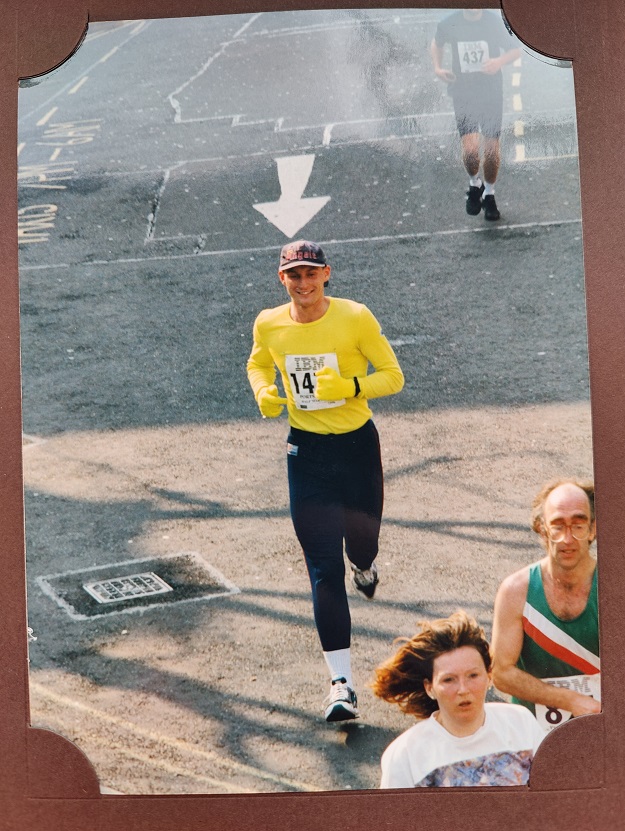
This year was apparently the 39th running of the Bournemouth Bay runs. I did my first in 1996 but it was almost a decade before I got back to it. My sporting time back then was dominated by playing and coaching volleyball; as well as going to circuit training and just about any other sport that I could find to fill my time with.

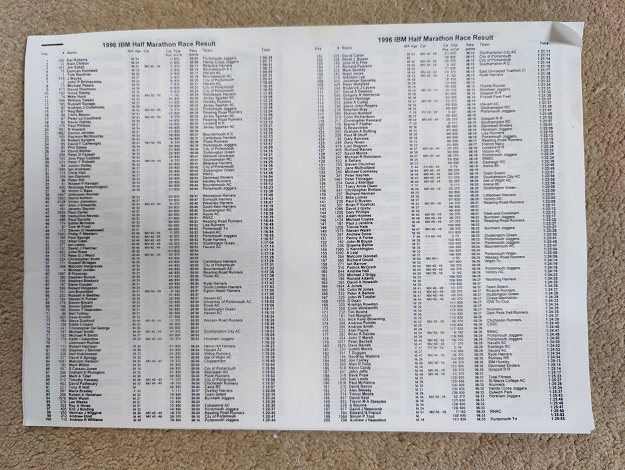
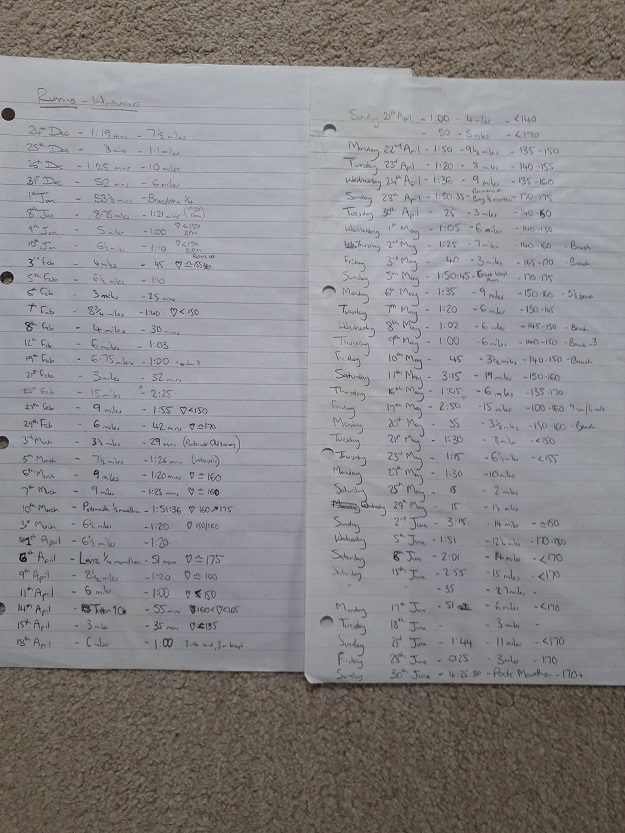
In 1996, like the majority of runners in yesterday’s race, I did a couple of months’ worth of basic training registering 10-20 miles per week at most in my preparation. I’d run my first half marathon at Portsmouth a month before and, in the lead-up to that, my only training aim was to do the distance in training albeit at a slow pace. I recall running on the February 29 (leap year) from Bournemouth pier to Boscombe pier and back (I reckoned it was 3-miles – not bad given it’s actually 2.85!). Then from Bournemouth pier to Shore Road and back (6-miles estimate, actually 5.6) and then another run to and from Boscombe pier to take it out to twelve miles which with a bit of distance to and from the car parked up on the East Cliff gave me confidence I would manage the distance. Then I went to Poole Sports Centre and played a volleyball match. That’s how I rolled in those days, cram in as much sport and activity as possible. No thought or understanding for recovery or the impact of doing too much.

I didn’t worry about how fast I was running, it was all about completing it. It was a time when my legs were big and strong from all the volleyball jumping and on race day I felt I couldn’t run any faster. I now I understand I simply didn’t have the aerobic training required for a fast half marathon and that reflects in my average heart-rate being in the 170s during the 1996 race. I distinctly recall running along, feeling comfortable, chatting to the chap near me and saying my heart-rate was at 177bpm and him replying “That sounds a bit high”. I’d tend to agree with him now!!

YearTime (HH:MM:SS)RankPace (min/mile)Avg. HR
19961:50:3510th8:26170-175
20051:54:46Slowest8:45
20061:49:559th8:23
     
20101:38:304th7:31
20121:31:08Fastest6:57160
20131:39:436th7:36159
20161:40:178th7:39157
20171:35:373rd7:18157
20181:39:547th7:37158
20191:39:345th7:35155
20221:33:432nd7:08153

By the time I ran in 2010, I’d given up the volleyball and while my legs were still big I was running more regularly yet rarely more than twenty miles per week. I’d run a 1hr16 ten mile race three weeks before and most of my lunchtime 6K training runs were all-out efforts with a long run on the weekend. That was a game changing race as I set off fast from the beginning where previously I’d always lagged back then enjoyed working my way through the field. When I ran 1hr38 I was somewhat elated to take over ten minutes off my previous best.

It was late 2011 when I started taking running seriously and building my aerobic base. So at this stage, I still had the strong legs and while I didn’t fully understand how to train, I was beginning to learn. It led to my fastest half marathon ever and two-plus minutes ahead of this year.

What strikes me about most of the intervening half marathons is they’re all grouped around the 1hr39 mark. This could be a coincidence but I don’t think so. I’m sure it’s some kind of indicator of my natural level when I’ve done some training but not too much. The halfs in 2013, 2016, 2018 were all coming back from injury during the month or so before.

The one recent outlier is 2017 (my 3rd fastest) when I had deliberately done lots of jogging in the two months preceding it (400+ miles) and less than fifteen total miles at race pace. The result was good but I paid for it in the following days with soreness lasting until Thursday. Even so when I’d recovered three weeks later, I found myself running a 2½-mile effort run at 6:30/mile – significantly faster than the 7min/mile pace I had been running it in the weeks before the half.

Comparing 2012 vs 2022

In 2012, the average heart-rate was 160bpm and I spent fifty-nine minutes above it, maxing at 170bpm! Compare that to yesterday where my max only touched 160 a couple of times. It’s clear my aerobic base is improving yet that isn’t the only part of the story even for a half marathon. I was able to run a faster half marathon in 2012 with a worse base but the faster speed wasn’t there. I’m fairly sure my legs didn’t have enough taper from all the training but had I done so, I might have been in record-breaking form.

The flipside to the heart-rates is when I look back at my early Bay runs, I didn’t have enough of an aerobic base to run these sort of times. The high heart-rates in the 170s demonstrate that. There’s some kind of balance to be found.

Mileage isn’t everything

Another point of interest when comparing my 2012 and 2022 runs are my training logs for the preceding weeks. In 2012, my average weekly mileage was 33½ – 39, 26, 30, 36, 39 and 32; which is about 50% less than what I did this year when I was averaging 50.

I seem to run much better off lower mileage – perhaps in part because it leaves less to recover from. In those days I would take at least one day – Friday – off each week; this year I’d been running every day for over two years until I rested the two days before the half marathon.

I’m increasingly conscious that while some bang on about doing high mileage – it is not the be-all and end-all of running success. And certainly not critical if all you’re interested in is a parkrun or 10K race. Get quick over the shorter distances and the mileage will naturally increase.


I‘m hopeful once my legs recover I will be in a position to surpass everything I did in 2012. Back then I spent the year running sub-20 every Saturday at parkrun and training hard to break nineteen minutes but it never quite happened until the end of the year – after I’d done a block of endurance training. I always knew endurance training was important but could never quite understand how, ten years on I do.

2022 Bournemouth Bay Half Marathon recap

The result of my half marathon wasn’t quite what I hoped for. I’d gone into it with very decent training runs – the highlight of which was a session of 3x two miles which had been at 6:27, 6:32, 6:37 pace and consequently left me believing I might have a chance of breaking 1hr30 (6:52/mile). But it wasn’t to be and the run felt hard from start to finish as I ran 1hr33:43.

At eight miles I was just hanging onto 6:52 pace but there were hills to come and I faded badly. Reaching the 9th and 10th miles my quads began to ache and seize up. I struggled up the overcliff incline at about 7:40/mile with the added demoralisation of being overtaken by other runners. The steep descent down to Boscombe pier at mile 12 had the quads screaming as I hit close to 5min/mile and then there was the final run to the finish, again with runners overtaking me and barely able to summon a sprint at the end.

Going backwards isn’t a pleasant feeling but this was my 4th fastest half marathon ever and the 2nd fastest on this course – so it wasn’t a complete mess. And the other point of rationalisation is that six months ago, the aim of winter training was to improve my endurance base and I’m sure I’ve done that. My average heart-rate for the run came in at 153bpm which is notably lower than many of my past runs.

What went wrong?

At the start-line, I positioned myself near the front but my legs just never felt like they had any decent push. Usually if you’ve tapered well, when you get to a race you have to hold yourself back to avoid going off too fast. That simply didn’t happen and when I looked at the GPS data, I never went any faster than 6:40/mile apart from with the assistance of downhills. The mile down Alum Chine came in at 6:22!

Compare this to the training runs when I was doing back-to-back miles in training at 6:27/mile and there was something missing. I believe it was down to leaving my taper too late. Or more precisely that I barely did one. I’d been running fifty miles per week and then the week before the race was forty-five miles and then I only ran seventeen miles in the days preceding the race. It’s possible I dropped off too sharply but I’m inclined to think my legs never quite perked back up from some of the great training runs I did. I never felt the bounce of fresh legs going up and down the stairs at home.

Realistically legs being under recovered has always been a problem with my training and races. I tend to be a hard worker as I want to get the most out of myself. A few years ago, I used to know I was on the edge because the legs were sore, I got grumpy and couldn’t wait for the taper to begin. But these days it’s much subtler and I’ve gradually scaled back my efforts to account for this. But I simply didn’t scale back early enough this year. I felt I was flying in training and my legs were always feeling great. But the bounce disappeared about two weeks out which is when I started scaling back and I hoped it would return. It didn’t. On reflection, I should simply have gone out and jogged those last two weeks until the legs perked up. Even a three week taper wouldn’t be out of the question.

Quads

I don’t recall my quads ever hurting this much during or after a race. It may well have done but I don’t recall it happening recently – usually it’s my hips that hurt. I like to think this is a sign of how my running form is changing from the form drills I’ve been doing since October. It was the outsides of my legs that hurt all the way up to the glutes and I believe this is a sign I’m getting good hip extension. If I’ve got that right my stride should be lengthening as I push off more powerfully.

While I didn’t get the result I was hoping for I did come out of winter training with my primary goal met – improve endurance. I’m now ready to get back to training for speed as I hope (and expect) to improve my 800m time this summer. First I need a week or so to let the legs fully recover and then I’m going to start looking at hill sprints and other short interval work as a way to pick up the speed.

Short sprint – Judging

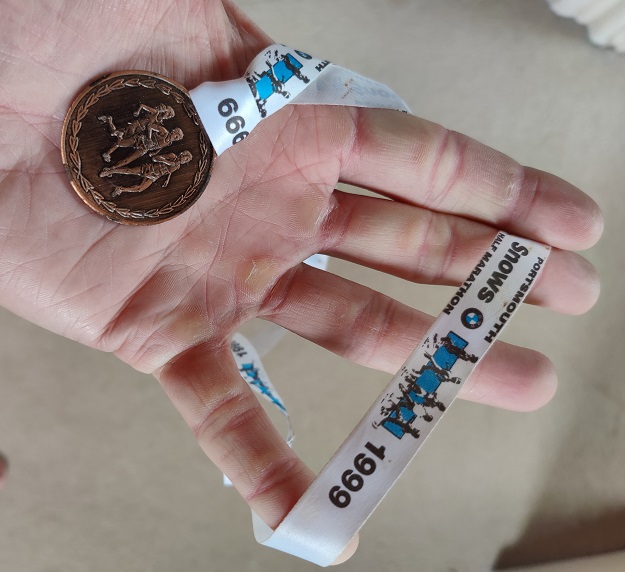
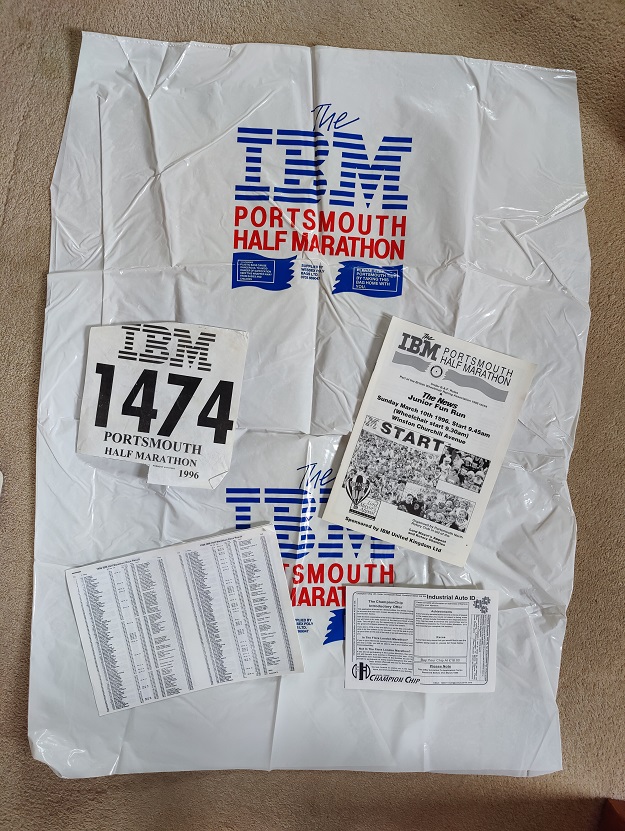
Half a lifetime ago I ran my first half marathon. I was still young, in my twenties, with a lot of growing up to do. I had many psychological issues that I hadn’t even begun to start unravelling. That day was a landmark in my life, firstly because it was the first half marathon I ever did and secondly because I had a psychological breakthrough while running it.

The route took me around Portsmouth and Southsea, near where the Great South Run is held these days. Somewhere around the 8-9 mile mark I noticed an older woman ahead of me. I estimated she was probably somewhere around fifty but she may have been forties or sixties for all I knew; when you’re young anybody over thirty looks old and you’ve got no concept of age. However old she was, she was ahead of me. There were only ten to twenty metres between us and for the next couple of miles I set my mind to catching up with her. Except I couldn’t. I never got any closer but she never got further away. I just trailed round in her wake as the miles ticked by in the back streets of Southsea.

My anger and indignation at being beaten by this woman was summed in a question – “How can this old, weak woman be ahead of tall, fit, athletic twenty-something me?”. Her being ahead made no sense to how I conceived the world, my place in it or what is right and just.

Then I had the landmark thought.

“I don’t know anything about this woman. For all I know she may have been Olympic champion twenty years ago and been training hard throughout her life. She may be on the downside of her running career and have a pedigree that far outstrips my own.”

The more I thought about it, and this is the great thing about distance running – you’ve got plenty of time for thinking, the more I realised I knew nothing about who she was, where she’d been and therefore why she should, or shouldn’t, be ahead of me. Simply put, I had no justification for believing I should be faster other than my own arrogance and prejudices of what older people, maybe specifically women, are capable of. I was judging on appearances.

With that realisation about the darkness of my inner thinking, I stopped jumping to conclusions about other people. I started to withhold judgement until I knew more. That became my default mode, refuse to make a judgement until I know more about situations or expectations. Always ask more questions, find out more information and when pushed for a conclusion, include a caveat along the lines of “to the best of my knowledge at this time”!


Now this “Don’t judge a book by its cover” approach may seem a little sanctimonious but there was a hidden benefit that I began to see in the following months.

When I stopped judging other people, I stopped judging myself.

By doing that, I opened up new vistas for living. No longer was I tied to my ill-conceived, ready-formed judgements about who I was. Now instead I was free to change and evolve whenever new ideas and information became available. I could incorporate better ways of living and being, without jeopardising my self-image because I no longer had one set in stone.