Short sprint – Ordinary speed

In True Speed I wrote about the high speeds at which elite runners run their races; speeds which ordinary runners can barely hit in a sprint. Today we’re going to look at what ordinary speed looks like. Outside of an elite race, most runners are running somewhere between six and ten miles per hour. Even the guys and gals up the front winning the prizes in your local race aren’t running much faster than this. Sometimes it’s even true for elites too, when Gwen Jorgensen was winning her Olympic Gold for triathlon, her 10K was ‘only’ around 11mph, so there’s no shame in not being super fast; only an attempt to better understand what’s going on.

Let’s begin with parkrun. In the table below I’ve listed the times between sixteen and thirty minutes as all but a few parkruns are run in that range. Of course quicker times are available, Andrew Baddeley holds the world record time of 13:48 while Lauren Reid ran 15:45 earlier this year to set a new women’s record.

Parkrun timeMphKm/hMin/mileMin/km
1611.718.85min093min12
1711.017.65min283min24
1810.416.75min473min36
199.815.86min073min48
209.315.06min264min00
218.914.36min454min12
228.513.67min044min24
238.113.07min234min36
247.812.57min434min48
257.512.08min025min00
267.211.58min225min12
276.911.18min415min24
286.710.79min005min36
296.410.39min195min48
306.210.09min396min00

If you want to train to get faster, it’s a useful table for understanding what speeds and paces you’ll need to be running. Once any initial burst of training sees your times levelling off, you have to start training smart.

You do intervals at paces a little quicker than you’re currently running while keeping the majority of your running at paces for a parkrun that’s 2½ – 3½ minutes slower. That’s 2½ minutes for the runners near sixteen and 3½ for those at thirty  If you’re currently running 22-mins at 7min/mile, you’ll want to be training no faster than the pace of a 25-min parkrun (three minutes slower). Even more of your training should be at the pace of a parkrun that’s five minutes slower than you’re currently running.


But we’re not only parkrunners so let’s have a look at what speeds we’re running for different race distances. The vast majority of runners are barely hitting 8mph in any of their races; most are even slower. The top end are the elite values to give you an idea of where there’s capacity for improvement.

4 mph5678910111213
parkrun46min3937min1931min0626min4023min2020min4518min4016min5815min3314min21
10K1hr331hr151hr0253min1946min3941min2937min1933min5631min0628min42
1/2M3hr162hr272hr111hr521hr381hr271hr191hr121hr061hr00
Marathon6hr335hr154hr223hr453hr162hr552hr372hr232hr112hr01

Of course reaching the highest speeds takes lots of dedicated training but certainly isn’t impossible if you understand what you need to do. Most people can run at 10mph (or 6min/mile pace) if only for twenty or thirty metres. If you can do this, then it’s probable with good endurance training you can improve to run times you wouldn’t have considered possible.

Most runners I see are good at unlocking their natural talent but then spend their training time reinforcing it without notable improvement. They seem happy if they’re knocking a minute or two off their marathon after months of hard training. My 10K went from 48 minutes to sub-40 when I got my training right. My early half marathons all came in at 1hr50 but when I took up running seriously I got them closer to 1hr30. I still believe there is significant room for improvement in all my races when I’m done with 800m training. I won’t settle for less, will you?

Short sprint – “Run as fast as I can”

Recently the BBC ran an article on Emer McKee, who’s set a 5,000m world record for a twelve year old with a time of 16min40. She’s quoted as saying “Normally I’m just running as fast as I can and just waiting for it to be over,” which is pretty much how any all-out 5K or parkrun should feel.

Emer McKee – world record holder in the 5000m for 12-year-olds

Emer started at parkrun when she was nine and joined a local running club, Willowfield in East Belfast, and has been improving ever since, competing in a range of events from 60 metres up to parkrun but also including long jump and cross-country.

Three points I want to highlight from her story:

  1. As a member of a running club, she is getting decent structured coaching and sessions that enable her to make progress. Although the headline from the article implies she “runs as fast as she can” this refers to her races. It doesn’t necessarily apply to her training. Just going out and running the fastest you can every day in training will bring short term results but eventually you’ll see the gains stop.
  2. It’s taken her three years to reach this stage. She began running parkrun in 2017 and quickly made good progress twenty-nine minutes down to twenty-one by year end. Since then it has taken three years of training to build on that and get down to a sub-17 time.
  3. Being part of a club limits the amount of racing she does and gives time for training to develop. While she’s a regular parkrunner, unlike typical adult runners, the rest of her year is not spent entering 10Ks, half marathons and marathons. The club events she does are all completed within twenty minutes (usually significantly less) and therefore don’t require much recovery. By contrast, adults regularly enter distance races that require more recovery and therefore cut into their ability to train to improve.

The great thing about being twelve years old is she’s got her whole running career ahead of her. She turns up to her club and the coach has already decided what the session is and how it will help her (along with her clubmates) to improve. For the most part, her running priorities are defined by the club’s season.

The coaching of juniors is usually very good because the focus is on developing them, through a structured approach to training, for when they are adults. This approach is one I try to replicate for adults attending my Big Red Running sessions. Sessions build on previous weeks to enable progress in the long-term. If you would like to come to my session then please do. Check the homepage for details and if you have any questions by all means contact me for further info.

Short sprint – True Speed

In Being Fast, I talked about the vagaries of language and mentioned some of the speeds elite runners run at. I thought it would be useful to look at the speed and paces for all the major world records. It only becomes clear when you see these, how fast the best in world are running, and begin to realise how much the rest of us neglect speed.

MenPerf. Mi/hKm/h Per milePer km Athlete
Top speed  27.844.7 2min101min21 Usain Bolt
100 m9.58 23.437.6 2min341min36 Usain Bolt
200 m19.19 23.337.5 2min341min36 Usain Bolt
400 m43.03 20.833.5 2min531min48 Wayde van Niekerk
800 m1:40.9 17.728.5 3min222min06 David Rudisha
1000 m2:12.0 17.027.3 3min322min12 Noah Ngeny
1500 m3:26.0 16.326.2 3min412min17 Hicham El Guerrouj
Mile3:43.1 16.126.0 3min432min19 Hicham El Guerrouj
3000 m7:20.7 15.224.5 3min562min27 Daniel Komen
5000 m12:35 14.823.8 4min032min31 Joshua Cheptegei
10,000 m26:11 14.222.9 4min132min37 Joshua Cheptegei
Half marathon57:32 13.722.0 4min232min44 Kibiwott Kandie
Marathon1:59:40 13.121.2 4min342min50 Eliud Kipchoge
100 km6:09:14 10.116.2 5min573min42 Nao Kazami
Women   
100 m10.49 21.334.3 2min491min45 Florence Griffith Joyner
200 m21.34 21.033.7 2min521min47 Florence Griffith Joyner
400 m47.6 18.830.3 3min121min59 Marita Koch
800 m1:53.3 15.825.4 3min482min22 Jarmila Kratochvílová
1000 m2:29.0 15.024.2 4min002min29 Svetlana Masterkova
1500 m3:50.1 14.623.5 4min072min34 Genzebe Dibaba
Mile4:12.3 14.323.0 4min122min37 Sifan Hassan
3000 m8:06.1 13.822.2 4min212min42 Wang Junxia
5000 m14:06 13.221.3 4min332min49 Letesenbet Gidey
10,000 m29:17 12.720.5 4min432min56 Almaz Ayana
Half marathon1:04:31 12.219.6 4min553min03 Ababel Yeshaneh
Marathon2:14:04 11.718.9 5min073min11 Brigid Kosgei
100 km6:33:11 9.515.3 6min203min56 Tomoe Abe
World record times for the major distance events (correct at 26-Apr-2021)

When you compare the men’s and women’s records side by side you see there’s consistently a difference of around 11-12% between them. This is believed to be down to the physical differences between the sexes, that men’s higher levels of testosterone allow them to have bigger muscles which in turn propel them quicker.

EventMen WRWomen WR% diff.
100 m9.5810.499.5
200 m19.1921.3411.2
400 m43.0347.610.6
800 m01:40.901:53.312.3
1000 m02:12.002:29.012.9
1500 m03:26.003:50.111.7
Mile03:43.104:12.313.1
3000 m07:20.708:06.110.3
5000 m12:35.414:06.612.1
10,000 m26:11.029:17.411.9
Half marathon57:32.01:04:3112.1
Marathon1:59:402:14:0412.0
100 km06:09:1406:33:116.5

The two most notable anomalies are at the ends of the spectrum. Florence Griffith-Joyner’s 100m world record was set in 1988 but the video evidence shows there was a strong wind that day, yet the wind gauge recorded 0.0m/s assistance. It’s thought to be a faulty gauge. If, however, you add 11% to Usain Bolt’s 9.58s then then the women’s time should be 9.63s which is close to the 10.61s FloJo recorded the next day and the 10.62s she recorded in winning Olympic gold two months later.

At the other end there is the 100km where the difference is 6.5%. At this distance, the best runners are genetically determined towards endurance and lack the fast-twitch muscle necessary for top speed. Their slow-twitch muscle is naturally resilient and the testosterone difference between the sexes is much less of a factor.

Some of the outliers between men’s and women’s records are down to lack of drug-testing or detectability when the records were set, how often the distances are raced and over the past year we’ve seen distance records being broken with championships cancelled due to Covid and runners taking advantage of energy-efficient shoes.


I’ll return to the point I was trying to make in the Being Fast article, most runners don’t have true speed and that’s because they often fail to train for it. It’s not the only requirement for being a distance runner but it is an important part of it.

My coached sessions are focused on getting you quicker while building the endurance to support it. Everybody’s welcome. In the meantime, enjoy the following video of runners trying to keep pace with Eliud Kipchoge’s sub-2hr marathon pace.

Short sprint – “Being fast”

I find the limitations of language frustrating. I often meet runners who say they want to “be fast” but that’s not exactly what they want. They might currently be running a twenty-five minute parkrun and think “being fast” is running twenty-three minutes. Other times when they drop back to twenty-six minutes they say they’re “losing their speed”. But “speed” and “fast”, even “slow” are all relative terms.

Currently I’m reading Chris MacDougall’s latest book, “Running with Sherman” where he talks about his experiences living in Amish country while training a donkey for an ultra race. In one chapter he details running on the Full Moon with the Amish people deciding to only do five miles as they’re running under starry skies without lighting. Meanwhile Ame, one of the first Amish runners, runs the ten mile run “fast” arriving back shortly after MacDougall has finished. That sounds incredible but then MacDougall mentions Ame can run a 2hr54 marathon which suggests he’s running ten miles in about an hour in which case MacDougall must be plodding along at something like ten minutes per mile. Neither of those paces sounds as fast as they come across in his description.

In his more famous book “Born to Run” he writes about how a group of Tarahumara Indians from Mexico competed in the Leadville 100 (mile ultramarathon) easily beating the rest of the field because they capable of running big distances at incredible paces. Except they were running one hundred miles in twenty hours so 12min/mile. While it is incredible to be able to cover that distance, it’s not incredibly fast which is the implication when you read it. Of course, as a writer, he’s trying to make his story appeal rather than go into the details whereas I’m always been interested in the details as much as the story. The danger of reading this vague language is you come away believing you can run incredibly fast at parkrun through ultra training.

The top sprinters in the world have genuine speed and are incredibly fast. Usain Bolt reaches a peak speed of over 27mph running the 100m, averaging 23mph. Meanwhile Eliud Kipchoge runs the marathon at 13mph which is half of Usain Bolt’s top speed. It’s also the equivalent of a fourteen minute parkrun. From there the rest of us are getting slower. Ten mph is scraping under nineteen minutes while that twenty-five minute parkrunner is barely running 7½ mph. When you get down to thirty minutes you’re barely running at a quarter of the speed, Usain Bolt averages.

The point here is not to rag on about people’s levels of ability, it’s about the use of language. Watch out when people say someone else is “fast”, or claim they’re “losing their speed”, are too “slow” or “not fast enough”. They could probably improve all those things easily with a few sessions of sprinting but whether it would do their race times any good is debateable. Specific language like “running at 9min/mile pace” can ensure everybody is on the same page about expectations. From a coaching perspective being specific provides decent insight into what needs to be done to improve.

Short sprint – No-one’s racing anymore

A few years back, I was going through the preliminaries of ascertaining whether I would be the right coach for a potential client. One of his questions to me was whether I could help him with racing. My reply was that it was something I had no experience of, but fortunately despite this, he still went ahead and took me on as his coach.

It later transpired we’d had different definitions of racing. He’d wanted to know if I could help with what to do on the day of his mass participation marathon race (which I absolutely could) whereas I’d been defining racing as what happens when you’re trying to finish ahead of your fellow competitors. For most people, when they talk about attending a race they’re really talking about a time trial – how quick can they run the distance?

Parkrun is not a race. For starters its insurance doesn’t cover it which is one reason why there are no race numbers or race clocks. Parkrun doesn’t even have a winner, it has a First Finisher, although when I first attended it did, until the nomenclature changed. If you look back to its beginnings, parkrun started as Bushy Park Time Trial then, as other events opened, it became UK Time Trials before rebranding as the friendlier sounding parkrun.

Running doesn’t have any true time trial events like say, cycling where riders go off at intervals of a minute or more and the winner is the one covering the distance in the quickest time. Admittedly when I orienteered it was done against the clock with runners having their own start times. This is a logistical necessity to ensure they don’t all reach the check points at the same time and have to wait to punch their card. But orienteering isn’t a pure running sport, it’s also a test of your ability to navigate, runners go off at intervals to avoid being able to follow someone else.

Typically elite runners do time trials to find out what form they’re in. When it comes to races the goal is simply to finish ahead of the person behind you. Often championship medals are won in times slower than heats especially at longer distances.

Of course there are some (many?) who turn up to parkrun and think they’re racing against others but true racing is a tactical art. It’s about letting your opponents take the breeze, it’s about knowing your strengths, their weaknesses and how to gain an advantage. It’s knowing when to go with the pack and when to let leaders go it alone hoping they’ll burn themselves out. This is the tactical stuff I’ve not got any experience of because I’ve never been good enough to need to learn it. I understand some basic theories as I’ve outlined but I’ve never experienced them. Like almost everybody else, I just run as fast as possible trying to get the best time I can.

Short Sprint – Beginner’s mind

Beginner’s mind is a Zen concept about approaching situations with a non-judgemental, open-minded attitude. There’s a couple of stories which begin to explain it and both involve cups of tea!

In the first teaching, a university professor who has been studying Zen teachings goes to see the Master. On arrival, he states he wishes to learn about Zen and begins to tell the Master all that he already knows. The Master listens and, after a while, suggests they drink tea.

While the professor talks, the Master begins to pour. The cup begins to fill with tea and the Master continues to pour. The professor continues to explain what he has learned about Zen and soon the cup is nearly full. The Master continues to pour as the professor continues on. The tea reaches the brim of the cup and then begins to overflow. The professor’s voice falters as the Master continues to pour and the tea spills out of the saucer onto the table. The professor stops, thinking perhaps his explanations have distracted the Master, but the pouring continues. As the tea runs off the table onto the floor, the professor is unable to stand it any longer and says “Stop, stop, can you not see the cup is full and no more will go in?”

The Master stops, looks up and replies “Like the cup, your mind is already full of what you know and there is no room left until you empty it of your ideas and preconceptions.

What I often see among my running friends is a propensity to struggle because they have become set in their routines. Often when they return from a running break they restart with a schedule that is not much smaller than when they stopped. Or if they’re struggling to make progress, they make only small changes to the training in the hope it will create some kind of large change. Or the same injury flairs up repeatedly. All of it is not that far off Einstein’s “Insanity is doing the same thing over and over again and expecting different results”. None of them seem able to take stock of the fact that what they’re doing isn’t working for them and go back to humble beginnings to build from the ground up.


In the second Zen teaching there is more tea to be drunk. Or rather, more tea to be poured into four different cups.

  • The first cup is upside down. When the teacher attempts to pour tea, it cannot, of course, go in the cup but instead splashes off the upturned china. This is like the student who is so blocked they cannot receive any wisdom.
  • The second cup is the right way up but has a hole in its base. When the tea is poured in, it immediately drains away. This is the student who says they want to learn, who listens to advice but then walks away but doesn’t implement or think any further on it. The advice has gone in one ear, out the other.
  • The third cup is normal but it contains a fine layer of dirt. When the tea is poured in it becomes muddy and undrinkable. This is the student who is already full of thoughts and ideas – the one who lacks beginner’s mind. They’re not receptive to new ideas, but only willing to listen to those which confirms their own preconceived beliefs and ideas.
  • The fourth cup represents the perfect student. It is clean, there are no cracks or holes and it is the right way up. When tea is poured in, it is retained and perfect to drink.

While experienced runners are not new students coming to a teacher to learn how to run; when they are struggling the situation they find themselves in is unfamiliar. If it were familiar, they would know how to run themselves to fitness and there would be no struggle.

Unbeknownst to them they are students approaching the master. They need to open their eyes and take stock of their situation. They need to consider all options before taking action, not just the ones they’ve become accustomed to. Just like the clean, upturned, perfectly formed cup they need an openness to learning anew and to rebuild using methods they may have forgotten from when they were younger or beginners.


Every day of your life is the first day of the rest of your life. The universe is gradual decay and entropy. You have to keep looking at it with fresh eyes and beginner’s mind to remain ahead of it.


(While these stories are often told by Zen practitioners, I have relied on Dr Joseph Parent’s versions in “Zen Golf”)

Short Sprint – Three max

Simple rule: never run hard more than three times per week. Use the rest of the week for easy running and do it often to offset the effects of the hard runs. You might be able to do a fourth hard run once in a while, or if you’re still young and full of growth hormones and getting quick recovery, but as a rule, three is the maximum.

But what do I mean by “running hard”? Obviously if you go to parkrun or a race, that’s running hard. If you do an interval or speedwork session, that’s running hard. If you do some kind of tempo or marathon pace workout that’s running hard. Anything that gets you breathing hard or sweating counts as running hard. Introducing a new type of session, e.g. a long run, counts as running hard because your body isn’t accustomed to the work involved. It’ll need time to recover from that.

When Paula Radclifffe was at the peak of her marathon training she worked to a nine day cycle with one workout every three days. It’s the workouts that get you faster but you need the recovery days to allow the body to rebuild. Slot in too many hard sessions in place of easy runs and you’re making it hard for the body to adapt.

Often though, what runners think of as easy sessions actually count as ‘running hard’. If you arrive home sweating, or your breathing is raised, or don’t feel like you could do it again, then it’s probable you’ve been running hard. It’s always better to err on the side of caution and run what feels like ‘too easy’. Generally the only runners who undertrain are those who don’t train regularly.

So that’s my simple rule – maximum of three workouts each week with the rest of the week spent recovering and building a base. By all means don’t even do three each week, Paula didn’t. I’ve seen myself and other runners make decent progress off just one hard run per week. But start to understand that a hard session is anything that’s more than “too easy” and start limiting yourself.

Short Sprint – Listen very carefully, I shall write this only once

My Sundays orienteering were spent with my best friend, Malcolm. On a couple of occasions our friend Steve joined us but it didn’t last, I suspect Malcolm’s parents didn’t want the responsibility of all three of us. I was enough to handle as the add-on and Steve had kind of self-invited himself so he got the boot. One thing I recall is him pointing out how noisily I ran, I think his words were “sounds like a baby elephant” and in fairness he wasn’t wrong about it.

I’ve never been a quiet runner. Sometimes I’m aware of this more than at others. I noticed it on my Sunday long run a few months back as I ran up into Broadstone Broadway and my feet were slapping so loudly on the pavement that an old woman looked round and commented that she’d been expecting a herd of runners to come through!

Another morning, as I was warming up on the way to my 800m speedwork session, I was hammering down the road closing in on a slower runner. She looked round well before I reached her, I assume because she heard the commotion, so as I passed I could only think to comment “Yes. I’m a noisy one, aren’t I?”


The problem with being a noisy runner isn’t so much being embarrassed by other’s opinions (although it can be); it’s that making a loud noise implies there is a big force going straight into the pavement rather than being used to propel you along. It’s said that a group of Kenyan runners will go past with a light tappity-tap sound. Of course it would be useful to be able to see this “noise as ground force” quantified in the lab but that’s the realm of university departments which few of us have access to.

After all these years of running I’d come to the conclusion that perhaps I’m simply a noisy runner, but it doesn’t necessarily mean I’m doing anything wrong. But then one Sunday morning my legs were relatively fresh and I noticed I wasn’t as noisy as normal. I thought about it for the first mile or so, noticing what happened on the first incline (stayed relatively quiet) before my attention shifted to rising breathing and heart-rates.

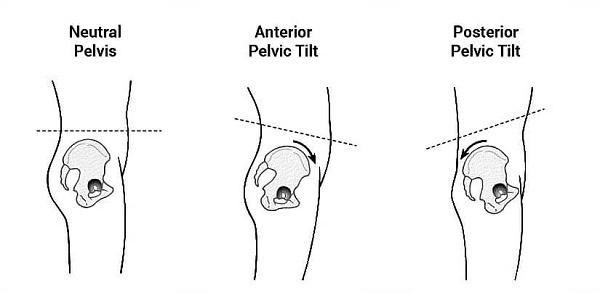
Three miles into the run I’d reached Gravel Hill and bumped into Mike and Nigel from Poole AC. Naturally I tried to look relaxed with good posture as we passed each other. But once past, with the road empty at that early hour, I noticed I’d become noisy again. I was on a downward stretch so I wondered if that could account for the difference, Realising I was stretching forward for each step, I experimented by tilting my pelvis back slightly and the noise disappeared. I returned to the lighter tappity-tap which I’d begun the run with. I also noticed that my left glute began to ache as it became more engaged.

I tried to maintain this feeling of pelvic tilt and glute engagement through the rest of the run. By the time I reached mile eight, I started to get a pain in my core muscles to the right of my belly button but it disappeared after a minute or two. I pushed through the rest of the run concentrating on my form.

Now I should point out that what worked for me is not an instruction for others. It may be useful but it depends on what they’re already doing. When I say that I tilted my pelvis back, it may be that it was already tilted too far forward (“posterior pelvic tilt”) and needed to be tilt to get more neutral. For another runner, making an adjustment from neutral would give them an undesirable anterior pelvic tilt.

The important thing to understand is I did two things which both revolve around awareness. Firstly I was listening to how noisy and slappy my feet had become so I played around with my pelvic tilt. Doing that I was then able to find a position which reduced the noise and where I could feel more engagement of my left glute. Using awareness in this way can be a great way to improve your running. It remains to be seen how this affects my running in the longterm but I’m hoping I can get the swiftness and lightness of a gazelle rather than the baby elephant!

Short Sprint – Limitations

I have always said running is about filling in the gaps, by which I mean, there’s usually something missing from your training, stopping you from running faster which needs to be addressed. After I first ran sub-20 at parkrun, I quickly zoomed on down towards nineteen minutes and, while I was flat out on the runs, I always walked away saying “there’s a lot more to come yet”. My legs felt strong and my breathing never felt top-end laborious, so I was super-confident that breaking nineteen minutes would be easy, and yet it took almost a year before it happened.

This came back to me earlier this week during an 800m training session. I did a twenty minute warm up then I ran a 600m as fast as I could. The previous week I’d run 600m in 2:07 in 20mph wind. I’d been gasping for breath after the first minute but managed to push myself on. This week the weather was better and I clocked 2:05. It never felt as difficult as it had been on the windy day yet I ran it as fast as I could. Some kind of limitation had built up. My legs were far from aching so they weren’t tired, my heart-rate was still below 170bpm and I was barely gasping for oxygen but something unknown was limiting me. What it was doesn’t really matter to this story.

I was happy enough with what I’d done as I was on target with that effort and the rest of the session. It was as I jogged to warm down I thought about this idea of how the limitation isn’t necessarily what you expect it to be. It would be easy, and I’m sure many runners do this, to believe that because I wasn’t gasping for breath throughout, the way forward is either to, do more repeats, do them faster, give myself less recovery or some such idea.

But what I began to learn all those years ago in my early days of parkrunning is that you have to find out what is limiting you and then fill in the gap. I didn’t have the understanding then to see where the issue lay. I can spot it quicker these days Sometimes it’s about building a bigger aerobic base, other times you need more lactate clearance, maybe to improve lactate tolerance, or simply to go out and build more speed. There are many things that could be limiting you and obviously if you don’t do much running then there are lots of gaps waiting to be filled in. But once you’re training regularly and frequently, working out exactly where a limitation lies is often the toughest part.