Things are coming together at last. I’m in the final two weeks of the plan and tapering towards a couple of 800m time trials in April to see whether the training has paid off. I already know it has and it’ll be good to see it quantified in my time trial, but that’s for next month’s update!!
Although I began following Jack Daniels’ 800m training plan at the start of December, I actually consider training started back on 21st September when I went back to a steady diet of gentle runs at ten minute mile pace, subsequently introducing strides and a faster session midweek.
So really this has been six months of consistent training. I wanted to write “hard work” but apart from putting in big efforts during the twice weekly workouts, and a difficult spell around the start of February when my body was struggling to adapt, compounded by atrocious weather, I don’t believe it’s been hard work. I’ve looked forward to the training, enjoyed it and it’s not felt like a burden at all.
I realised over this past month my body has begun to feel fit and strong again. I hadn’t appreciated a lack of regular fast running over the past 3-4 years has allowed muscles to weaken. That translated in my day-to-day living as minor aches or pains walking up the stairs, or pushing with my hands to get up off the sofa. Nothing drastic, just minor little things that most people put down to the effects of ageing. In some ways they are the effects of ageing but not irreversibly as those people would have you believe. The takeaway is if you stop using it, you lose it. I actually now feel as strong and fit as I did ten years ago, and would like to believe I’m as fit as I was in my twenties although I know that’s not quantifiably true. My running still isn’t as fast it was when I started parkrunning at forty but I can see it’s getting back there and I believe it’s going to surpass that because of what I’ve learned since then.
March’s training has been focusing on what Jack calls T- and FR- pace running which stand for Tempo and Fast Rep. After adjusting for the expected improvement in fitness, these have been mile repeats at 7:12/mile and short intervals (200-600m) at 5:38/mile respectively. To put this into perspective when I began in December the Fast Reps were 44½ secs per 200m, now they’re at 42secs. Training has been going well enough that I’ve been overcooking these with some coming in at sub-40! I even managed a 37.45s effort (5:01/mile).
One of the problems I faced for T-paced sessions is ideally needing somewhere flat where I could keep pace and effort consistent. In other years, I would have gone to the beach or Poole Park, but with lockdown ongoing, as well as the possibility of sand on the prom or people out for a walk; I decided to look closer to home. The roads right outside my front door are fairly flat and quiet, but I’ve always resisted doing intervals on them for no explicable reason other than I always think of warm-up as taking me away from home. Circumstances led me to conclude this would be the best place for the training. Maximising the area available to me, I created a loop measuring 900m which had no sharp turns and only minor ups and downs. On some sessions, it meant I ended up doing a good 10+ laps of the same roads which, I suspect many people would find boring, but I hardly noticed as I was focused on my breathing, pace and sometimes trying to reach the end without completely falling apart! This ‘track’ worked well apart from, where I run in the road my early morning sessions brought me into conflict with people driving off to work.
Around mid-month, my legs began to feel strong and, the walking up the stairs with ease I talked about, came into my awareness. I could tell a step change in my fitness was about to come through and when it arrived my easy running pace improved by 20 secs/mile. It felt wonderful and that improvement then fed into the next session of T-pace running coming in at sub-7 min/mile rather than 7:10. In turn it made the fastest intervals feel a lot easier although not necessarily faster!
I’m not going to do my usual breakdown of successful / failed repeats until next month’s post but my attention was drawn to a bizarre set of times on last week’s 200s. I run these back and forth along a road which I’ve come to realise, has slight undulations to it, and these result in one direction being marginally faster than the other. The four efforts in the slower direction were 41.66 / 41.66 / 42.20 / 41.66 secs. I’m sure you can see the bizarreness of the fastest three being exactly the same time to one-hundredth of a second, it simply cannot be a coincidence. And if I then tell you the first effort on the previous session was … yes, you’ve guessed it … 41.66secs; there’s some kind of limitation going on somewhere in all of this! I’m not sure what it is, my legs were fatigued that day but in the other direction I ran 41.77 / 40.05 / 39.33 / 37.45 secs so it was possible to go faster under the right conditions. Bizarre numbers aside, it’s been a good month’s training.
I’ve got two more workouts to do in April, then the time trials begin. I’m only intending to do two mid-month but this will be weather dependent. If I feel I’ve underperformed I may slot in a third. Analysing my training times, I’m hopeful I can break 2min40 but I’ll report back whatever the fruits of my harvest are!
My Sundays orienteering were spent with my best friend, Malcolm. On a couple of occasions our friend Steve joined us but it didn’t last, I suspect Malcolm’s parents didn’t want the responsibility of all three of us. I was enough to handle as the add-on and Steve had kind of self-invited himself so he got the boot. One thing I recall is him pointing out how noisily I ran, I think his words were “sounds like a baby elephant” and in fairness he wasn’t wrong about it.
I’ve never been a quiet runner. Sometimes I’m aware of this more than at others. I noticed it on my Sunday long run a few months back as I ran up into Broadstone Broadway and my feet were slapping so loudly on the pavement that an old woman looked round and commented that she’d been expecting a herd of runners to come through!
Another morning, as I was warming up on the way to my 800m speedwork session, I was hammering down the road closing in on a slower runner. She looked round well before I reached her, I assume because she heard the commotion, so as I passed I could only think to comment “Yes. I’m a noisy one, aren’t I?”
The problem with being a noisy runner isn’t so much being embarrassed by other’s opinions (although it can be); it’s that making a loud noise implies there is a big force going straight into the pavement rather than being used to propel you along. It’s said that a group of Kenyan runners will go past with a light tappity-tap sound. Of course it would be useful to be able to see this “noise as ground force” quantified in the lab but that’s the realm of university departments which few of us have access to.
After all these years of running I’d come to the conclusion that perhaps I’m simply a noisy runner, but it doesn’t necessarily mean I’m doing anything wrong. But then one Sunday morning my legs were relatively fresh and I noticed I wasn’t as noisy as normal. I thought about it for the first mile or so, noticing what happened on the first incline (stayed relatively quiet) before my attention shifted to rising breathing and heart-rates.
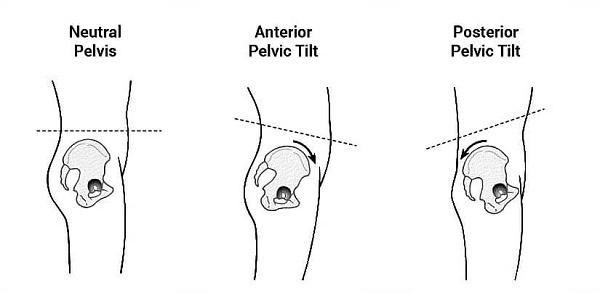
Three miles into the run I’d reached Gravel Hill and bumped into Mike and Nigel from Poole AC. Naturally I tried to look relaxed with good posture as we passed each other. But once past, with the road empty at that early hour, I noticed I’d become noisy again. I was on a downward stretch so I wondered if that could account for the difference, Realising I was stretching forward for each step, I experimented by tilting my pelvis back slightly and the noise disappeared. I returned to the lighter tappity-tap which I’d begun the run with. I also noticed that my left glute began to ache as it became more engaged.
I tried to maintain this feeling of pelvic tilt and glute engagement through the rest of the run. By the time I reached mile eight, I started to get a pain in my core muscles to the right of my belly button but it disappeared after a minute or two. I pushed through the rest of the run concentrating on my form.
Now I should point out that what worked for me is not an instruction for others. It may be useful but it depends on what they’re already doing. When I say that I tilted my pelvis back, it may be that it was already tilted too far forward (“posterior pelvic tilt”) and needed to be tilt to get more neutral. For another runner, making an adjustment from neutral would give them an undesirable anterior pelvic tilt.
The important thing to understand is I did two things which both revolve around awareness. Firstly I was listening to how noisy and slappy my feet had become so I played around with my pelvic tilt. Doing that I was then able to find a position which reduced the noise and where I could feel more engagement of my left glute. Using awareness in this way can be a great way to improve your running. It remains to be seen how this affects my running in the longterm but I’m hoping I can get the swiftness and lightness of a gazelle rather than the baby elephant!
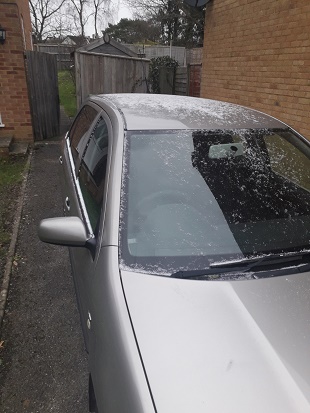
I’m a big believer you can train in all weathers. There’s only one thing that stops me and that’s ice, mainly because it’s too easy to get injured but anything else I’m willing to get out there. My resolve has been tested recently with a bitterly cold wind and driving rain alternating for what seems like the past month. But I suspect my body is trying to convince me to have a little break. I certainly don’t recall it being as tough this time last year.
I remember in the first winter after setting up Poole parkrun, I got in the car and its temperature gauge said -6C, or it may even have been -10. Whatever it was, by the time I arrived at the park it had risen to -2 degrees but with no wind it was a calm, still day. Not even a breeze. Wrapped up warm with thick leggings, long sleeve running top, t-shirt over it, plus obligatory hat and gloves it was a surprisingly pleasant morning run. The lack of wind chill made all the difference.
All layered up for a cold morning
At the other extreme I suffered heatstroke one summer. Or at least that’s my self-diagnosis of what happened. I’d planned a ten mile run at the beach on the prom – five miles out, five miles back. The outward leg went well but what I didn’t realise was the breeze on my back was pushing me along. It was intended as an easy-paced run and I found myself ticking along nicely at 7:45/mile but when I turned around the breeze hit me. I immediately began to find running harder. It was the height of summer so it shouldn’t have been a surprise but I’d done the same run the day before without incident. By seven miles I was slowing to nine minute miles and stopped to stand in the shade of a beach hut. Hands on knees, head down, not feeling great and my heart-rate only recovered to 115bpm – a good thirty or forty beats higher than I’d expect. I tried running the eighth mile and could barely struggle along at ten minute mile pace so eventually decided it would be safest walking the last two miles back to the car.
I’ve run in heat before without issue but the temperature registered as 26C which is higher than I’m used to. Normally I avoid running in the heat of the day, I either go early morning or in the evening. There’s no point running at the beach on a sunny day, I’ve tried it and you encounter walkers, the pushchair mafia three or four abreast, dogs on leads, as well as other exercisers running, cycling or roller-blading. It’s too crowded to have an enjoyable session and impossible to do a workout on target.
Running in snow is fine when you’re the first one out there. Sound is dampened, all is quiet and it feels fantastic. But Poole has its own microclimate so snow is a rare thing. In a lifetime of living here I can remember decent snowfalls in only six or seven winters. Most times it’s melted away within a day. I don’t think I saw a decent snowfall from 1993 to 2008; it’s that rare around here. This year the news outlets warned of the second coming of the Beast from the East hitting large parts of the country – the picture below shows the snowfall that hit us. So my snow running experience is limited and certainly never been tried in knee deep drifts.
Typical Bournemouth snowfall!
We did have two days of snowfall in March 2018 although it was barely a foot deep. The first morning was a Saturday so I ran to Poole parkrun and was highly disappointed to find it was called off even though there’d been no notice on the website when I checked at 8am. The great thing about the first day of snow is everything shuts down and no-one else goes out other than to sled, build snowmen or throw snowballs. The fresh snow is easy to run on and the council is good at getting the main roads gritted and cleared. Without traffic, the roads become the perfect track for running on. But the good times rarely last and by the second evening of our snowfall, everything was melting, turning slushy and the pavements packing down, turning to ice. Unfortunately I came a cropper only a few hundred metres from home after running five miles in the morning and five in the evening. I lost my footing and went straight down spread-eagled. I believe that may have been the cause of a groin injury that came on over the next month but I’m not sure as I was running big mileage during that period.
Rain is never fun to run in unless it’s warm rain on a hot summer’s day but that’s pretty rare. Most rain really isn’t that bad to run in. If you look out the window and it’s absolutely pelting down, just wait and it eases off within ten minutes. When it’s not pelting down, it looks worse than the reality of being out in it. Often I’ve looked out pessimistically at a rainy day before stepping out of the backdoor to find it’s not torrid at all.
A few years ago the big man-up phrase was “Skin is waterproof”, but my logic is slightly different – you’re going to get sweaty and shower when you get home so getting wet first doesn’t make much difference. Some like to wrap up with layers and rain jackets to keep from getting too wet. I take the opposite approach – the less wet kit there is clinging and weighing me down, the more enjoyable it stays. It’s easy for wet kit to become cold, uncomfortable kit. On arriving home a pair of shorts and a t-shirt can be thrown on the radiator, and it doesn’t take long to towel off dry.
I remember getting stoned one lunchtime along Baiter Park. I’d started off in bright sunshine in Poole Park but as I came round onto Whitecliff Park ominous black clouds were forming and then the rain came. My biggest concern was getting caught by lightning as I’d have nowhere to hide. But while it never struck, hail did. It only lasted five minutes but it was painful. Stinging with every hit, the wind blowing me back and the rain soaking me through. I found myself running bent over, head turned down to protect my eyes from getting haildashed. It was an occasion when I considered quitting the run but some part of me wouldn’t quit. Anyway what was I going to do? I’d still have had to get back to the car, so I might as well run back. Then just like that, the hail stopped, the rain ended and the clouds parted so I was back to blue skies and sunshine.
Windy days are my least enjoyable. At 6’2” with equivalent reach I bear the brunt of a headwind in a way smaller people will never understand. There’s too much surface area creating drag which in turn slows the pace to a crawl. But it’s the wind on cold days where the wind chill ramps up that have begun to do for me. Leaving the house with leggings, long sleeve top, gloves, hat, even a buff to try and cover up every piece of skin I’m like an Arctic explorer fearing frostbite if any part is left exposed. Captain Oates springs to mind on these days “I am just going outside and may be some time.”
I suffer with cold hands and feet, always have. I’ve even run with two pairs of gloves in the past and had my hands go numb. Feet going numb is something weird I’ve experienced on a few occasions, it’s very disconcerting not being able to feel how your foot is striking the ground. Generally I warm up once the blood gets pumping but if I forget gloves I’m in trouble. One September, I misjudged an unseasonably cold morning. An hour into my long run I’d lost half the feeling in my right hand. Two fingers, a thumb and most of the palm were numb. Returning home I could barely hold the door key and certainly didn’t have the dexterity to unlock it. I had to employ a two-handed, childlike manoeuvre with my palms pressed either side of the key to create enough pressure to turn it. Having gone through the pain of hands getting cold, I then had to endure the pain of them warming back up, tingling as the blood flowed into the constricted veins.
I recently ran at the beach during the cold spell. The wind was 20+ mph and the chill had it feeling like -4C. Sand was whipping across the prom, a danger of getting it in the eyes, and I only managed a mile before turning round. It was meant to be a recovery run so my legs weren’t at their best as it was. By the time I got back to the car, the tips of my fingers were numb, even in gloves, and the layers of clothing weren’t enough to stop me shivering sat back in the car. It reminded me of the Saturday morning two days before my run streak reached a year when it was a howling storm and pitch dark. So close to the goal I had to run but went out in shorts, t-shirt and no gloves; arriving home I was chilled to the bone. I stripped off my wet clothes, put on my dressing gown and went back to bed where it took over half an hour to warm back up.
I never used to be a big reader of weather forecasts. After all if you’ve planned to do something, you can’t control the weather, just get out there and do it. However in recent times, I’ve begun to look at what the weather will be like during the day to see if there’s a best time to run. Should I get out early at 10am, wait until midday or even the evening? Is the wind picking up or dying down as the day goes on, are the chances of rain increasing or decreasing? What is never in question is whether I’ll do a session. I don’t look at the weather forecast and use it to talk myself out of running. I only look at it to see when the best time to run might be. That’s been more applicable with pandemic lockdowns, but once we return to normal and life regains its own schedule the runs will have to be slotted in wherever the rest of life dictates. It’s just a case of making sure I wear the right kit for the conditions.
What a block of training this has been! You’ll recall from my previous update that I’ve been following an 800m plan written by Jack Daniels and in his notes he said this phase would be the most demanding. He didn’t lie. In the previous update, most of my workouts were short intervals at paces between 5:30 – 6:30/mile to get the legs used to running faster. The rest of my week was easy running to recover. It never felt too bad as my legs have always liked faster running and coped very well with it.
What I hadn’t appreciated about my fitness was … the huge gap in it. Before starting this training I did three months of easy running where the majority of it was 8-10 min/mile. My long runs for example were averaging 8:30/mile in November. Along the way I clocked a few miles close to 7:30 (but only a few) and this is where the gap opened up. I had nothing to connect me between those autumn runs, at 7:30 or slower, to the 800m speedwork at 6:30 or quicker. Bridging the gap is what this phase aimed to do as you’ll see when I explain JackD’s T-pace and I-paced running.
To begin the recap let’s rewind to mid-January and the start of this phase. The first thing was to up the paces to account for (hopefully) improved fitness coming off of the previous block of training. This meant where I’d been running 200s at 48secs they were now expected to be run in 47 secs. Faster 200m repetitions quickened up from 44 to 43s and the other short interval distances were all increased using equivalent paces to these.
The sessions focused on what JackD terms I-pace training which are longer intervals at your predicted 5K pace. These began at three mins (where I managed 700 metres) and incrementally stretched out to five minutes (1,200m). I like what he says on p.108 of his 3rd edition book about how this “adds an aerobic stress but not any faster running speeds, which would be an additional new stress for the body to deal with.” i.e. you only add one stress, not two. My I-pace has been 6:50/mile (4:15/km).
The T-pace (Threshold) running should have been around 7:20/mile but I’ve found myself running them at 7:10-15 fairly comfortably. I think my recent years of endurance training probably made this easier to achieve than expected. There was also one 40-minute run at M-pace (Marathon) which I ran at 7:45/mile but could feel myself flagging in the last 5-10 minutes. Another gap filler.
There were still lots of 200s, 300s, 400s and 600s being run at fast paces but not the 100+ efforts of last time. Once again I’ve summarised it all in a table below and you can see, while the shorter efforts were generally successful, I struggled on the longer 400s and 600s. I think this is because my legs were often still recovering from the I- and T-paced sessions which totalled well over 45km.
Target time
On target
Missed
Efforts
Fastest
200m
47s
10
–
10
(2km)
38.44s
(5:10/mile)
43s
12
2
14
(2.8km)
300m
1min05
9
–
9
(2.7km)
59.77s
(5:21/mile)
400m
1min34
6
4
10
(4km)
1:24.9
(5:42/mile)
1min26
1
4
5
(2km)
500m
1min57
1
–
1
(0.5km)
1:53.54
(6:06/mile)
600m
2min23
4
6
10
(6km)
2:17.2
(6:08/mile)
I-Pace
6min50
33
1
34
(27.7km)
T-Pace
7min20
7
–
7
(11.2km)
M-Pace
7min45
4
1
5
(8km)
Total
87
18
105
(66.9km)
Stats for those who love them!
What’s been most interesting is Sundays have alternated between doing a Long Run one week, and a workout the next. By the time I’d run warm-up, efforts, jogged recoveries and warmed down home; the Sunday workouts were close to ten miles – not far off my standard 11-12 mile Long Run. Some of the midweek workouts have also been in the 8-10 mile range.
The first couple of weeks had their usual slump as the legs got used to the new regime. There were some aches and pains occurring especially in my left knee and right calf but these disappeared about three weeks in. My body began to feel comfortable with the training but I fatigued after a heavy fourth week. I found myself sleeping more and the fifth week of training was the toughest I’ve encountered so far. Thursday of week 5 was the workout where I physically couldn’t run fast enough on a set of fast 400m efforts missing target by 2-3 seconds. Fortunately in week 6, my legs perked up and I reaped the benefits of all the training so far. In the final workout I recorded my three fastest 200m times since I started – hurrah! Arriving home my Garmin promptly corrupted the workout so it wouldn’t upload. Fortunately I’d done a cursory review of the numbers in the kitchen. Frustrating but not the end of the world.
My overall mileage stayed about the same as previously and the six weeks resulted in 45 / 45 / 42 / 45 / 41 / 46 miles. These have been achieved with 6hr10 – 40 mins running each week depending on how my other commitments allow.
Weatherwise the training was a nightmare. As a golfer I’ve always found the end of January / start of February to be the worst conditions and I usually took a month off to stay warm at home. But, as a runner, you need to be getting out as often as possible so it’s a case of wrapping up warm, wearing the right gear. This year’s weather was rather diabolical – a combination of high winds, minus-figures temperatures, almost some snow, and two weeks of heavy rain. It seemed to dominate the forecast for every scheduled workout but there were one or two nice sunny days jumping out from nowhere to give surprise relief. Even so, when you’re struggling with fatigue, it’s not encouraging to go into a session knowing high winds will be suppressing your pace. But it’s already beginning to feel like “Spring is here” with mornings getting brighter and even birds tweeting!
The next six weeks focus on T-paced work which so far I’ve found fairly easy, but it includes fast repeats out to 600m which are going to need to be run in 2:06 – the fastest I’ve run so far is 2:13. I’m not looking forward to those but let’s see what happens ..
I noticed during the 2020 lockdown my speed and strength have been declining and, as I’m not getting any younger, I thought it would be good to try something different while I’ve still got the opportunity to maximise whatever talent is left.
I’ve been toying over the years with trying my hand at middle distance running – 800m or mile. Having always struggled at 10K and half marathons more than my training suggested I should, it’s been a slow realisation that maybe I’m built more towards middle-distance or even shorter. I met Iwan Thomas, the British 400m record holder at Eastleigh parkrun once, and noticed we’re of similar size and build at 6’2” and 13+ stone. (Obviously this isn’t to begin to suggest I could ever have challenged him). But I have all the hallmarks of being packed with speed-generating fast-twitch muscle – I build muscle easily, I sweat profusely, have high heart-rates when running at easy paces, start off too fast and love doing interval work. The only trouble is I was never fast at sprinting!
While I understand the principles behind training for 800m, I’ve never actually done it so I decided to use one of the plans from Jack Daniels’ Running Formula book. I wanted to get a sense of how he structures workouts and what volumes he uses. I’d been running forty miles per week through the autumn so went with the plan based on that mileage. I ran an 800m time trial on Dec 2nd to baseline where I was at and ran a lung-busting 2min58. Not great but a starting place.
The plan has been to run two workouts each week, on Tuesday and Thursday, and a long run on Sunday. While I’ve trained to the workouts scheduled, I’ve continued with a long run of 1hr30+ that I was doing through the autumn rather than Jack’s recommended one hour. He also recommends doing six to eight strides on two of the recovery days but again I haven’t done these. This is because I’ve found in the past it’s easy to develop my speed but, in doing so, I wipe out my endurance. I wanted to try and keep the aerobic side propped up with the long run. The six weeks of training I’ve done so far have resulted in 45 / 41 / 48 / 47 / 43 / 44 miles.
The first workout began with a total of 1,600m training (8x200m) progressing to 2,400 – 3,000m in most sessions with a peak of 3,200m. It’s been exclusively a mixture of 200m – 600m efforts with equal jog recoveries. I’m surprised at how low volume this is compared to what many runners do when training themselves.
Target time
On target
Missed
Efforts
Fastest
200m
48s
67
9
76
(15.2km)
40.6s
(5:27/mile)
300m
1min13
6
–
6
(1.8km)
1:05.79
(5:53/mile)
400m
1min37
26
1
27
(10.8km)
1:29.01
(5:58/mile)
600m
2min26
4
–
4
(2.4km)
2:13.87
(5:59/mile)
Total
103
10
113
(30.2km)
Some interval stats for those who love them!
The first few weeks created an overload and the pace of my Sunday and other runs went backwards. This was to be expected as it takes 10-14 days to recover from a new stimulus. I found myself sleeping 8-10 hours the night after big workouts and experiencing more muscular tightness than in the past. As my running form has (hopefully) improved, I’ve found myself landing more on the fore and midfoot and my calves have been taking more load. I’ve had a few aches and pains in random muscles – the inside of the right thigh, below the knee, my left glute but none of them lasted long and the slower, paced recovery days allowed them to heal. I’ve been stretching more to keep everything loose.
Once or twice, I looked at the upcoming session with dread – not because of whether it’ll hurt, but whether I can be on-target for some of the bigger efforts. That’s a real ego thing and something that isn’t good to get too judgemental about. Ultimately there was only one interval I missed by a big margin and that was in the first session of the 400s. It started on an uphill section and I took it too casual – so I learned from it. When I was younger, I’d have beaten myself up about it but now I see a missed target as feedback to whether I’m on track for training. If you start missing targets regularly then there you’re trying to do something you’re not ready for. But once I got into the training I rarely missed target and was more likely to run them too fast. The silly thing is while you can feel you’ve failed for running 48.2s and only marginally missing, you think nothing of it when you run 45 or 46s. Certainly that’s how I would have looked at it when I was younger. But with a wiser head on my shoulders, I tried to ensure efforts weren’t too fast either, there’s no use in adding extra stress when the plan is calculated to give you an optimum loading to recover from.
One of the side-effects of training with all these short intervals – especially the 200s – has been that it’s given me a chance to practice my running form, or rather to play around with it. I noticed I run faster with lower knee lift, that my left leg wasn’t straightening ‘out the back’ and my right hip was coming forward and therefore dragging the trail leg. I noticed over the past week that my left knee was tracking from side-to-side but the lower knee lift gave it more power to push down and straight through. All little things I could only figure out and experiment with by training at faster speeds than a jog. Jack Daniels says in his book that Repetition training is good for improving efficiency but I’d never experienced it to be true until this block of training.
Overall I’ve really enjoyed this training. I’ve been lucky with the weather. It was icy around New Year but I ran at lunchtime when it was warmer and lighter. Some of the sessions have been 15-20mph wind but nothing gale force. Getting out and running fast is fun even when it leads to heavy legs and gasping for breath. It leaves you feeling stronger and better able to cope with running on other days. The next phase of the plan is geared towards supporting this with longer intervals but run at a slightly, slower pace.
With 2020 now done and dusted, it’s an understatement to say it was a difficult year for everybody. From a running perspective, the lack of races, parkruns and even club sessions left many runners questioning why they run. Personally I run because I enjoy it, the races and parkruns are side attractions where I like to test my mettle. While my year started with a rebuild of my fitness, it ended with me having run every day, failing to get faster over 5K and heading in a new direction with 800m training.
The rebuild of fitness began after I suffered a four day illness in late November 2019. It was probably a standard winter flu virus although it’s tempting to claim it was an early version of Covid-19 but realistically the timing is wrong even though some of the symptoms, like loss of taste, were the same. Anyway whatever it was, this all took place the week before the Christchurch 10K and with my aerobic fitness wiped out, I struggled round to receive the annual reward of a Christmas pudding! After that I focused on the rebuild which I knew would take about six weeks and got out running every day. I attended Christmas Day parkrun at Poole with its record attendance of over 1,300 then went to visit friends and ran Rushmoor and Frimley Lodge parkruns on New Year’s Day. By February, the legs were perking up; I was running ten miles on a Sunday at a good clip and ready to up my training.
It was my intention to run Bournemouth Bay 1/2M at the start of April and take a few days rest going into it. But with the onset of Covid-19, I delayed my entry and we ended up entering lockdown in the last week of March. As leaving the house was limited, I continued to run every day and it was a fantastic time to be out running. The roads were traffic free, almost deserted and I remember running at 10am one morning barely seeing anyone for the first mile. It was eerie and quiet like a scene from “28 Days Later”, the 2002 film where the protagonist awakes from a coma to find London deserted. But then, if you’ve seen “28 Days Later”, you’ll know 2020 wasn’t far off a real life version of it.
By the end of March I’d been running for 115 days straight and there was no sign of stopping. I decided that with lockdown in place, no races in sight and uncertainty about when the world would be back to normal, this would be my chance to create the longest run streak of my lifetime. And I mean lifetime. All being well, I’ve got a few decades ahead but I always take rest days before and often after races. If I’m still running in my 70s and 80s, I’ll still be entering races. I don’t usually go more than three months without a race.
Streakwise I’d already surpassed my previous best of 76 days so the question was how long could this one go? I figured if I reached September I’d try to see out the whole of 2020. But that was still a long way off so I focused on now.
My standard running year is to build stamina in the winter then work on speed for 5K and 10K races in the summer. There weren’t going to be any of those coming up but I pressed on with the plan hoping, as we all did, that racing and parkrun would be back in a few months. I’d also noticed my vertical jump had dropped over the years. When I played basketball I was able to touch the ring and my jump was about 70cms, now it was 42cms at best and I felt little spring in my legs. This shouldn’t have been a surprise because I hadn’t done any dedicated running speedwork in over three years and it was over a decade since I’d been playing the sports that had built big thigh muscles for jumping. So while everybody else was following Joe Wicks’ classes on Youtube, I started my own fitness regime of hill sprints, skipping, side jumps, step-ups and depth jumps. I also started bounding, like a triple jumper, which was great fun and began to highlight some changes I needed to make to my running action.
I continued to run daily and began 5K training with a time trial at Poole Park benchmarking in at 22:05. I was twenty-five seconds slower than I’d been on New Year’s Day. My fastest kilometre had only been 4:14 and I found myself struggling to even hit 4:30 towards the end. But a benchmark is there to find out where you’re starting from and over the next six weeks I ran kilometre intervals twice per week and saw my speed pick up to reach a best time of 3:50. A second time trial at the beginning of July came in at 21:32. A 30+ second improvement isn’t to be sneezed at, but I’d also expected better from six weeks of training so there was something missing. What I didn’t immediately realise was that another rebuild was looming.
The day after the second time trial, it was obvious my body had switched over to speed mode rather than the endurance mode needed for distance running. I could feel it in my long runs where I felt like I was running fast, yet each week’s run came in within seconds of the previous weeks’. Nonetheless I thought I could train myself out of it with a more restrained approach to my interval work but I was wrong. By mid-August I had to admit defeat and think about another rebuild. There was another problem. I was struggling with many aches and pains in my ankles and feet, as well as my lower back. This is always a sign I’ve done too much fast running and need to do recovery work.
On top of all this I started a core stability programme in mid-August. I’d always thought my core was reasonably strong. Certainly whenever I planked against other people they’d struggle to hold it for as long as me and I could hold for 1-2 minutes. But I was wondering how on earth the guy who holds the record at over five hours for a plank could manage that. The longest I’d ever managed was three minutes which is a long way off. Researching I came across a statement that once you go over a minute there’s no benefit to planking for longer, and then I discovered the Big3 programme of Stuart McGill which he’d developed from working with spinal rehab patients.
I began doing the Big3 programme nightly but after a week it was too much, too soon so I backed off and let things settle down. A week later, after my Sunday long run, I bent down to untie my shoelace and felt an ache in my side that took two hours to subside. It wasn’t a bad pain just one that indicated I’d been working the core throughout my two hour run. I realised that while I may always have had a strong core, it had never been integrated into my running and was allowing me to twist and turn my shoulders and hips too much. I continued with the core stability and found an additional benefit was my golf swing became more connected.
Going into September the aches and pains in ankles and feet were becoming too much to bear. My streak was intact but I knew I wouldn’t get through four more months of daily running. I had to be honest with myself about this. It was tempting to think I could take it one day at a time but deep down I knew realistically it would be too many days. If this had been mid-November, with a month or so to go, it would have been different but not four months. I didn’t want to give up without trying to fix things before I took a rest day, so I made a deal with myself – I’d give it until October and if there was no respite from the pain by then, I’d end the streak.
Knowing the pains were a sign I was doing too much, I scaled back my daily one hour runs to forty minutes and shortened my Sunday long run to give less training to recover from. Over the first couple of weeks, the pain eased and I found myself sleeping up to nine hours each night. But despite running at over 9min/mile I returned from each run sweating. I knew from the sweat I was overcooked on the speed side. If I was to get out of this hole, I had to drop back and run even slower.
The week beginning September 21st, I dropped back to running at ten minutes per mile. The average pace of that week’s runs were 10:02/mile, 10:05, 9:48, 9:11, 9:27, 9:53, 9:25. It was a big step back when you consider my kilometre intervals had been easily faster than seven minute per mile. The following week wasn’t much faster but I was arriving home barely sweating and the aches and pains soon eased up. It was beginning to feel relaxing.
After three weeks I began to throw in a faster mid-week run at 8:30/mile and then a couple of strides into my Sunday long runs. By mid-November the midweek run was sub-8 pace and the aches and pains that had plagued me just a few months before were forgotten. Easing up the pace had allowed the muscles to recover, switch to building endurance and the pace to pick up. There was still a variance between the pace of all my runs – days of faster running needed to be followed by a day or two of slower but I was sleeping less and the general pace was improving. All the while I continued the core stability programme on Mondays and Thursdays and found my running form was transforming. Less rotation of the shoulders and hips, more glutes driving me forward.
Finally December of this difficult year rolled around. The streak was still on. I’d always had in mind to get to the 8th to achieve a year’s worth of running and that would then leave a few weeks to complete the whole calendar year. With the quiet of lockdown, I’d had time to think about my own running and why I’d struggled to run the sort of times that my training should have brought. Some years ago I half-joked that I would have been better suited to middle-distance running, or even the sprints, and now I decided to test this by trying my hand at 800-metre training.
To start off December I ran a 800m time trial in 2min58. Considering the world record is under 1min42, that’s a long way from being decent but considering I’d done no dedicated speedwork in years I figured this wasn’t terrible. The following week I began running two intervals sessions each week geared towards building speed over shorter distances. Now as we begin 2021, four weeks have been done and so far so good. My general runs are getting faster and I’m loving the interval work. I like the daily jogs but interval work has always been something I enjoyed much more than any distance run. Often what you enjoy doing is an indicator to what you’re best suited.
So that was the rollercoaster of my 2020 running. Three months spent rebuilding fitness. The following months working on strength and speed. Then back to rebuilding. The underlying positive has been one of a gradual improvement in running form through sprints, bounding and core stability work. I’ve wondered whether the need for the second rebuild was down to the revised form, the body discovering a need to rewrite all its motor programmes as lesser-used muscles began to take precedence over those that have turned out to be inefficient and overdeveloped. Could it be I’m like a beginner starting out and building up for the first time?
In the background there’s been the aim to complete a year of running every day. It never started off that way but became a goal as our circumstances change. The streak itself was never there to be a social media boast, it was a bucket list tick off so one day I’d be able to say I did it. But I also wanted to experience it and pass on what I learnt. While the early days of my streak never felt difficult, as the year wore on I began to feel jaded. Even when I reset things in September and lowered both the pace and volume of my running I began to lose my enjoyment of running. Completing the streak began to hang over me like a dark mist. With December’s nights drawing in, shorter days, colder and wetter weather I began to struggle to feel enthusiasm to get out on my runs. The introduction of 800m training added an extra stimulus to recover from and most likely contributed to that mood.
Yet as soon as I had streaked the year, the mist lifted and I felt happier in the knowledge that I didn’t haveto run if I didn’t want to. Where before I’d been thinking ahead, planning each day’s run with an eye on the run that followed, now I’m able to run in the moment. If I overdo things at any time, having a rest day is back on the table as an option. I realise run streaks are a good thing when they support your training but not when they stop you from listening to your body.
A year of running – 365 days with bonus Feb 29th for free
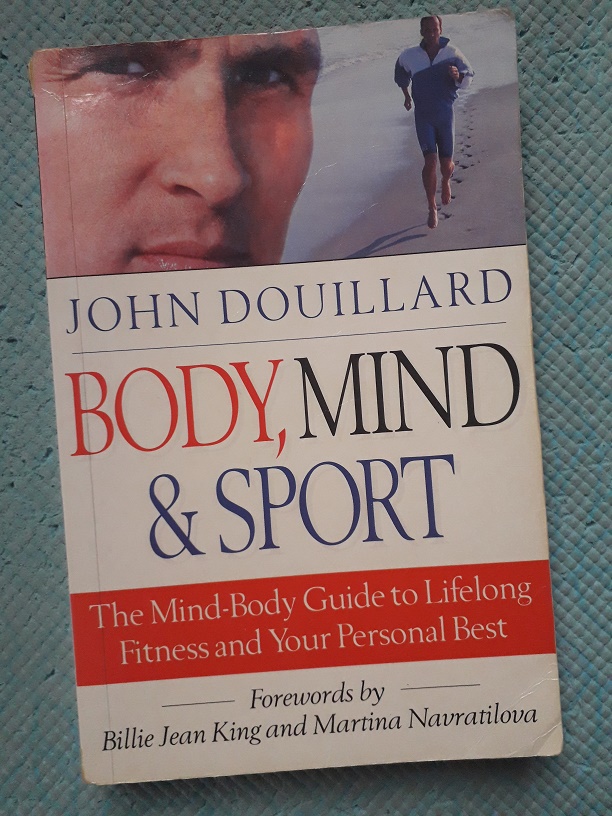
I realised on finishing the “How to Improve” series that I’ve spent the past twenty-five years trying to understand the principles of endurance. It was November 1995 when I bought a copy of John Douillard’s “Body, Mind and Sport” which made grandiose claims of being able to play sports effortlessly, run fast while barely getting out of breath and get ‘in the zone’ by retraining the body with nose-breathing and a heart-rate monitor. But it wasn’t purely a book about playing sports easily, it detailed a whole system for health based on your body-type and the ancient system of Ayurvedic medicine. The idea of getting ‘into the zone’ appealed because I wanted to settle my mind while playing volleyball and for a while I got strange glances from volleyball teammates as I warmed up with yoga Sun Salutes and nose-breathing.
I spent the following summer running half marathons as well as my first marathon, and in training used his method of nose-breathing and keeping my heart-rate low for some months. But all I did was tiptoe up and down the beach promenade at slow paces. The book had promised results of improvement in a matter of months with examples of Catherine Oxenberg running 8min/miles at 130HR after three months of retraining and Warren Wechsler running 6 min/miles averaging 124HR after 18-months of training. My reality is that even when I was capable of running sub-19 at parkrun, I’ve barely been quicker than nine minute miles at these heart-rates; I don’t have the physiology to allow me to do this easily. But back then it was a mystery to be solved and I was intrigued enough for many years afterwards to periodically return to the book’s wisdom and unsuccessfully try to get its methods to work for me. I didn’t realise it then, but this book was promoting the secrets of endurance training and the aerobic base.
John Douillard’s 1995 book
I had run before this. I’d run cross-country in PE lessons at school – I was terrible – I used to finish second to last, but I was also at the back of the sprints. I was the proverbial big slow kid. As a teenager I went orienteering with my friend Malcolm and his parents. The 5K courses took me 45-mins to complete albeit I was trying to navigate myself around difficult forest and moorland terrain. I dreaded the idea of running the longer courses that came with older age-groups and the thought of the 10Ks that the senior men ran terrified me. Eventually I stopped going when I got a job working Sundays at Broadstone sports centre, now The Junction, so the issue of going past 5K never reared its head.
But I always played sports and my bicycle was my main mode of transport so I had a reasonable level of fitness. Once I started fulltime work, I began to play sports with my colleagues and squash, basketball, 5-a-side football all gave me incidental running skills and fitness.
I entered my first 10K race in October 1992, ran 48 minutes and was into running for six months before shin splints were too painful to even walk across the beach. My training system was non-existent. Jump on the treadmill and run at 9.5mph for ten minutes gasping for breath. Run round the streets near home to complete a twenty-minute route as quickly as possible. No warmup, just hammer off down the road from the moment I started the stopwatch. Enter a 10K – train for it by going out and plodding the distance to make sure I could complete it. That was all there was. My highlight of those days was running 3 miles on the treadmill at its maximum speed of 10mph – 18min10 – it took the extra ten seconds to get up to full speed. I remember being awed by the fastest runners at work who could run 35-36 minutes for 10K. My 10K of 48-minutes put me two-thirds of the way down the results lists of races. Nothing about my life experience up to this point said I was any good at running. Even when I put some effort in, I finished in the lower half of the field far behind the best runners I knew, and far behind the winners.
Let’s break down the training for my early attempts to train for races. My training had three components – building speed, stamina-building runs and over-distance runs.
I built speed from playing sports which involved many shorts sprints. In a game of squash the court measures 9.75m from front to back, 6.4m across its width so you only take a maximum of five or six steps in one direction before pausing. Volleyball is movements of a few steps, but repeated powerful exertion when jumping to hit or block. The court where we played 5-a-side football and basketball was around twenty-five metres in length. That’s all I did lots of maximal paced sprints over short distances usually for 30 to 60 minutes at a time..
Stamina came from the runs of up to twenty minutes either on the treadmill (which was forcing the pace), or round the local streets where I’d start fast and hang on. These street runs also threw in hills and corners so it was never one-paced.
For over-distance runs, I jogged easily to ensure I could cover the race distance. My first block of running in 1992-93, I only entered 10Ks so I over-distanced to around eight miles. I remember getting from my standard four mile run up to eight was difficult. When I later did half marathons and even full marathons, it never felt as hard to increase the distance of runs past eight miles.
Even now when I analyse these, they’re effectively the three core types of training you get recommended to do. Although runners may talk about hill sessions or track speedwork they still fall into the first category of speed building. We might go out to do threshold or tempo runs but they categorise as stamina-building and finally long runs are categorised as over-distance runs. It’s very hard to discern what’s wrong with this training.
Yet I wasn’t able to go faster at any of my races. My 10K each came in around 48-mins while a quarter marathon (10.5K) came in at a similarly paced 50-mins. My half marathons came in 30-seconds either side of 1hr51. The most notable thing was breaking 1hr50 (1hr49min55) a couple of years later yet this is still in the same vicinity as the others. I always believed this would be as good as I got at running.
What I never tried to understand was why this wasn’t enough. I thought that to run fast, you had to train fast. That to get faster you had to keep going at top speed and hang on. It was only when I read Douillard that I began to learn there was a different way to train. But I tried it and it didn’t work for me because of how endurance is created. I continued to play other sports while trying to be a runner and those sports kept pushing down my endurance and taking me back to the speed that would be more appropriate to a sprinter. I now know it takes a couple of months for endurance to start showing up and even then you have to keep working at it and avoid overdoing the speed side too much. While my “train hard, play hard” mentality was great for playing team sports, it didn’t help my running.
I tried Douillard’s nose-breathing and low heart-rate method one more time in 2009 but again I found myself ambling along. Eventually I took off the shackles and began running regularly however I liked. Long distance running still wasn’t easy but I was getting out three to four times each week. I still had the stamina runs two or three times each week with 6K at lunchtime but – and this is the critical component – I no longer played team sports and thus did much less speed-building. Early in 2010, I ran a 10-mile race and surprised myself with a fast-finishing time of 1hr16. Three weeks later, I set a half marathon PB of 1hr38min30 – over ten minutes quicker than any I’d ever done before. Six months later I ran a 3hr41 marathon despite having missed a month of training due to a calf injury. I still hadn’t conquered endurance but I now realise less speed-building and more regular running were critical to the improvement.
The truth is, I still didn’t understand what endurance or aerobic bases were but I was running faster. When I got involved with parkrun and began running almost daily, it didn’t take much to see my times get even better. Sub-19 for parkrun, 41-mins for 10K, 1hr09 for 10-miles and 1hr31 for half-marathon in the first year. Eventually I began to see the low heart-rates Douillard had promised and my runs felt easy. But it took until 2017 for me to finally understand how to really create endurance and be running how Douillard had promised. The details are however, another story waiting to be told.
Halloween’s arrived and I find myself with a running streak stretching back into 2019. It was never my intention to run every day until we got hit by coronavirus when my plans to do Bournemouth Bay 1/2 marathon went out the window. Usually I’d have taken a rest day going into a race but of course there was no race so I kept on running. “To run every day of 2020” became my new challenge.




 Big Red Running