Another winter of gymwork comes to an end and I have to say I’ve really enjoyed it. And here’s the bonus – I feel physically really good from it. This year my deadlifting has gone through the roof and it feels like it’s made a massive difference to my running.
My rationale for joining the gym was established over the summer of 2024 when I’d exhausted my training options at home. I own a few bits of kit; weighted vests and dumb bells but at most I could only add 30kg to my bodyweight if I was doing squats or step-ups. If I wanted to get stronger I either needed to buy more weights or join a gym to use theirs. While the former may be cheaper in the long run (assuming you use it); the latter is better for not cluttering up your home as the gym will always have more weights and equipment than I can ever store.
I got a six month membership at the end of September 2024 to take me through the winter but set myself no specific targets. There were some questions at the back of my mind. Would I be able to bench press more than when I lifted weights at twenty years old? Would I be able to half squat the 130kg I could manage in my late thirties? The answer to the latter was a resounding “Yes” as I was doing 1/4 squats at 150kg within twelve weeks. Unfortunately the answer to the bench question was a disappointing “No” as I only managed a 75kg bench press and failed when I attempted 80kg. Across the six months I didn’t make much progress as I was able to do 70kg within a month of starting.
Training Goals
As someone who is usually striving to improve, I don’t feel a need to set goals other than for a direction to work in. As I’ve got older and my personality has become more rounded, I find there is an overlapping bunch of things I want to achieve and at the gym the main ones were:
- Recruit more muscle fibres as that is key to staving off the effects of ageing.
- Meanwhile don’t get heavier or put on body weight.
- Do deadlifts and squats to improve specific muscle fibre recruitment for running.
- Bench press to try and recapture old glory.
- Learn to do pull-ups because I’d like to be able to do them.
- Build a six pack stomach and bigger biceps for vanity purposes!
One day I bumped into Caroline, a lady from Human Resources where we both used to work. Despite my protestations that my goals weren’t SMART, she reckoned they are because what I’m doing is specific, its measurable, attainable, recorded and there is a timeframe involved – I wanted to get all this done before my membership expired and I headed back outdoors for the summer. Technically she’s right as I keep a record of each session and weights are easy to measure but my goals are what I’m calling hesitant goals – they end in ER – I want to be stronger, fitter and better than when I started. There’s not much specificity in what the actual targets are.
Ultimately though my goals are wrapped up in an overarching desire to be as healthy as reasonably possible. This is probably the most important thing for me; I’m not going to push my body to such extremes that it becomes unhealthy just to be able to lift an extra 10kg. Now in my mid-fifties I recognise some things are getting weaker or beginning to ail and I want to stave off that age-process as best I can.
Squats
Last year squats were my focus and I completed a 100kg deep squat before I left. This year on the advice of Alex, one of the powerlifters, I changed my form and this allowed me to get deeper. Unfortunately soon after this change my adductor tightened up on a run and made squatting heavy loads difficult, maybe even painful. Running wise it never affected me but I did have a similar injury back in 2012 which took three months to recover from and I couldn’t run. So I’m not sure whether it was running or weights or an interaction of them which caused the problem but it stopped me improving my squat from November to early February.
When I was able to squat again, I was only doing sets of 75kg but with smarter training managed to eke out a 100kg deep squat on my last session. It was touch and go whether I’d complete it whereas last year it went up easily and I could probably have added another 2.5 – 5kg. Nonetheless I felt pleased to match last year despite only doing three decent months of squatting and with better form.
Deadlifts
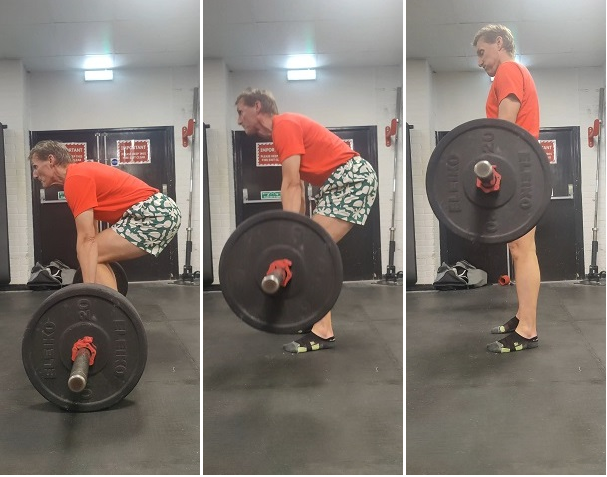
Where squats were problematic, deadlifts were a resounding success. I started at 80-90kg, the latter of which is bodyweight and on week three was just able to do 105kg but I felt like Quasimodo, the hunchback of Notre Dame, as my back was rounding and my grip was screaming out to drop the bar before it slipped out of my fingers.
Staying healthy is an overarching goal and the one thing I didn’t want to do is mess up my spine. A slipped disc or similar will never properly heal. For that reason, I backed off the heavy weight and built up from 90kg focusing on form and from there it was a straight line of improvement. Every session I seemed to add 2.5kg to the bar and complete 3 sets of 6 reps.
By Christmas I was at 122.5kg and while I had no particularly goals when I started, I had read a runner should be able to deadlift 3 sets of 8 at 1.5 – 1.8 times their bodyweight. That equates to 135 – 162kg for me and it seemed unthinkable that I wouldn’t be able to achieve this with so much success behind me and another three months to train.
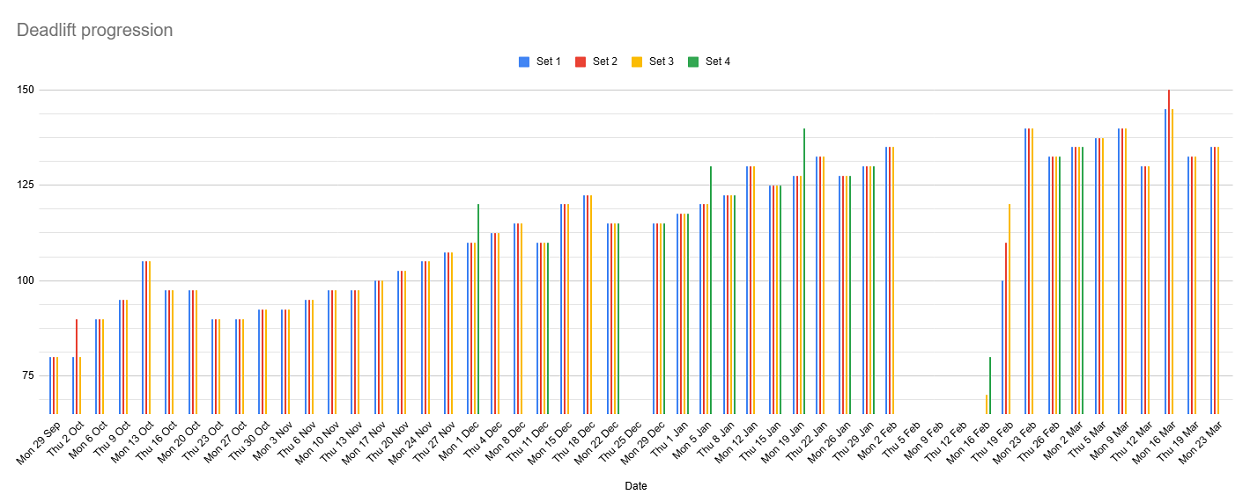
I needed the Christmas break though as I was beginning to feel beat up with all that improvement and I started doing four sets at lower weights to increase the overall lifting volume while giving my top end muscle a chance to recover.
I continued improving until I reached 132.5kg where I experienced my first failure to complete 3 sets of 6 and from here onwards, my progress became notably slower. With hindsight it seems like this was a threshold weight where things changed.
I managed some sets/reps at 140kg and while my legs were strong enough it was my top half which was beginning to fail me. Completing the hip hinge could be tough, my grip would slip and worst of all I strained my right lat when lifting at 135kg. Just a slightly rounding of the upper back was enough to keep me out for a couple of weeks although I could still train squats and everything else in my programme.
The final month or so was tough but rewarding. I started using chalk to stop my sweaty palms from slipping and I progressed my 3 sets of 6 to 140kg. I realised I’d struggle to do this at 145kg with the limited time I had availalble and so opted to do 4 reps at 145kg and then attempt a 150kg lift. In all the deadlifting I’d done the bar never moved so slowly but I managed it. And then I did another set of 4 reps at 145kg. Hitting that 150kg / 330lb deadlift felt like a satisfying winter’s training and allowed me to achieve 3 sets of 8 at 135kg to just make it to the 1.5x bodyweight criteria.
Bench Press
My bench press has been a disappointment again. Despite trying to use the same methodology of doing 3 sets of 6 at each weight, I simply struggled to make gains. I tried all sorts of things from drop sets to increased volume, to emphasising sets of 10 reps to trying sessions with singles, doubles and quad reps.
Arriving back in the weights room six months ago I could bench 60kg and when I left six months later I failed attempting to lift 82.5kg. Some weeks before I had managed a session of six single reps at 80kg so it was a bit frustrating not to at least manage 85kg and I’m going to rethink my work/recovery balance before next year.
Overall my chest is stronger and better sculpted which I think is also in part due to deadlifts but I haven’t managed to unlock what I need to do for improving my bench press. Maybe this is as far as I will ever get but it seems a little weird that I could only add 33% to my bench press when my deadlift was able to increase almost weekly – adding 65+%.
Pull-ups, deadhangs and six packs
My attempt to do pull-ups has had a modicum of success. On three occasions I’ve managed a single pull-up. I actually did two pull ups about ten minutes apart on one of those days. As I weigh 90kg performing pull-ups has always been something of a struggle. The gym has a machine where you can set the weight it provides to assist you so I began by using 30kg / 66lbs – essentially I was only pulling up 60kg of me. As the weeks went by I decrease the weight until on my final session I used less than 4kg / 8lbs.
Given I’d already done some individual reps perhaps I could have switched over but pull-ups were a low priority exercise and I often did them when I was fatigued after other exercises. I need every bit of help I could reasonably get.
Another low priority exercise were deadhangs which I did from time to time. I built up from 35secs on my first attempt to doing 1min20 which is reasonably decent. I’m now intending to deadhang every day for a minute through the summer, often using a weighted vest to make me heavier and therefore make it more of a challenge.
As for my abs sixpack it’s grown. It’s mostly a vanity thing as while a strong core is important for running, your core is more than a sixpack. Nonetheless there are definitely abs showing.
Setbacks
As great as it’s all been, I have to say I’m ready for the summer break from the gym. Most mornings when I wake up I’d have some aches or pains based on what I’d worked out the previous day. Usually these would be gone in a few minutes but it’s going to be nice to wake up without them.
There were some small sprains and strains. Firstly there was the adductor as I wrote above. Then in January I strained a rear shoulder muscle doing flies – that made things painful for about a week. I also picked up some golfers elbow which I’ve attributed to the flies – so I stopped doing them – but is also related to grip strength which seemed to know when I’d done deadlifts, bench press, pull-ups and one or two other exercises. There was also a bit of tendinitis in my left bicep which is probably related to these.
Finally there were my lats. The lower portion of these was really tested when I deadlifted. I would usually feel that area after the heaviest deadlifts and sometimes into the next morning. On the positive side it never affected my running.
Overall these were all just minor issues which I was able to manage and while I wanted to achieve goals, they informed me of when to back off training.
Running rewards
By keeping my rep counts low I’ve managed to avoid putting on a significant amount of weight, only 4lbs / under 2kg. With all the leg strength I’ve gained that suggests my weight-to-power ratio will have improved. I’m looking forward to getting back to some sprints.
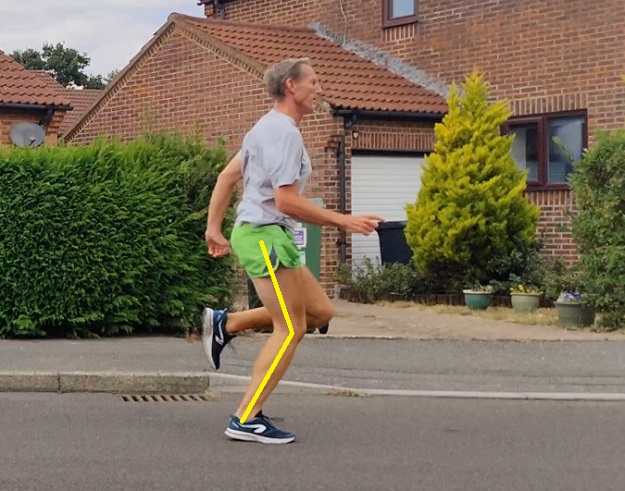
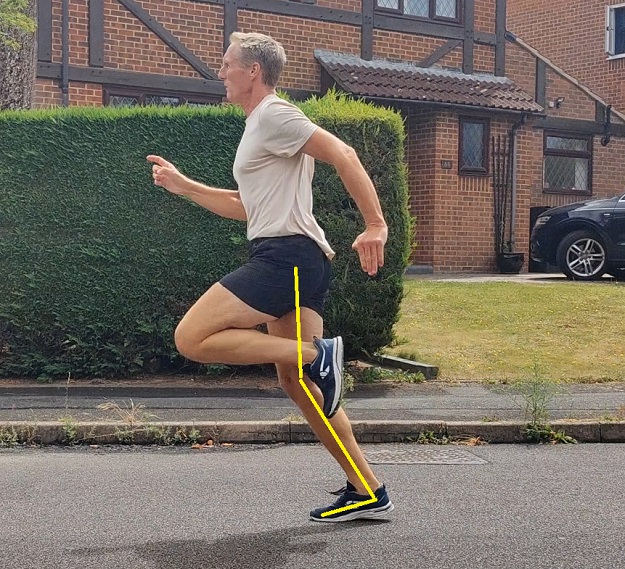
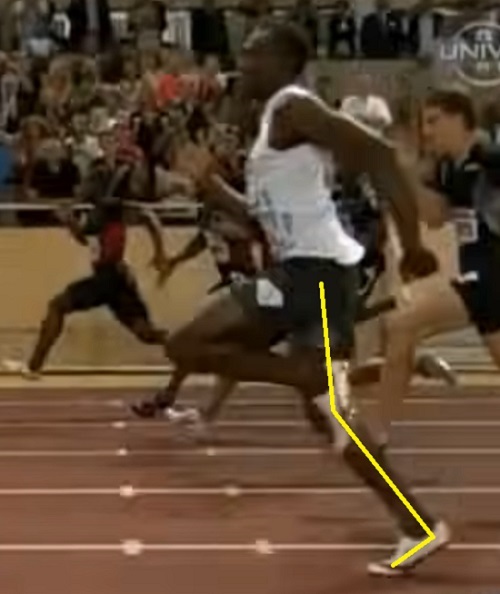
The real reward from the deadlifts (as well as the better squat form) is the effect they had on firing up my glutes. When I run I’m glute-dominant and skimming along just above the ground. Unfortunately it’s not yet coming through into my running times. It will but all the fast-twitch recruitment has increased my anaerobic capacity andnow needs to be made more aerobic before I get the benefits.
The hidden benefit of deadlifts has been that, as it’s a whole body exercise I’ve strengthened many accessory muscles which don’t get a workout when running. That’s got to reduce the chances of incurring an injury. I feel much more balanced and stable when I’m out running. While it’s great to be able to deadlift a heavy weight, for the purposes of running you need to convert that to power and that’s essentially what I began to implement in the last month or so. I’ll explain what I’ve been up to in my April blog post.

 Big Red Running