Short sprint – Ordinary speed

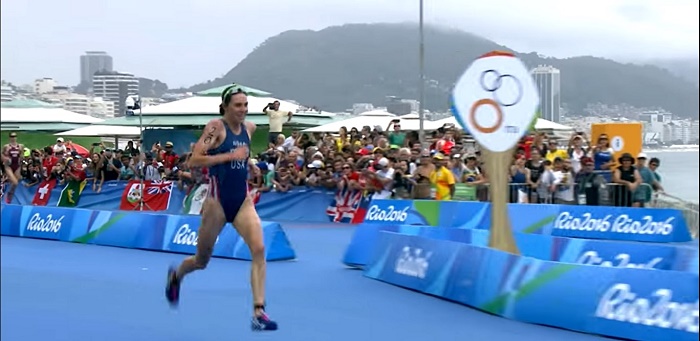
In True Speed I wrote about the high speeds at which elite runners run their races; speeds which ordinary runners can barely hit in a sprint. Today we’re going to look at what ordinary speed looks like. Outside of an elite race, most runners are running somewhere between six and ten miles per hour. Even the guys and gals up the front winning the prizes in your local race aren’t running much faster than this. Sometimes it’s even true for elites too, when Gwen Jorgensen was winning her Olympic Gold for triathlon, her 10K was ‘only’ around 11mph, so there’s no shame in not being super fast; only an attempt to better understand what’s going on.

Let’s begin with parkrun. In the table below I’ve listed the times between sixteen and thirty minutes as all but a few parkruns are run in that range. Of course quicker times are available, Andrew Baddeley holds the world record time of 13:48 while Lauren Reid ran 15:45 earlier this year to set a new women’s record.

Parkrun timeMphKm/hMin/mileMin/km
1611.718.85min093min12
1711.017.65min283min24
1810.416.75min473min36
199.815.86min073min48
209.315.06min264min00
218.914.36min454min12
228.513.67min044min24
238.113.07min234min36
247.812.57min434min48
257.512.08min025min00
267.211.58min225min12
276.911.18min415min24
286.710.79min005min36
296.410.39min195min48
306.210.09min396min00

If you want to train to get faster, it’s a useful table for understanding what speeds and paces you’ll need to be running. Once any initial burst of training sees your times levelling off, you have to start training smart.

You do intervals at paces a little quicker than you’re currently running while keeping the majority of your running at paces for a parkrun that’s 2½ – 3½ minutes slower. That’s 2½ minutes for the runners near sixteen and 3½ for those at thirty  If you’re currently running 22-mins at 7min/mile, you’ll want to be training no faster than the pace of a 25-min parkrun (three minutes slower). Even more of your training should be at the pace of a parkrun that’s five minutes slower than you’re currently running.


But we’re not only parkrunners so let’s have a look at what speeds we’re running for different race distances. The vast majority of runners are barely hitting 8mph in any of their races; most are even slower. The top end are the elite values to give you an idea of where there’s capacity for improvement.

4 mph5678910111213
parkrun46min3937min1931min0626min4023min2020min4518min4016min5815min3314min21
10K1hr331hr151hr0253min1946min3941min2937min1933min5631min0628min42
1/2M3hr162hr272hr111hr521hr381hr271hr191hr121hr061hr00
Marathon6hr335hr154hr223hr453hr162hr552hr372hr232hr112hr01

Of course reaching the highest speeds takes lots of dedicated training but certainly isn’t impossible if you understand what you need to do. Most people can run at 10mph (or 6min/mile pace) if only for twenty or thirty metres. If you can do this, then it’s probable with good endurance training you can improve to run times you wouldn’t have considered possible.

Most runners I see are good at unlocking their natural talent but then spend their training time reinforcing it without notable improvement. They seem happy if they’re knocking a minute or two off their marathon after months of hard training. My 10K went from 48 minutes to sub-40 when I got my training right. My early half marathons all came in at 1hr50 but when I took up running seriously I got them closer to 1hr30. I still believe there is significant room for improvement in all my races when I’m done with 800m training. I won’t settle for less, will you?

It’s all about hard work?

I grew up believing in hard work. I was doing a Sunday paper round from age 11, a morning one at 13, I had a part-time job at Broadstone Sports Centre at 15 and my mum told me that if I ran out of work, I should always ask for more! After the Sports Centre I did a year at Tesco on Fruit & Veg, where I believe Brian and Dave, the managers, considered me hardworking enough to entrust one side of an aisle to me while three did the other.

When it came to playing sport, I brought the same workhorse mentality and desire to do everything I could. That stood me in good stead when I played a solo sport like squash where I’d run myself into the ground, but it could be less positive playing team sports where you have to have the discipline to sometimes do nothing more than allow your teammates to do their job.

Nonetheless when playing I would squeeze every ounce of effort out of my body. Running on and off-court to get lost balls, chasing after opponents who’d broken away for one-on-one opportunities in football, diving after every volleyball that came in my direction, man-marking opponents and jumping to block every basketball shot. Playing volleyball I picked up an array of minor injuries which included jumping into the post while trying to hit an errant set, running full speed into a crash barrier at an outdoor summer tournament trying to reach a ball that had caromed ten yards off-court, and repeatedly diving on sports hall floors to which my hip still bears the scar of testimony. Whenever I trained or played, I would always walk off court dripping with sweat. My effort was as good as you could ask for, even if my performance wasn’t what I hoped for.

When I became a runner, I brought this wholehearted approach with me. I charged off down the road at full speed from the beginning of runs. If I reached a hill it was maximum effort up it. I wanted to get faster and ended up gasping for breath for however long I was running. The only exception was on long runs when, knowing I would be out for two or three hours, I tried to ration my effort. But at the end of it all my legs would still be tired and lacking energy. This approached lasted with me until 2011 when I started learning how to train. Even since, as I learned about the benefits of high mileage, I’ve been willing to put in sixty mile weeks despite relatively mediocre race performances.

What I now realise is that, for me, all that hard work was a mistake.


Having read the biographies of Ron Hill, Derek Clayton and Steve Jones, it’s easy to conclude miles make champions. The overriding message that comes from each of them is how hard they trained. Ex-marathon world record holder Paula Radcliffe is another who talks about training hard.

Steve Jones was the world record holder in both the marathon (2:08:05 – Chicago 1984) and half marathon (1:01:14 – Birmingham 1985). He was the pre-eminent marathoner of the mid-1980s with two wins in Chicago, one at London, another at New York. He talks about how he never wore a watch or heart-rate monitor, how he didn’t think about his diet but focuses on putting in hard work to be able to run hard from start to finish.

Derek Clayton ran 150 miles per week on his way to becoming the world record holder for the marathon during the 1970s. Ron Hill ran as much as 130 mpw when he was running world class times similar to Derek. Paula Radcliffe’s success and notoriety came when she moved up to the marathon distance and set incredible world records that lasted for over a decade. Like Steve Jones, Paula liked to race from the front and go as hard as her body would allow.

Each of them credit their running success to hard work.


But I believe there’s a catch to this. The marathon is at one extreme event of the running spectrum. If you’re interested in running the longest distance in the fastest time then working hard to convert all your muscle fibres to become more efficient at fat burning and aerobic metabolism is a good way forward. Forcing yourself through long, hard training runs to handle the pain of running for over two hours, while feeling depleted, is going to make a difference.

For all their talk of success through hard work, none of these world class marathoners was as successful at shorter distances. Steve Jones was a 5,000m – 10,000m specialist before he took up the marathon. His results in the 10,000m major championships are less prolific. No world record, 12th place at 1983 Helsinki World Championships, 8th place in 1984’s Los Angeles Olympics and a bronze in the 1986 Edinburgh Commonwealth Games.

Paula’s track career resulted in a single 10,000m silver medal at the Seville World Championships in 1999. Ron Hill placed 18th and 7th in the 10,000m at the 1964 and 1968 Olympics. Derek Clayton never tried shorter distances once he realised the marathon was where his talent lay.


I’m trying to highlight that while these runners tell you how hard they worked to achieve their notable successes, what goes unsaid is how all that hard work wasn’t any use in shorter distance races and it’s a lesson I believe we can all learn from.

A key part of training is to figure out where your own strengths and weakness lie with regards to your physiology. It’s something a coach should be doing as they get to know your running. Some people are built for speed, others built for endurance. The more you’re built for speed, the fewer miles you need to run in training whatever the event. This was the lesson I never understood until recently. Even two years ago, I was running sixty miles per week to achieve the same 21-22 minute parkruns I was running ten years ago on only ten miles per week. Yet ten years ago when I upped my mileage from ten to thirty I began to run faster times so there’s a paradoxical element to it. Mileage helps when it’s well-aimed.

Finding the sweet spot between speed and mileage is the key to running success. If you’re a complete beginner, it is obvious you only need to do a small amount of exercise to start getting fitter and faster – one mile per day might be enough. If you’re competing at the Olympics, it takes many miles of training each week simply to maintain your fitness before you squeeze out more. You have to find the sweet spot that is right for your level.

Short sprint – “Run as fast as I can”

Recently the BBC ran an article on Emer McKee, who’s set a 5,000m world record for a twelve year old with a time of 16min40. She’s quoted as saying “Normally I’m just running as fast as I can and just waiting for it to be over,” which is pretty much how any all-out 5K or parkrun should feel.

Emer McKee – world record holder in the 5000m for 12-year-olds

Emer started at parkrun when she was nine and joined a local running club, Willowfield in East Belfast, and has been improving ever since, competing in a range of events from 60 metres up to parkrun but also including long jump and cross-country.

Three points I want to highlight from her story:

  1. As a member of a running club, she is getting decent structured coaching and sessions that enable her to make progress. Although the headline from the article implies she “runs as fast as she can” this refers to her races. It doesn’t necessarily apply to her training. Just going out and running the fastest you can every day in training will bring short term results but eventually you’ll see the gains stop.
  2. It’s taken her three years to reach this stage. She began running parkrun in 2017 and quickly made good progress twenty-nine minutes down to twenty-one by year end. Since then it has taken three years of training to build on that and get down to a sub-17 time.
  3. Being part of a club limits the amount of racing she does and gives time for training to develop. While she’s a regular parkrunner, unlike typical adult runners, the rest of her year is not spent entering 10Ks, half marathons and marathons. The club events she does are all completed within twenty minutes (usually significantly less) and therefore don’t require much recovery. By contrast, adults regularly enter distance races that require more recovery and therefore cut into their ability to train to improve.

The great thing about being twelve years old is she’s got her whole running career ahead of her. She turns up to her club and the coach has already decided what the session is and how it will help her (along with her clubmates) to improve. For the most part, her running priorities are defined by the club’s season.

The coaching of juniors is usually very good because the focus is on developing them, through a structured approach to training, for when they are adults. This approach is one I try to replicate for adults attending my Big Red Running sessions. Sessions build on previous weeks to enable progress in the long-term. If you would like to come to my session then please do. Check the homepage for details and if you have any questions by all means contact me for further info.

Update on my 800m training – April 2021

April arrived and I was excited, after four months of following a Jack Daniels 800m training plan, to see how it had paid off. I know I’ve been feeling fitter, faster and stronger but how would it affect my 800m time?

Back in December I ran 2:58 with estimated splits of 39sec followed by 45, 45, 49s.

My fastest 200 in training has been 37.45s, which multiplies to 2:30, so that gave me a cap to what my top end could be. There’s no way I was going to run all four at 37½ so any thoughts of hitting 2:30 were out.

At the other end, I’ve been feeling fairly comfortable running 200s at 44-45s in recent weeks so figured this would be the pace I’d slow to before the final sprint to the line.

This was my realistic range for what I might achieve – 2:35-45. I was hoping I might break 2:40, as that seems like a nice round number. Here’s what happened …

Time Trial #1 – Friday 9th April 2021

I had two recovery days after my last workout and, on the morning, I went for a 1½ mile run to loosen up. It didn’t feel that good aerobically but my legs felt ok.

I had a light lunch, earlier than usual, to ensure it would be digested by the time I ran at six in the evening. I’d selected this day and time predominantly based on weather. My original plan had been to run on Saturday morning thereby giving me three recovery days but the forecast was for it to be 15mph windy by 8-9am. Friday evening’s weather was only 5-6mph and gave the added bonus of having the day to eat and hydrate going into the run. I usually find my body is happier in the evenings.

While I know the 800 is all about effort, and I’d advise anyone to go out at about 90-95% top speed; I was no longer sure what 90-95% would feel like after all the training. I’m now going faster in sessions, even when legs are tired, than I was in December. Unfortunately I didn’t do any prediction workouts and even if I had I probably wouldn’t be able to pace accurately. I decided to just go out reasonably hard and hang on.

On arriving at the park, I ran warm-up and my legs/breathing felt ok. I did three sets of strides and while I felt I put a decent effort into them, my watch was suggesting they weren’t that quick but I put this down to my Garmin being unable to adjust quickly enough so I remained confident.

I gave myself an eight minute break between warm-up and the time trial to let any waste products get out of my legs. But it was a cold, grey evening and I felt a few spots of rain; so I didn’t hang around as long as I might have liked.

I went with the standing split start I’ve been learning, which makes it harder to start the watch, but I was away.

Oh my word, my legs felt unbelievable.

The first time I’ve run hard in months without any lactate in them. They felt so quick and unhindered that it surprised me. I was almost stumbling. I got to 300m and began to start breathing harder but it didn’t feel as tough as it did last December.

Further on my shoulders began to ache. A lot. This only happened to me once in training but apparently also on the last time trial. My legs began to tie up and stumble but I kept going and overall I was feeling confident that I was cutting through the air at pace.

I reached the final stretch, jumping into the empty road and then back onto the path because of walkers and then gave it my final sprint.

My time was astounding …

I could barely believe it …

Two minutes fifty-five seconds.

Only a three second improvement over last time.

It’s so far below expectations that I couldn’t even feel disappointed about it. Four months of good hard training where I’ve felt fitter, faster, stronger and leaner yet no notable improvement.

Perplexing is the word I’d use about it.


Before the next time trial I did recovery runs. On the Sunday I went for a 10-mile long run and began to wonder whether I was really getting the hip or knee extension required to get full force. I started looking at videos on sprint mechanics. Youtube videos and internet articles, the bane of all self-coached sportspeople, but for once I did glean some information that changed how I’ve been thinking about sprinting.

By the time I ran on the Monday, my legs felt like they’d recovered from the time trial and my mechanics were feeling powerful in a way they haven’t in years.

Time Trial #2 – Wednesday 14th April – five days after the first time trial

I decided to start off slower. The first time trial had estimated 400m splits of 1:23 / 1:32 – which are too far apart – ideally there should only be two or three seconds difference. I decided to go out slower, aiming for around 43s on the first 200 (it was 39s on TT1), and if I could replicate that for the second 200m it would take me through halfway in 1:26. In truth, I expected the first section still to be too quick but hopefully by not putting in as much effort, I would be closer to a decent pairing.

It didn’t work out anything like that. I started with less effort but once again my splits for the first 100-200-300 metres each came in at 20 / 40 / 60 seconds but by the 400m mark I was at 1:24 (compared to 1:22-23 on TT1). Once again I started to struggle with the lactate build-up in my legs and arms, and I began to feel my stride ebb away and become uncoordinated. I went through 600 in 2:12-13 (4=5 secs slower than TT1) and finished off with a somewhat lacking sprint to clock 3:00.  Eke!  Worse than my original time trial.

What to make of all this?

While the three second improvement between December and TT1 is technically quicker, to me it’s a negligible improvement, TT2 shows this. I feel there’s something I haven’t unlocked because as I said before I’ve felt fitter, faster and stronger as the months have gone by.

Thinking back on the training, I’ve struggled throughout on the longer intervals of 400 and 600 metres, which points to an endurance issue. I’ve definitely improved it but perhaps not as much as I needed. My Sunday long run has improved from around 8:35/mile to 8:10/mile but that’s still a long way from my 800m pace of 5:50/mile. I’m hoping the upcoming phase of endurance training will bring them closer together.

With regards to following Jack’s plan, I’ve been 95% faithful. I’ve done every effort of every session as he defined them. I’ve not dropped any workouts, swapped days around or changed any of the parameters of workouts. Admittedly my long runs have been longer than his suggested 1-hour but I don’t think that diminished anything.

The one omission that may have been crucial is not doing strides on two of my weekday Easy runs. That might have dug out more speed for the Time Trials but I deliberately didn’t do them as my running history has shown my endurance goes backwards when I do. Even without them, I have found my top end pace is registering as faster. Back in December I couldn’t break 5min/mile but when the time trials rolled around I hit 4:38/mile.

The next six weeks

I decided there wasn’t any point in doing a third time trial, after the second one came in slower, but to begin the endurance phase immediately. It was noticeable that in the following long run, my easy run pace had dropped.

My new schedule through to June involves running eight mile Steady runs on Tuesdays and Friday with a twelve mile long run on Sunday. The rest of the week will be recovery runs and I’ll slip in strides occasionally to keep all the faster muscles involved.

Week 1 – the Tuesday steady peak with an 8:10 mile and the last four miles were all run closer to 9min/mile. Three days later I was hampered by strong winds on the outward leg and pushed home with a peak 7:55 mile for a two-minute improvement.

Week 2 – the first Steady run of week 2 brought calm conditions and a decent improvement. The fastest mile came in at 7:29 and all the miles except the last were under eight minutes. Seven minutes taken off the previous Tuesday’s run. The Friday Steady was relatively calm but my legs must still have been recovering as the last five miles all came in at about 8:05/mile. The Sunday long run, straight out of bed and fasted at 5:55am, was a season’s best on a hillier route via Gravel Hill and Broadstone averaging 7:58/mile

Rounding up my thoughts and feelings

Overall I’m not too unhappy with how this went. As I’ve already said, I know I’m fitter, faster, stronger and lighter. I’ve lost about half a stone in weight since the beginning of January as I began to fire up some of the muscles fibres I’ve stopped using over the past few years. Simply from that perspective, the training has been worthwhile.

I am slightly frustrated though. I’ve done everything by the book and got no result from it. I’m questioning whether Jack’s plan is right for me as I know I’ve self-trained to run whole kilometres at quicker paces than my all-out 800m. I have one or two thoughts on how I could adjust things but I’m going to stick with it for another round of training. I have a suspicion that the endurance training I’ll be doing through May will actually lead to a faster 800 in June.

It became clear to me in February that, entering this training plan, I had a big gap between my easy pace and my 800m pace that needed to be closed up. I hadn’t run faster than 7:30/mile in the build-up and there was nothing to bridge the gap to my 800m pace. While the training did that to a good extent, I believe I now need to cement over the gap and then I’ll start making progress in my 800 time.

I’ll follow the plan again, which will take me through to September and then see where my 800 is at. But parkrun is due back in June so I may find myself attending one or two of those. If I do so, then I’m going to have to go off Jack’s plan somewhat but so be it.

Short sprint – True Speed

In Being Fast, I talked about the vagaries of language and mentioned some of the speeds elite runners run at. I thought it would be useful to look at the speed and paces for all the major world records. It only becomes clear when you see these, how fast the best in world are running, and begin to realise how much the rest of us neglect speed.

MenPerf. Mi/hKm/h Per milePer km Athlete
Top speed  27.844.7 2min101min21 Usain Bolt
100 m9.58 23.437.6 2min341min36 Usain Bolt
200 m19.19 23.337.5 2min341min36 Usain Bolt
400 m43.03 20.833.5 2min531min48 Wayde van Niekerk
800 m1:40.9 17.728.5 3min222min06 David Rudisha
1000 m2:12.0 17.027.3 3min322min12 Noah Ngeny
1500 m3:26.0 16.326.2 3min412min17 Hicham El Guerrouj
Mile3:43.1 16.126.0 3min432min19 Hicham El Guerrouj
3000 m7:20.7 15.224.5 3min562min27 Daniel Komen
5000 m12:35 14.823.8 4min032min31 Joshua Cheptegei
10,000 m26:11 14.222.9 4min132min37 Joshua Cheptegei
Half marathon57:32 13.722.0 4min232min44 Kibiwott Kandie
Marathon1:59:40 13.121.2 4min342min50 Eliud Kipchoge
100 km6:09:14 10.116.2 5min573min42 Nao Kazami
Women   
100 m10.49 21.334.3 2min491min45 Florence Griffith Joyner
200 m21.34 21.033.7 2min521min47 Florence Griffith Joyner
400 m47.6 18.830.3 3min121min59 Marita Koch
800 m1:53.3 15.825.4 3min482min22 Jarmila Kratochvílová
1000 m2:29.0 15.024.2 4min002min29 Svetlana Masterkova
1500 m3:50.1 14.623.5 4min072min34 Genzebe Dibaba
Mile4:12.3 14.323.0 4min122min37 Sifan Hassan
3000 m8:06.1 13.822.2 4min212min42 Wang Junxia
5000 m14:06 13.221.3 4min332min49 Letesenbet Gidey
10,000 m29:17 12.720.5 4min432min56 Almaz Ayana
Half marathon1:04:31 12.219.6 4min553min03 Ababel Yeshaneh
Marathon2:14:04 11.718.9 5min073min11 Brigid Kosgei
100 km6:33:11 9.515.3 6min203min56 Tomoe Abe
World record times for the major distance events (correct at 26-Apr-2021)

When you compare the men’s and women’s records side by side you see there’s consistently a difference of around 11-12% between them. This is believed to be down to the physical differences between the sexes, that men’s higher levels of testosterone allow them to have bigger muscles which in turn propel them quicker.

EventMen WRWomen WR% diff.
100 m9.5810.499.5
200 m19.1921.3411.2
400 m43.0347.610.6
800 m01:40.901:53.312.3
1000 m02:12.002:29.012.9
1500 m03:26.003:50.111.7
Mile03:43.104:12.313.1
3000 m07:20.708:06.110.3
5000 m12:35.414:06.612.1
10,000 m26:11.029:17.411.9
Half marathon57:32.01:04:3112.1
Marathon1:59:402:14:0412.0
100 km06:09:1406:33:116.5

The two most notable anomalies are at the ends of the spectrum. Florence Griffith-Joyner’s 100m world record was set in 1988 but the video evidence shows there was a strong wind that day, yet the wind gauge recorded 0.0m/s assistance. It’s thought to be a faulty gauge. If, however, you add 11% to Usain Bolt’s 9.58s then then the women’s time should be 9.63s which is close to the 10.61s FloJo recorded the next day and the 10.62s she recorded in winning Olympic gold two months later.

At the other end there is the 100km where the difference is 6.5%. At this distance, the best runners are genetically determined towards endurance and lack the fast-twitch muscle necessary for top speed. Their slow-twitch muscle is naturally resilient and the testosterone difference between the sexes is much less of a factor.

Some of the outliers between men’s and women’s records are down to lack of drug-testing or detectability when the records were set, how often the distances are raced and over the past year we’ve seen distance records being broken with championships cancelled due to Covid and runners taking advantage of energy-efficient shoes.


I’ll return to the point I was trying to make in the Being Fast article, most runners don’t have true speed and that’s because they often fail to train for it. It’s not the only requirement for being a distance runner but it is an important part of it.

My coached sessions are focused on getting you quicker while building the endurance to support it. Everybody’s welcome. In the meantime, enjoy the following video of runners trying to keep pace with Eliud Kipchoge’s sub-2hr marathon pace.

Lessons in marathon training

Imagine running your first marathon in 2hr41?  Imagine doing it off less than three months of training? Most people would be pleased with that, but now imagine you were already a great endurance athlete used to training thirty hours every week. This is Gwen Jorgensen’s story.

Graduating to work as a tax accountant in 2009, Gwen Jorgensen was talked into becoming a triathlete by USA Triathlon. She’d been a runner and swimmer through college so only needed to add the cycling skills to enter her first triathlon a year later. She was good enough to finish with elite status.  Two years later, she competed for the USA at the London Olympics coming in 38th after getting a flat tyre in the cycling section. In the following years Gwen became one of the world’s premier female triathletes, being crowned the winner of the ITU’s World Series in 2014 and 2015.

This lined her up as the favourite for the 2016 Rio Olympics. Like the World Series events, the Olympics are a 1.5km swim (taking around twenty minutes), a 40km cycle (1hr) and a 10K run (thirty-five minutes). This is about a quarter of the more famous Ironman triathlons.

In the six months prior to Rio, Jorgensen logged 137 swims, 110 rides and 171 runs. With running being her strength she’s often able to start the run, which is the last part of a triathlon, behind opponents and catch them. She was generally recognised as the fastest runner on the women’s circuit and in Rio ran 34:09 for 10K on her way to taking the gold.

On her way to gold in Rio

Having claimed the Olympic title, Gwen then threw out a curveball, she was going to run the New York Marathon three months later. More accurately she was going to do it in seventy-eight days’ time. She won the Rio gold on 20th August and the New York Marathon was being held on November 6th giving her just twelve weeks and one day to train.

As we now know she ran 2:41:01 to finish 14th and by her own admission she wasn’t happy with that time. Running the NYC marathon was to be the first step towards her goal of winning the (now-cancelled) 2020 Tokyo women’s marathon. The fastest women in the world are running sub-2:20 and in New York she set out with the leaders at 5:40/mile, managing to stay with them for the first five miles before dropping back and finishing the last two miles at seven minute mile pace. The graph below highlights how her performance dropped away in the second half.

Her seventy-eight days of training were less than ideal. She still fitted in triathlon events which meant continuing to train for those and her running mileage came in at fifty miles per week. She’d never run further than ten miles before and with the limited time available, her longest training run was sixteen miles. Another aspect of her training that was less than ideal was she trained off-road which was unlike the tarmac surfaces she encountered in New York.

Gwen’s NYC splits in parkrun terms – a noticeable drop in the second half

So what are the lessons we can learn from this performance? To me, the notable (and somewhat obvious) thing is that even though Gwen never ran longer than sixteen miles in training for her first marathon; her pace was high from the beginning and she was able to get to the end still running. She didn’t end up walking because she has a huge base of fitness from her triathlon training.

On the other hand, her triathlon training wasn’t specific enough to allow her to continue her starting pace and see it all the way through. If you want to get the most out of training then running is going to be better for your marathon than cross-training.


Training off-road didn’t work for Gwen as the tarmac in New York was tough on her legs – she wasn’t accustomed to it. Often elite runners and physios recommend running on softer surfaces to avoid inflicting damage. But I believe this is advice better suited to those running higher mileage. Gwen went from running 30-40 miles per week to 40-50 – it’s not a huge increase.

Also with specificity I’ve known people training for London who do their long Sunday runs over the hilly Purbecks. While it’s nice to get out in the peace and quiet, hills are one thing London doesn’t feature – it’s a flat course other than a slight downhill in the opening miles. Hill training has its place in a training plan as a workout but combining that with a long run is adding unnecessary stress especially for slower runners.


While Gwen is not the first runner I’ve seen who records decent times in half or full marathons off less than perfect training. I’ve seen guys run sub 1hr30 half marathons with barely any long distance training because they’ve got the speed over shorter distances. I’ve done it myself – I ran a 3hr41 marathon with only six weeks where I ran more than thirty miles but I was already running twenty-one minutes for 5K.

This is really key. First you have to be able to run fast, or more specifically you have to have a high lactate threshold which is the result of combining speed and endurance. After that it’s about how much pain you’re willing to suffer as your body fatigues and slows down. Trying to run a marathon on fifty miles per week, in less than three months, with nothing longer than a sixteen mile run wasn’t enough to stop Gwen’s pace dropping in the final miles. I experienced the same on my marathon, I went from running 8:15/mile to 9min/mile in the last six miles.

If you’ve read my post on the 20-mile myth you may wonder, doesn’t this conflict with the Hansons’ idea of not running longer than sixteen miles in training? Superficially it does, but the plans in their book are not aimed at elite runners like Gwen. Their elite plans do more weekly mileage, over a longer training period and go out to twenty miles. The underlying principle of their system is to avoid overdoing long runs if you can’t complete them in two-and-a-half to three hours maximum. I believe that’s good advice.

Chicago 2018 marathon – the wet and windy city

A key driver for Gwen’s change from triathlon to running marathons was a desire to start a family. Typical triathlon training is thirty hours per week with three session per day. Some days that includes a three hour bike ride which, when you add in early morning runs, mid-morning swims, eating and changing is likely too much, although not impossible, to also do justice to raising a baby. Any parent will tell you it’s hard enough as it is. By comparison an elite marathon runner typically trains for thirty to forty-five minutes in the morning straight out of bed and then another longer session in the evening. With a supportive husband, it’s much more manageable.


However things haven’t worked out in the marathon world for Gwen. Her best marathon is 2:36 in Chicago in 2018, which puts her well down the list of American women running the marathon. It’s a time that wasn’t going to be anywhere near the gold medal in Tokyo, so in late 2019 she decided to switch to focusing on the 5,000 or 10,000 metres. Her times are still struggling to be world-class but it’s clear that while she was great at Olympic-distance triathlon she hasn’t turned out be the endurance monster many expected.

Come this autumn we’ll see how all that training has worked out for her with the postponed Tokyo Olympics. Will she even be there? In my opinion, whichever way you look at it she’s had an enjoyably challenging decade. She began it working sixty-plus hour weeks as an accountant which by all accounts (pun intended) she enjoyed. She then became less cerebral, pushing herself physically and competing in two Olympics, winning gold in one. As a triathlete she travelled around the world for the World Series events and at one stage seemed unbeatable with thirteen consecutive wins, then as the joy of parenthood beckoned she took on a new challenge and all that entails. Whatever happens I’d sum that up as living life to the max.

Short sprint – “Being fast”

I find the limitations of language frustrating. I often meet runners who say they want to “be fast” but that’s not exactly what they want. They might currently be running a twenty-five minute parkrun and think “being fast” is running twenty-three minutes. Other times when they drop back to twenty-six minutes they say they’re “losing their speed”. But “speed” and “fast”, even “slow” are all relative terms.

Currently I’m reading Chris MacDougall’s latest book, “Running with Sherman” where he talks about his experiences living in Amish country while training a donkey for an ultra race. In one chapter he details running on the Full Moon with the Amish people deciding to only do five miles as they’re running under starry skies without lighting. Meanwhile Ame, one of the first Amish runners, runs the ten mile run “fast” arriving back shortly after MacDougall has finished. That sounds incredible but then MacDougall mentions Ame can run a 2hr54 marathon which suggests he’s running ten miles in about an hour in which case MacDougall must be plodding along at something like ten minutes per mile. Neither of those paces sounds as fast as they come across in his description.

In his more famous book “Born to Run” he writes about how a group of Tarahumara Indians from Mexico competed in the Leadville 100 (mile ultramarathon) easily beating the rest of the field because they capable of running big distances at incredible paces. Except they were running one hundred miles in twenty hours so 12min/mile. While it is incredible to be able to cover that distance, it’s not incredibly fast which is the implication when you read it. Of course, as a writer, he’s trying to make his story appeal rather than go into the details whereas I’m always been interested in the details as much as the story. The danger of reading this vague language is you come away believing you can run incredibly fast at parkrun through ultra training.

The top sprinters in the world have genuine speed and are incredibly fast. Usain Bolt reaches a peak speed of over 27mph running the 100m, averaging 23mph. Meanwhile Eliud Kipchoge runs the marathon at 13mph which is half of Usain Bolt’s top speed. It’s also the equivalent of a fourteen minute parkrun. From there the rest of us are getting slower. Ten mph is scraping under nineteen minutes while that twenty-five minute parkrunner is barely running 7½ mph. When you get down to thirty minutes you’re barely running at a quarter of the speed, Usain Bolt averages.

The point here is not to rag on about people’s levels of ability, it’s about the use of language. Watch out when people say someone else is “fast”, or claim they’re “losing their speed”, are too “slow” or “not fast enough”. They could probably improve all those things easily with a few sessions of sprinting but whether it would do their race times any good is debateable. Specific language like “running at 9min/mile pace” can ensure everybody is on the same page about expectations. From a coaching perspective being specific provides decent insight into what needs to be done to improve.

Process or Outcome goal?

Back at the New Year I wrote all about SMART and DUMB goals which are acronyms for remembering the parameters to use when setting your goals. Today I’m explaining the difference between two types of goal – process and outcome. At their simplest, a process goal is one that focus on actions you take in the journey to becoming a better runner; an outcome goal will show you are a better runner.

Typical examples include:

Process goal

  • Run three times each week for thirty mins.
  • Eat banana after every run.
  • Buy new running shoes every 500 miles.

Outcome goal

  • Finish first at my local parkrun.
  • Break forty minutes for 10K.
  • Beat my rival at next half marathon.

I’m a big fan of setting Process goals because they’re within your control and if you complete them you get a sense of satisfaction from ticking them all off. They’re very motivating because of all the ticks you see. Completing them can be good for your mental health because ticking off the goal reminds you of how you’ve just seen a goal through to completion and celebrating that success.

In some ways, they’re like a “Gratitude Journal”, those diaries which people keep to remind themselves of five good things that happened to them that day. The secret behind the Gratitude Journal’s success is that it keeps you focused on the present and good feelings, not looking into the future for what you wish or think you need to make you happy.

The downside of Process Goals is it’s possible to get bogged down with routine never achieving anything of substance. You can end up living in the process of getting better without ever testing yourself in races to find out whether you’re actually better. It’s like teaching your kids to save money for the future, it’s a good habit to learn, but what good does it do if the money just sits in the bank unspent?


On the other hand, the success of Outcome goals can be dependent on factors beyond your control.

  • What happens if Mo Farah turns up and runs your local parkrun the day you were targeting to finish first?
  • What happens if your target 10K race falls on a day with 50mph winds?
  • What happens if your rival gets a coach, starts training hard, buys the latest shoes with carbon fibre footplate?

But this can also work in your favour – you may be able to achieve your Outcome goal through judicious selection of circumstances. Want to be First Finisher at parkrun? Go to a small one where the turnout is low and the finishing time is slow. For many years, Pymmes parkrun regularly had less than thirty runners, sometimes only single figures. There’s nothing wrong per se with selecting enabling circumstances but it can become a hollow victory if you’re too focused and selective, rather like challenging your five-year-old to a game of chess.


Sometimes there’s a crossover between Process and Outcome goals e.g. aiming to run 40-minutes at the 10K to be first female finisher. But usually Process goals are defined as manageable steps along the way to your Outcome goal. Tick off all the Process goals and you’ve got a good chance of hitting your Outcome but there can always be things beyond your control to stop you succeeding.

Process goals should be achievable as long as you put in the effort or hardwork; with an Outcome goal you can fail irrespective of how hard you work. This isn’t to say Outcome goals are a bad idea, only that if you set genuinely stretching goals rather than what I call pat-on-the-back goals*; you have to be able to handle the possibility of failure and accompanying disappointment. So my belief is to use Outcome goals more sparingly as too many failed goals sap belief and confidence. All elite runners have a mix of both types with Outcome goals being used as the measure across their career.

* A Pat-on-the-back goal is one which has so little stretch or difficulty about it that with the smallest of effort, you’re going to achieve it. It’s the person who can run 26min38 at parkrun saying I’d like to break 26min30, or setting a process goal of “Running once per fortnight”. Of course there could be people for whom this represents a genuine challenge and I’m making no judgement about that, please just understand the general principle of setting goals that are so unchallenging, that really it’s just the person giving themselves a pat-on-the-back.

Short sprint – No-one’s racing anymore

A few years back, I was going through the preliminaries of ascertaining whether I would be the right coach for a potential client. One of his questions to me was whether I could help him with racing. My reply was that it was something I had no experience of, but fortunately despite this, he still went ahead and took me on as his coach.

It later transpired we’d had different definitions of racing. He’d wanted to know if I could help with what to do on the day of his mass participation marathon race (which I absolutely could) whereas I’d been defining racing as what happens when you’re trying to finish ahead of your fellow competitors. For most people, when they talk about attending a race they’re really talking about a time trial – how quick can they run the distance?

Parkrun is not a race. For starters its insurance doesn’t cover it which is one reason why there are no race numbers or race clocks. Parkrun doesn’t even have a winner, it has a First Finisher, although when I first attended it did, until the nomenclature changed. If you look back to its beginnings, parkrun started as Bushy Park Time Trial then, as other events opened, it became UK Time Trials before rebranding as the friendlier sounding parkrun.

Running doesn’t have any true time trial events like say, cycling where riders go off at intervals of a minute or more and the winner is the one covering the distance in the quickest time. Admittedly when I orienteered it was done against the clock with runners having their own start times. This is a logistical necessity to ensure they don’t all reach the check points at the same time and have to wait to punch their card. But orienteering isn’t a pure running sport, it’s also a test of your ability to navigate, runners go off at intervals to avoid being able to follow someone else.

Typically elite runners do time trials to find out what form they’re in. When it comes to races the goal is simply to finish ahead of the person behind you. Often championship medals are won in times slower than heats especially at longer distances.

Of course there are some (many?) who turn up to parkrun and think they’re racing against others but true racing is a tactical art. It’s about letting your opponents take the breeze, it’s about knowing your strengths, their weaknesses and how to gain an advantage. It’s knowing when to go with the pack and when to let leaders go it alone hoping they’ll burn themselves out. This is the tactical stuff I’ve not got any experience of because I’ve never been good enough to need to learn it. I understand some basic theories as I’ve outlined but I’ve never experienced them. Like almost everybody else, I just run as fast as possible trying to get the best time I can.

Charlie Spedding’s success

Recently I’ve been reading Charlie Spedding’s autobiography “from last to first”.  He’s a runner I only remember because he was one of the early winners of the London Marathon and being a trivia buff it was the sort of factual list I knew off by heart at one time. The following year he finished second in a time of 2:08:33, which remained the English record until 2014, as he relinquished his title to Welshman Steve Jones.

Published in 2009, “from last to first” looks back to Charlie’s running career which ended twenty years earlier after the Seoul Olympics. Like all autobiographies, it tells of his early life, parents and formative years in running. It details his two major successes, winning the London Marathon and a bronze medal at the Los Angeles Olympic, events which occurred a few months apart in 1984 as well as a copy of his training diary between them. The final chapters of the book give an overview of how he trained and brings us up to date with some of his thoughts on the reasons behind the nation’s lack of health and prospects for future running success.

At just over two hundred pages, the book is well written and often humorous. As a pharmacist, he clearly has an understanding of science yet is able to tell his story without unnecessarily resorting to big words or jargon. I laughed out loud when he recalled his time at Chorister School in Durham where “One of the lads I played with was a boy called Tony Blair. I don’t recall his skill with the ball, but I do remember his ability to make up rules of the game to suit his team’s situation.” Also the tale of how he was invited to do an inspirational talk at a local psychiatric hospital. Introduced to a patient by the doctor as “This is Charlie Spedding. He’s an Olympic bronze medallist in the marathon”, the patient replied “That’s alright, I thought I was Henry the Eighth when I got here.”

About to undergo Achilles surgery in the 1970s, he almost died in hospital due to anaphylactic shock caused by an allergic reaction to a drug. It’s interesting to think that, at the time, surgery was deemed the way to fix these issues. Derek Clayton stated in his autobiography that he’d had nine operations for problems which included his Achilles. Nowadays we understand surgery isn’t necessarily the solution, heel drops can resolve it. My friend, Simon rehabilitated his Achilles simply by doing a month of very easy running after racing twenty-five times in a year. Charlie notes late on that he avoided further Achilles issues when he was in the United States by getting regular massages.

Throughout the book, Charlie impresses how important attitude and mindset were to his succcess. He talks about how he was fortieth or forty-first academically in a class of 42 at junior school but went on to achieve a degree and running his own business. When he first played sport, he wanted to be a footballer but wasn’t good enough; when he ran sprints he was last but then found cross-country and finished second in his first race. Having found what he was good at, he then worked hard at it.

After a decade of high level national running as part of Gateshead Harriers, he sat in a pub and rethought his attitude as to what he needed to do to reach his potential. He realised he needed to be more positive in his vocabulary, to be specific about his goals and to be willing to think differently if he was going to achieve more than the average person. His underlying philosophy was one of getting the best out of himself for whatever talent he had and accepting that as success.

I found many parallels in his writing to how I’ve lived my own life apart, of course, from winning the London marathon or going to the Olympics. The attitude and mindset of always giving your best to fulfil your potential are one that resonate with me. Also his willingness to try new approaches and not giving up when things haven’t worked out. It’s something of a cliché to say “how bad do you want it?” is the determining factor but I’ve met many people who say they want to achieve good times in their running but aren’t then willing to make it a priority or get out of their comfort zone. There’s nothing wrong with not doing those things but I believe it’s best not to talk about your desire for improvement if you’re not willing to do the things that are firmly within your control. It’s like wanting to win the lottery but refusing to buy a ticket.

I enjoyed reading this book for its refreshing honesty and humour. It was a very easy read and, as I was loaned this copy, I’ll probably look to pick up my own one in the future for a reread. As an aside, the hospital in which Charlie Spedding nearly died is the one where I was born!