In Being Fast, I talked about the vagaries of language and mentioned some of the speeds elite runners run at. I thought it would be useful to look at the speed and paces for all the major world records. It only becomes clear when you see these, how fast the best in world are running, and begin to realise how much the rest of us neglect speed.
Men
Perf.
Mi/h
Km/h
Per mile
Per km
Athlete
Top speed
27.8
44.7
2min10
1min21
Usain Bolt
100 m
9.58
23.4
37.6
2min34
1min36
Usain Bolt
200 m
19.19
23.3
37.5
2min34
1min36
Usain Bolt
400 m
43.03
20.8
33.5
2min53
1min48
Wayde van Niekerk
800 m
1:40.9
17.7
28.5
3min22
2min06
David Rudisha
1000 m
2:12.0
17.0
27.3
3min32
2min12
Noah Ngeny
1500 m
3:26.0
16.3
26.2
3min41
2min17
Hicham El Guerrouj
Mile
3:43.1
16.1
26.0
3min43
2min19
Hicham El Guerrouj
3000 m
7:20.7
15.2
24.5
3min56
2min27
Daniel Komen
5000 m
12:35
14.8
23.8
4min03
2min31
Joshua Cheptegei
10,000 m
26:11
14.2
22.9
4min13
2min37
Joshua Cheptegei
Half marathon
57:32
13.7
22.0
4min23
2min44
Kibiwott Kandie
Marathon
1:59:40
13.1
21.2
4min34
2min50
Eliud Kipchoge
100 km
6:09:14
10.1
16.2
5min57
3min42
Nao Kazami
Women
100 m
10.49
21.3
34.3
2min49
1min45
Florence Griffith Joyner
200 m
21.34
21.0
33.7
2min52
1min47
Florence Griffith Joyner
400 m
47.6
18.8
30.3
3min12
1min59
Marita Koch
800 m
1:53.3
15.8
25.4
3min48
2min22
Jarmila Kratochvílová
1000 m
2:29.0
15.0
24.2
4min00
2min29
Svetlana Masterkova
1500 m
3:50.1
14.6
23.5
4min07
2min34
Genzebe Dibaba
Mile
4:12.3
14.3
23.0
4min12
2min37
Sifan Hassan
3000 m
8:06.1
13.8
22.2
4min21
2min42
Wang Junxia
5000 m
14:06
13.2
21.3
4min33
2min49
Letesenbet Gidey
10,000 m
29:17
12.7
20.5
4min43
2min56
Almaz Ayana
Half marathon
1:04:31
12.2
19.6
4min55
3min03
Ababel Yeshaneh
Marathon
2:14:04
11.7
18.9
5min07
3min11
Brigid Kosgei
100 km
6:33:11
9.5
15.3
6min20
3min56
Tomoe Abe
World record times for the major distance events (correct at 26-Apr-2021)
When you compare the men’s and women’s records side by side you see there’s consistently a difference of around 11-12% between them. This is believed to be down to the physical differences between the sexes, that men’s higher levels of testosterone allow them to have bigger muscles which in turn propel them quicker.
Event
Men WR
Women WR
% diff.
100 m
9.58
10.49
9.5
200 m
19.19
21.34
11.2
400 m
43.03
47.6
10.6
800 m
01:40.9
01:53.3
12.3
1000 m
02:12.0
02:29.0
12.9
1500 m
03:26.0
03:50.1
11.7
Mile
03:43.1
04:12.3
13.1
3000 m
07:20.7
08:06.1
10.3
5000 m
12:35.4
14:06.6
12.1
10,000 m
26:11.0
29:17.4
11.9
Half marathon
57:32.0
1:04:31
12.1
Marathon
1:59:40
2:14:04
12.0
100 km
06:09:14
06:33:11
6.5
The two most notable anomalies are at the ends of the spectrum. Florence Griffith-Joyner’s 100m world record was set in 1988 but the video evidence shows there was a strong wind that day, yet the wind gauge recorded 0.0m/s assistance. It’s thought to be a faulty gauge. If, however, you add 11% to Usain Bolt’s 9.58s then then the women’s time should be 9.63s which is close to the 10.61s FloJo recorded the next day and the 10.62s she recorded in winning Olympic gold two months later.
At the other end there is the 100km where the difference is 6.5%. At this distance, the best runners are genetically determined towards endurance and lack the fast-twitch muscle necessary for top speed. Their slow-twitch muscle is naturally resilient and the testosterone difference between the sexes is much less of a factor.
Some of the outliers between men’s and women’s records are down to lack of drug-testing or detectability when the records were set, how often the distances are raced and over the past year we’ve seen distance records being broken with championships cancelled due to Covid and runners taking advantage of energy-efficient shoes.
I’ll return to the point I was trying to make in the Being Fast article, most runners don’t have true speed and that’s because they often fail to train for it. It’s not the only requirement for being a distance runner but it is an important part of it.
My coached sessions are focused on getting you quicker while building the endurance to support it. Everybody’s welcome. In the meantime, enjoy the following video of runners trying to keep pace with Eliud Kipchoge’s sub-2hr marathon pace.
Imagine running your first marathon in 2hr41? Imagine doing it off less than three months of training? Most people would be pleased with that, but now imagine you were already a great endurance athlete used to training thirty hours every week. This is Gwen Jorgensen’s story.
Graduating to work as a tax accountant in 2009, Gwen Jorgensen was talked into becoming a triathlete by USA Triathlon. She’d been a runner and swimmer through college so only needed to add the cycling skills to enter her first triathlon a year later. She was good enough to finish with elite status. Two years later, she competed for the USA at the London Olympics coming in 38th after getting a flat tyre in the cycling section. In the following years Gwen became one of the world’s premier female triathletes, being crowned the winner of the ITU’s World Series in 2014 and 2015.
This lined her up as the favourite for the 2016 Rio Olympics. Like the World Series events, the Olympics are a 1.5km swim (taking around twenty minutes), a 40km cycle (1hr) and a 10K run (thirty-five minutes). This is about a quarter of the more famous Ironman triathlons.
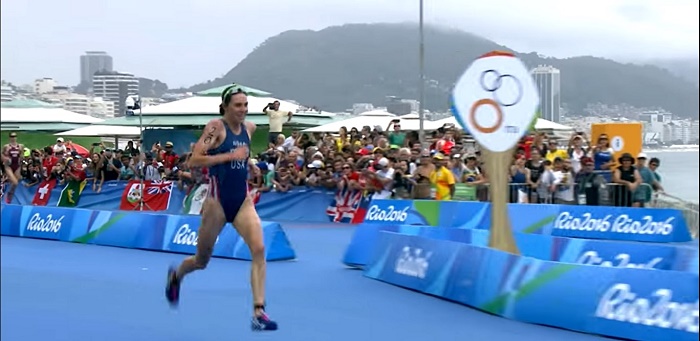
In the six months prior to Rio, Jorgensen logged 137 swims, 110 rides and 171 runs. With running being her strength she’s often able to start the run, which is the last part of a triathlon, behind opponents and catch them. She was generally recognised as the fastest runner on the women’s circuit and in Rio ran 34:09 for 10K on her way to taking the gold.
On her way to gold in Rio
Having claimed the Olympic title, Gwen then threw out a curveball, she was going to run the New York Marathon three months later. More accurately she was going to do it in seventy-eight days’ time. She won the Rio gold on 20th August and the New York Marathon was being held on November 6th giving her just twelve weeks and one day to train.
As we now know she ran 2:41:01 to finish 14th and by her own admission she wasn’t happy with that time. Running the NYC marathon was to be the first step towards her goal of winning the (now-cancelled) 2020 Tokyo women’s marathon. The fastest women in the world are running sub-2:20 and in New York she set out with the leaders at 5:40/mile, managing to stay with them for the first five miles before dropping back and finishing the last two miles at seven minute mile pace. The graph below highlights how her performance dropped away in the second half.
Her seventy-eight days of training were less than ideal. She still fitted in triathlon events which meant continuing to train for those and her running mileage came in at fifty miles per week. She’d never run further than ten miles before and with the limited time available, her longest training run was sixteen miles. Another aspect of her training that was less than ideal was she trained off-road which was unlike the tarmac surfaces she encountered in New York.
Gwen’s NYC splits in parkrun terms – a noticeable drop in the second half
So what are the lessons we can learn from this performance? To me, the notable (and somewhat obvious) thing is that even though Gwen never ran longer than sixteen miles in training for her first marathon; her pace was high from the beginning and she was able to get to the end still running. She didn’t end up walking because she has a huge base of fitness from her triathlon training.
On the other hand, her triathlon training wasn’t specific enough to allow her to continue her starting pace and see it all the way through. If you want to get the most out of training then running is going to be better for your marathon than cross-training.
Training off-road didn’t work for Gwen as the tarmac in New York was tough on her legs – she wasn’t accustomed to it. Often elite runners and physios recommend running on softer surfaces to avoid inflicting damage. But I believe this is advice better suited to those running higher mileage. Gwen went from running 30-40 miles per week to 40-50 – it’s not a huge increase.
Also with specificity I’ve known people training for London who do their long Sunday runs over the hilly Purbecks. While it’s nice to get out in the peace and quiet, hills are one thing London doesn’t feature – it’s a flat course other than a slight downhill in the opening miles. Hill training has its place in a training plan as a workout but combining that with a long run is adding unnecessary stress especially for slower runners.
While Gwen is not the first runner I’ve seen who records decent times in half or full marathons off less than perfect training. I’ve seen guys run sub 1hr30 half marathons with barely any long distance training because they’ve got the speed over shorter distances. I’ve done it myself – I ran a 3hr41 marathon with only six weeks where I ran more than thirty miles but I was already running twenty-one minutes for 5K.
This is really key. First you have to be able to run fast, or more specifically you have to have a high lactate threshold which is the result of combining speed and endurance. After that it’s about how much pain you’re willing to suffer as your body fatigues and slows down. Trying to run a marathon on fifty miles per week, in less than three months, with nothing longer than a sixteen mile run wasn’t enough to stop Gwen’s pace dropping in the final miles. I experienced the same on my marathon, I went from running 8:15/mile to 9min/mile in the last six miles.
If you’ve read my post on the 20-mile myth you may wonder, doesn’t this conflict with the Hansons’ idea of not running longer than sixteen miles in training? Superficially it does, but the plans in their book are not aimed at elite runners like Gwen. Their elite plans do more weekly mileage, over a longer training period and go out to twenty miles. The underlying principle of their system is to avoid overdoing long runs if you can’t complete them in two-and-a-half to three hours maximum. I believe that’s good advice.
Chicago 2018 marathon – the wet and windy city
A key driver for Gwen’s change from triathlon to running marathons was a desire to start a family. Typical triathlon training is thirty hours per week with three session per day. Some days that includes a three hour bike ride which, when you add in early morning runs, mid-morning swims, eating and changing is likely too much, although not impossible, to also do justice to raising a baby. Any parent will tell you it’s hard enough as it is. By comparison an elite marathon runner typically trains for thirty to forty-five minutes in the morning straight out of bed and then another longer session in the evening. With a supportive husband, it’s much more manageable.
However things haven’t worked out in the marathon world for Gwen. Her best marathon is 2:36 in Chicago in 2018, which puts her well down the list of American women running the marathon. It’s a time that wasn’t going to be anywhere near the gold medal in Tokyo, so in late 2019 she decided to switch to focusing on the 5,000 or 10,000 metres. Her times are still struggling to be world-class but it’s clear that while she was great at Olympic-distance triathlon she hasn’t turned out be the endurance monster many expected.
Come this autumn we’ll see how all that training has worked out for her with the postponed Tokyo Olympics. Will she even be there? In my opinion, whichever way you look at it she’s had an enjoyably challenging decade. She began it working sixty-plus hour weeks as an accountant which by all accounts (pun intended) she enjoyed. She then became less cerebral, pushing herself physically and competing in two Olympics, winning gold in one. As a triathlete she travelled around the world for the World Series events and at one stage seemed unbeatable with thirteen consecutive wins, then as the joy of parenthood beckoned she took on a new challenge and all that entails. Whatever happens I’d sum that up as living life to the max.
I find the limitations of language frustrating. I often meet runners who say they want to “be fast” but that’s not exactly what they want. They might currently be running a twenty-five minute parkrun and think “being fast” is running twenty-three minutes. Other times when they drop back to twenty-six minutes they say they’re “losing their speed”. But “speed” and “fast”, even “slow” are all relative terms.
Currently I’m reading Chris MacDougall’s latest book, “Running with Sherman” where he talks about his experiences living in Amish country while training a donkey for an ultra race. In one chapter he details running on the Full Moon with the Amish people deciding to only do five miles as they’re running under starry skies without lighting. Meanwhile Ame, one of the first Amish runners, runs the ten mile run “fast” arriving back shortly after MacDougall has finished. That sounds incredible but then MacDougall mentions Ame can run a 2hr54 marathon which suggests he’s running ten miles in about an hour in which case MacDougall must be plodding along at something like ten minutes per mile. Neither of those paces sounds as fast as they come across in his description.
In his more famous book “Born to Run” he writes about how a group of Tarahumara Indians from Mexico competed in the Leadville 100 (mile ultramarathon) easily beating the rest of the field because they capable of running big distances at incredible paces. Except they were running one hundred miles in twenty hours so 12min/mile. While it is incredible to be able to cover that distance, it’s not incredibly fast which is the implication when you read it. Of course, as a writer, he’s trying to make his story appeal rather than go into the details whereas I’m always been interested in the details as much as the story. The danger of reading this vague language is you come away believing you can run incredibly fast at parkrun through ultra training.
The top sprinters in the world have genuine speed and are incredibly fast. Usain Bolt reaches a peak speed of over 27mph running the 100m, averaging 23mph. Meanwhile Eliud Kipchoge runs the marathon at 13mph which is half of Usain Bolt’s top speed. It’s also the equivalent of a fourteen minute parkrun. From there the rest of us are getting slower. Ten mph is scraping under nineteen minutes while that twenty-five minute parkrunner is barely running 7½ mph. When you get down to thirty minutes you’re barely running at a quarter of the speed, Usain Bolt averages.
The point here is not to rag on about people’s levels of ability, it’s about the use of language. Watch out when people say someone else is “fast”, or claim they’re “losing their speed”, are too “slow” or “not fast enough”. They could probably improve all those things easily with a few sessions of sprinting but whether it would do their race times any good is debateable. Specific language like “running at 9min/mile pace” can ensure everybody is on the same page about expectations. From a coaching perspective being specific provides decent insight into what needs to be done to improve.
Back at the New Year I wrote all about SMART and DUMB goals which are acronyms for remembering the parameters to use when setting your goals. Today I’m explaining the difference between two types of goal – process and outcome. At their simplest, a process goal is one that focus on actions you take in the journey to becoming a better runner; an outcome goal will show you are a better runner.
Typical examples include:
Process goal
Run three times each week for thirty mins.
Eat banana after every run.
Buy new running shoes every 500 miles.
Outcome goal
Finish first at my local parkrun.
Break forty minutes for 10K.
Beat my rival at next half marathon.
I’m a big fan of setting Process goals because they’re within your control and if you complete them you get a sense of satisfaction from ticking them all off. They’re very motivating because of all the ticks you see. Completing them can be good for your mental health because ticking off the goal reminds you of how you’ve just seen a goal through to completion and celebrating that success.
In some ways, they’re like a “Gratitude Journal”, those diaries which people keep to remind themselves of five good things that happened to them that day. The secret behind the Gratitude Journal’s success is that it keeps you focused on the present and good feelings, not looking into the future for what you wish or think you need to make you happy.
The downside of Process Goals is it’s possible to get bogged down with routine never achieving anything of substance. You can end up living in the process of getting better without ever testing yourself in races to find out whether you’re actually better. It’s like teaching your kids to save money for the future, it’s a good habit to learn, but what good does it do if the money just sits in the bank unspent?
On the other hand, the success of Outcome goals can be dependent on factors beyond your control.
What happens if Mo Farah turns up and runs your local parkrun the day you were targeting to finish first?
What happens if your target 10K race falls on a day with 50mph winds?
What happens if your rival gets a coach, starts training hard, buys the latest shoes with carbon fibre footplate?
But this can also work in your favour – you may be able to achieve your Outcome goal through judicious selection of circumstances. Want to be First Finisher at parkrun? Go to a small one where the turnout is low and the finishing time is slow. For many years, Pymmes parkrun regularly had less than thirty runners, sometimes only single figures. There’s nothing wrong per se with selecting enabling circumstances but it can become a hollow victory if you’re too focused and selective, rather like challenging your five-year-old to a game of chess.
Sometimes there’s a crossover between Process and Outcome goals e.g. aiming to run 40-minutes at the 10K to be first female finisher. But usually Process goals are defined as manageable steps along the way to your Outcome goal. Tick off all the Process goals and you’ve got a good chance of hitting your Outcome but there can always be things beyond your control to stop you succeeding.
Process goals should be achievable as long as you put in the effort or hardwork; with an Outcome goal you can fail irrespective of how hard you work. This isn’t to say Outcome goals are a bad idea, only that if you set genuinely stretching goals rather than what I call pat-on-the-back goals*; you have to be able to handle the possibility of failure and accompanying disappointment. So my belief is to use Outcome goals more sparingly as too many failed goals sap belief and confidence. All elite runners have a mix of both types with Outcome goals being used as the measure across their career.
* A Pat-on-the-back goal is one which has so little stretch or difficulty about it that with the smallest of effort, you’re going to achieve it. It’s the person who can run 26min38 at parkrun saying I’d like to break 26min30, or setting a process goal of “Running once per fortnight”. Of course there could be people for whom this represents a genuine challenge and I’m making no judgement about that, please just understand the general principle of setting goals that are so unchallenging, that really it’s just the person giving themselves a pat-on-the-back.
A few years back, I was going through the preliminaries of ascertaining whether I would be the right coach for a potential client. One of his questions to me was whether I could help him with racing. My reply was that it was something I had no experience of, but fortunately despite this, he still went ahead and took me on as his coach.
It later transpired we’d had different definitions of racing. He’d wanted to know if I could help with what to do on the day of his mass participation marathon race (which I absolutely could) whereas I’d been defining racing as what happens when you’re trying to finish ahead of your fellow competitors. For most people, when they talk about attending a race they’re really talking about a time trial – how quick can they run the distance?
Parkrun is not a race. For starters its insurance doesn’t cover it which is one reason why there are no race numbers or race clocks. Parkrun doesn’t even have a winner, it has a First Finisher, although when I first attended it did, until the nomenclature changed. If you look back to its beginnings, parkrun started as Bushy Park Time Trial then, as other events opened, it became UK Time Trials before rebranding as the friendlier sounding parkrun.
Running doesn’t have any true time trial events like say, cycling where riders go off at intervals of a minute or more and the winner is the one covering the distance in the quickest time. Admittedly when I orienteered it was done against the clock with runners having their own start times. This is a logistical necessity to ensure they don’t all reach the check points at the same time and have to wait to punch their card. But orienteering isn’t a pure running sport, it’s also a test of your ability to navigate, runners go off at intervals to avoid being able to follow someone else.
Typically elite runners do time trials to find out what form they’re in. When it comes to races the goal is simply to finish ahead of the person behind you. Often championship medals are won in times slower than heats especially at longer distances.
Of course there are some (many?) who turn up to parkrun and think they’re racing against others but true racing is a tactical art. It’s about letting your opponents take the breeze, it’s about knowing your strengths, their weaknesses and how to gain an advantage. It’s knowing when to go with the pack and when to let leaders go it alone hoping they’ll burn themselves out. This is the tactical stuff I’ve not got any experience of because I’ve never been good enough to need to learn it. I understand some basic theories as I’ve outlined but I’ve never experienced them. Like almost everybody else, I just run as fast as possible trying to get the best time I can.
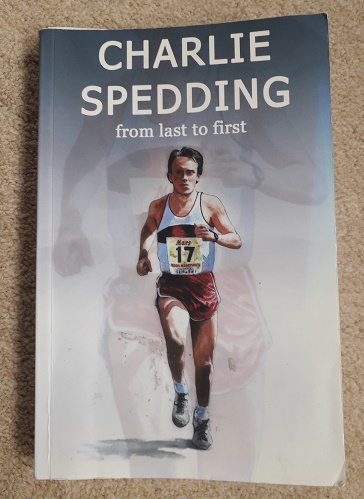
Recently I’ve been reading Charlie Spedding’s autobiography “from last to first”. He’s a runner I only remember because he was one of the early winners of the London Marathon and being a trivia buff it was the sort of factual list I knew off by heart at one time. The following year he finished second in a time of 2:08:33, which remained the English record until 2014, as he relinquished his title to Welshman Steve Jones.
Published in 2009, “from last to first” looks back to Charlie’s running career which ended twenty years earlier after the Seoul Olympics. Like all autobiographies, it tells of his early life, parents and formative years in running. It details his two major successes, winning the London Marathon and a bronze medal at the Los Angeles Olympic, events which occurred a few months apart in 1984 as well as a copy of his training diary between them. The final chapters of the book give an overview of how he trained and brings us up to date with some of his thoughts on the reasons behind the nation’s lack of health and prospects for future running success.
At just over two hundred pages, the book is well written and often humorous. As a pharmacist, he clearly has an understanding of science yet is able to tell his story without unnecessarily resorting to big words or jargon. I laughed out loud when he recalled his time at Chorister School in Durham where “One of the lads I played with was a boy called Tony Blair. I don’t recall his skill with the ball, but I do remember his ability to make up rules of the game to suit his team’s situation.” Also the tale of how he was invited to do an inspirational talk at a local psychiatric hospital. Introduced to a patient by the doctor as “This is Charlie Spedding. He’s an Olympic bronze medallist in the marathon”, the patient replied “That’s alright, I thought I was Henry the Eighth when I got here.”
About to undergo Achilles surgery in the 1970s, he almost died in hospital due to anaphylactic shock caused by an allergic reaction to a drug. It’s interesting to think that, at the time, surgery was deemed the way to fix these issues. Derek Clayton stated in his autobiography that he’d had nine operations for problems which included his Achilles. Nowadays we understand surgery isn’t necessarily the solution, heel drops can resolve it. My friend, Simon rehabilitated his Achilles simply by doing a month of very easy running after racing twenty-five times in a year. Charlie notes late on that he avoided further Achilles issues when he was in the United States by getting regular massages.
Throughout the book, Charlie impresses how important attitude and mindset were to his succcess. He talks about how he was fortieth or forty-first academically in a class of 42 at junior school but went on to achieve a degree and running his own business. When he first played sport, he wanted to be a footballer but wasn’t good enough; when he ran sprints he was last but then found cross-country and finished second in his first race. Having found what he was good at, he then worked hard at it.
After a decade of high level national running as part of Gateshead Harriers, he sat in a pub and rethought his attitude as to what he needed to do to reach his potential. He realised he needed to be more positive in his vocabulary, to be specific about his goals and to be willing to think differently if he was going to achieve more than the average person. His underlying philosophy was one of getting the best out of himself for whatever talent he had and accepting that as success.
I found many parallels in his writing to how I’ve lived my own life apart, of course, from winning the London marathon or going to the Olympics. The attitude and mindset of always giving your best to fulfil your potential are one that resonate with me. Also his willingness to try new approaches and not giving up when things haven’t worked out. It’s something of a cliché to say “how bad do you want it?” is the determining factor but I’ve met many people who say they want to achieve good times in their running but aren’t then willing to make it a priority or get out of their comfort zone. There’s nothing wrong with not doing those things but I believe it’s best not to talk about your desire for improvement if you’re not willing to do the things that are firmly within your control. It’s like wanting to win the lottery but refusing to buy a ticket.
I enjoyed reading this book for its refreshing honesty and humour. It was a very easy read and, as I was loaned this copy, I’ll probably look to pick up my own one in the future for a reread. As an aside, the hospital in which Charlie Spedding nearly died is the one where I was born!
Beginner’s mind is a Zen concept about approaching situations with a non-judgemental, open-minded attitude. There’s a couple of stories which begin to explain it and both involve cups of tea!
In the first teaching, a university professor who has been studying Zen teachings goes to see the Master. On arrival, he states he wishes to learn about Zen and begins to tell the Master all that he already knows. The Master listens and, after a while, suggests they drink tea.
While the professor talks, the Master begins to pour. The cup begins to fill with tea and the Master continues to pour. The professor continues to explain what he has learned about Zen and soon the cup is nearly full. The Master continues to pour as the professor continues on. The tea reaches the brim of the cup and then begins to overflow. The professor’s voice falters as the Master continues to pour and the tea spills out of the saucer onto the table. The professor stops, thinking perhaps his explanations have distracted the Master, but the pouring continues. As the tea runs off the table onto the floor, the professor is unable to stand it any longer and says “Stop, stop, can you not see the cup is full and no more will go in?”
The Master stops, looks up and replies “Like the cup, your mind is already full of what you know and there is no room left until you empty it of your ideas and preconceptions.”
What I often see among my running friends is a propensity to struggle because they have become set in their routines. Often when they return from a running break they restart with a schedule that is not much smaller than when they stopped. Or if they’re struggling to make progress, they make only small changes to the training in the hope it will create some kind of large change. Or the same injury flairs up repeatedly. All of it is not that far off Einstein’s “Insanity is doing the same thing over and over again and expecting different results”. None of them seem able to take stock of the fact that what they’re doing isn’t working for them and go back to humble beginnings to build from the ground up.
In the second Zen teaching there is more tea to be drunk. Or rather, more tea to be poured into four different cups.
The first cup is upside down. When the teacher attempts to pour tea, it cannot, of course, go in the cup but instead splashes off the upturned china. This is like the student who is so blocked they cannot receive any wisdom.
The second cup is the right way up but has a hole in its base. When the tea is poured in, it immediately drains away. This is the student who says they want to learn, who listens to advice but then walks away but doesn’t implement or think any further on it. The advice has gone in one ear, out the other.
The third cup is normal but it contains a fine layer of dirt. When the tea is poured in it becomes muddy and undrinkable. This is the student who is already full of thoughts and ideas – the one who lacks beginner’s mind. They’re not receptive to new ideas, but only willing to listen to those which confirms their own preconceived beliefs and ideas.
The fourth cup represents the perfect student. It is clean, there are no cracks or holes and it is the right way up. When tea is poured in, it is retained and perfect to drink.
While experienced runners are not new students coming to a teacher to learn how to run; when they are struggling the situation they find themselves in is unfamiliar. If it were familiar, they would know how to run themselves to fitness and there would be no struggle.
Unbeknownst to them they are students approaching the master. They need to open their eyes and take stock of their situation. They need to consider all options before taking action, not just the ones they’ve become accustomed to. Just like the clean, upturned, perfectly formed cup they need an openness to learning anew and to rebuild using methods they may have forgotten from when they were younger or beginners.
Every day of your life is the first day of the rest of your life. The universe is gradual decay and entropy. You have to keep looking at it with fresh eyes and beginner’s mind to remain ahead of it.
(While these stories are often told by Zen practitioners, I have relied on Dr Joseph Parent’s versions in “Zen Golf”)
Running 10Ks, half marathons and marathons in the 1990s my attempts to race faster were limited. I’d enter a race at one or two months’ notice believing all I had to do was get fit enough to cover the distance and rely on the speed I’d built up from playing other sports and some shorter runs. I never thought about it any more deeply than that. There was no connection or systematic way to string together training sessions, and the biggest downfall was that I never trained regularly for longer than a few months. Other sports or interests would drop into my life, running would stop until the next lull gave me the impetus to enter another race and start training again.
My first systematic attempt to race faster wasn’t in running, it came on the Indoor Rower, which I wrote about in detail here, when I tried to improve my 2,000m time. I suppose because rowing isn’t something you do naturally like running, I felt I needed to research how to improve at it. My research was done, after a lunchtime at the gym, over sandwiches on my return to the office, accessing the infant “World Wide Web”. It was so young, Google wasn’t even the search engine of choice then; I used Yahoo!, Alta Vista, Ask Jeeves and a meta-engine called Dogpile. I was lucky, working in an IT department, to have a fast internet connection and a management that didn’t mind how long our lunch hours were, because they were usually off playing football, squash or at the pub on a Friday!
Another stroke of luck was to stumble across Stephen Seiler’s MAPP website. He was a university researcher with a Masters thesis about rats running on treadmills and their response to exercise. But he was also a rower interested in applying his knowledge of exercise physiology to his sport. I lapped up the information on his website and began to follow his “Waves of Change” system of building fitness by rowing hard intervals to push my body to get faster. Although this post is going to refer to rowing often, stick with it because it’s very relevant to running as you’ll come to see.
Another of my internet searches turned up an interview with Sir Steve Redgrave which left me puzzled for years afterwards. Unfortunately I’ve never been able to relocate this piece and would love to reread it, to view it with fresh eyes.
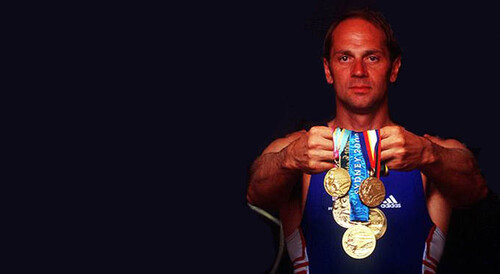
To the younger generations, I suspect Redgrave is now unknown or simply a footnote in history. But growing up in the 1980s and 1990s, watching the Olympics, he was one of Britain’s few reliable gold medal prospects. Golds were rare in those days, nowhere near the twenty-seven won in Rio. In fact, twenty-seven is how many golds Great Britain totalled in the five Olympics Redgrave participated in, and he won 18% of them! Five consecutive Olympic gold medals that began in Los Angeles (1984) in the men’s coxed fours then continued in the coxless pairs in Seoul (1988) and Barcelona (1992). In Atlanta (1996) he and Matthew Pinsent claimed Britain’s solitary gold medal and then it was onto Sydney where at age thirty-eight, Redgrave claimed his final gold as part of the coxless fours. Over a similar period, Redgrave won another nine World Championship gold medals as well as silvers and bronzes. He was undoubtedly our premier Olympian to that moment and, as the pre-eminent British rower, you can understand why I felt any advice I could glean from an interview with him would be worthwhile knowledge.
The interview appeared after he won his 5th Olympic gold medal and Redgrave talked about how, after meeting Jürgen Gröbler for the first time in 1991-92, his training changed because of it. Gröbler had moved to England when his native East Germany disintegrated with the fall of Communism and, with him, he brought knowledge from the nation’s coaching programmes. The East Germans were so dominant that, even now, thirty years after ceasing to exist, they still lead the rowing World Championship medal table with ninety-four golds to second place Italy’s eighty-five. While some of that success is explained by a state doping programme, the methods the East Germans used were also significantly different to how Redgrave was training.
From what I can glean a typical season’s training for Redgrave in the 1980s was rowing 20-40 min fast efforts two or three times each week, along with hard intervals every spring and summer throughout the racing season. Everything was geared to pushing to get faster, the runner’s equivalent of Tempo runs and Speedwork. But Gröbler had Redgrave rowing the majority of his training at very low stroke rates which felt like he was barely putting in any effort. This was as low as 14-18 strokes per minute which is significantly less than the 40-50 he might be reaching during a race. There are many runners who baulk at a similar concept of easy running because they believe you have to train fast to race fast.
Gröbler and Redgrave
Redgrave, himself, was sceptical about this method, but he was also intelligent enough to realise he needed to commit to the training if he was going to make a fair judgement of its effectiveness. The following March, after a winter of low stroke rate steady rowing, he attended the Thames “Head of the River” race which, by his own admission, he’d never done well in. Gröbler told him to start easy before turning on the power. Long story short, Redgrave won and was sold on the training. He stated that he and his crewmates followed Gröbler’s methods from then on.
So to recap, up to this point, Redgrave’s training in the 1980s, when he won Olympic golds and World Championships, had been training hard intervals each year to reach top form then dropping back over the following winter before building up again the following year. With Gröbler he did hours of slow training and gradually improved year-on-year and still won Olympic golds in the 1990s.
This was the itch I couldn’t scratch for years – how could rowing hard intervals in the 1980s lead to success but a gradual build in the 1990s also lead to gold medals? Surely there’s only one true method to success with coaches/athletes using variations on it. How could two significantly different methods be effective at winning gold medals throughout Redgrave’s career?
In subsequent years I would come across articles on running which talked about building endurance through slower training to get faster. Yet whenever I tried it, I could never get the huge benefits being promised. But the literature on endurance training was so prevalent, I felt I was missing something. I understood it was important but at the back of my mind there was always the paradox of Redgrave winning through two seemingly opposite methods.
Stephen Seiler’s MAPP website even made reference to this question on a page called “Understanding Intervals” where he posed the question “Which is better, Interval training or Steady-state training?” In it he firstly explains how doing interval work is effective at getting more work done. For example, you’ll be able to run 8x200m in a faster time than you can run a single mile. But having established interval training allows you to do more work at faster paces, he tells the story of how East German rowers were training with slow, steady rowing throughout the 1980s and winning championships. He tells of how Kenyan distance runners do vast amounts of their training at slower paces. So once again, everything pointed to the best endurance athletes doing massive amounts of steady state training to be fast. And yet whenever I tried training slow, I couldn’t get it to work for me even though all the books and articles seemed to suggest it was the route to success. Meanwhile there are numerous articles telling you of the benefits of running hills and speedwork. Very confusing to try and figure out how the two things fit together.
In the last few years, I’ve finally been able to resolve this paradox of how Redgrave was able to win two Olympics with one method and then three more with another. It turns out I wasn’t looking or thinking about what his event entailed. The typical 2,000m rowing race lasts under six minutes for an elite man, it’s the equivalent of a middle-distance running race, somewhere between the mile and 3,000m. When Roger Bannister became the first man to break four minutes for the mile he did it with twice weekly interval sessions where he ran ten laps of the athletic track during his lunch break and only totalled fifteen miles each week. Basically this is the nature of events that last under eight minutes, it’s possible to reach very good times off a relatively low volume of training and Bannister’s training is how Redgrave trained in the 1980s.
But this training is outdated, I doubt it would be possible to be a world class miler today off the low volume Bannister ran. The decade after he broke the four minute mile in 1953, Arthur Lydiard’s runners began to win the Olympics in the 800m and mile by running a hundred miles per week. This was where the East German rowers learned about the benefits of Steady State training and why Jürgen Gröbler converted Redgrave to this type of training in the 1990s.
The change in method also explains Redgrave’s success in the Head of the River race. This race lasts between 15-20 minutes and is much closer to the demands of a parkrun for faster runners. Redgrave’s previous lack of success in this race is because hard intervals are only one piece of the training required for longer events. He needed to build a base of training to support his speed, so he converted some of his speed into endurance to be able to last three times longer in the Head of the River race. That’s what Gröbler’s Steady State training gave him, more endurance.
But this still doesn’t fully answer the question of how you can win off both types of training. What I missed (or more likely wasn’t explained) about the gradual build-up method is that, as Redgrave got nearer to the championships, he would still go back to rowing hard intervals to ensure he peaked at medal time. He was essentially still winning with hard intervals but there was now no dropping back the following winter because he was building an endurance base. The big advantage of this base is it allows you to recover quicker between interval sessions and train harder during them. If Redgrave had to row through rounds of qualifying and repechages then he was better able to withstand their stresses and strains.
The middle distance events are such that they’re about finding a balance between sprint speed and longer distance endurance. You can come at it from either direction. Bannister came at the mile from the speed end and relied on his endurance to develop over the course of his running career and tempo runs. The Lydiard approach was to come at it from the endurance end and then perk things up with intervals to get enough speed into the legs for competitive racing. As I say, it’s the middle ground of events – you’d never train for sprints through endurance, you never train for the marathon through pure speedwork. You have to train at both ends of the spectrum for middle distance.
BONUS FACTS – One final bonus from my rowing reading. Redgrave mentioned he occasionally did runs along the river towpath. He stated he’d run ten miles in an hour and a half-marathon in 1hr30! Even more impressively his Sydney foursome partner James Cracknell, who is 6’4” and 15 stone, ran the 2017 London Marathon in 2hr43 at age 45. Nothing is impossible if you know how to train properly.
Simple rule: never run hard more than three times per week. Use the rest of the week for easy running and do it often to offset the effects of the hard runs. You might be able to do a fourth hard run once in a while, or if you’re still young and full of growth hormones and getting quick recovery, but as a rule, three is the maximum.
But what do I mean by “running hard”? Obviously if you go to parkrun or a race, that’s running hard. If you do an interval or speedwork session, that’s running hard. If you do some kind of tempo or marathon pace workout that’s running hard. Anything that gets you breathing hard or sweating counts as running hard. Introducing a new type of session, e.g. a long run, counts as running hard because your body isn’t accustomed to the work involved. It’ll need time to recover from that.
When Paula Radclifffe was at the peak of her marathon training she worked to a nine day cycle with one workout every three days. It’s the workouts that get you faster but you need the recovery days to allow the body to rebuild. Slot in too many hard sessions in place of easy runs and you’re making it hard for the body to adapt.
Often though, what runners think of as easy sessions actually count as ‘running hard’. If you arrive home sweating, or your breathing is raised, or don’t feel like you could do it again, then it’s probable you’ve been running hard. It’s always better to err on the side of caution and run what feels like ‘too easy’. Generally the only runners who undertrain are those who don’t train regularly.
So that’s my simple rule – maximum of three workouts each week with the rest of the week spent recovering and building a base. By all means don’t even do three each week, Paula didn’t. I’ve seen myself and other runners make decent progress off just one hard run per week. But start to understand that a hard session is anything that’s more than “too easy” and start limiting yourself.
Things are coming together at last. I’m in the final two weeks of the plan and tapering towards a couple of 800m time trials in April to see whether the training has paid off. I already know it has and it’ll be good to see it quantified in my time trial, but that’s for next month’s update!!
Although I began following Jack Daniels’ 800m training plan at the start of December, I actually consider training started back on 21st September when I went back to a steady diet of gentle runs at ten minute mile pace, subsequently introducing strides and a faster session midweek.
So really this has been six months of consistent training. I wanted to write “hard work” but apart from putting in big efforts during the twice weekly workouts, and a difficult spell around the start of February when my body was struggling to adapt, compounded by atrocious weather, I don’t believe it’s been hard work. I’ve looked forward to the training, enjoyed it and it’s not felt like a burden at all.
I realised over this past month my body has begun to feel fit and strong again. I hadn’t appreciated a lack of regular fast running over the past 3-4 years has allowed muscles to weaken. That translated in my day-to-day living as minor aches or pains walking up the stairs, or pushing with my hands to get up off the sofa. Nothing drastic, just minor little things that most people put down to the effects of ageing. In some ways they are the effects of ageing but not irreversibly as those people would have you believe. The takeaway is if you stop using it, you lose it. I actually now feel as strong and fit as I did ten years ago, and would like to believe I’m as fit as I was in my twenties although I know that’s not quantifiably true. My running still isn’t as fast it was when I started parkrunning at forty but I can see it’s getting back there and I believe it’s going to surpass that because of what I’ve learned since then.
March’s training has been focusing on what Jack calls T- and FR- pace running which stand for Tempo and Fast Rep. After adjusting for the expected improvement in fitness, these have been mile repeats at 7:12/mile and short intervals (200-600m) at 5:38/mile respectively. To put this into perspective when I began in December the Fast Reps were 44½ secs per 200m, now they’re at 42secs. Training has been going well enough that I’ve been overcooking these with some coming in at sub-40! I even managed a 37.45s effort (5:01/mile).
One of the problems I faced for T-paced sessions is ideally needing somewhere flat where I could keep pace and effort consistent. In other years, I would have gone to the beach or Poole Park, but with lockdown ongoing, as well as the possibility of sand on the prom or people out for a walk; I decided to look closer to home. The roads right outside my front door are fairly flat and quiet, but I’ve always resisted doing intervals on them for no explicable reason other than I always think of warm-up as taking me away from home. Circumstances led me to conclude this would be the best place for the training. Maximising the area available to me, I created a loop measuring 900m which had no sharp turns and only minor ups and downs. On some sessions, it meant I ended up doing a good 10+ laps of the same roads which, I suspect many people would find boring, but I hardly noticed as I was focused on my breathing, pace and sometimes trying to reach the end without completely falling apart! This ‘track’ worked well apart from, where I run in the road my early morning sessions brought me into conflict with people driving off to work.
Around mid-month, my legs began to feel strong and, the walking up the stairs with ease I talked about, came into my awareness. I could tell a step change in my fitness was about to come through and when it arrived my easy running pace improved by 20 secs/mile. It felt wonderful and that improvement then fed into the next session of T-pace running coming in at sub-7 min/mile rather than 7:10. In turn it made the fastest intervals feel a lot easier although not necessarily faster!
I’m not going to do my usual breakdown of successful / failed repeats until next month’s post but my attention was drawn to a bizarre set of times on last week’s 200s. I run these back and forth along a road which I’ve come to realise, has slight undulations to it, and these result in one direction being marginally faster than the other. The four efforts in the slower direction were 41.66 / 41.66 / 42.20 / 41.66 secs. I’m sure you can see the bizarreness of the fastest three being exactly the same time to one-hundredth of a second, it simply cannot be a coincidence. And if I then tell you the first effort on the previous session was … yes, you’ve guessed it … 41.66secs; there’s some kind of limitation going on somewhere in all of this! I’m not sure what it is, my legs were fatigued that day but in the other direction I ran 41.77 / 40.05 / 39.33 / 37.45 secs so it was possible to go faster under the right conditions. Bizarre numbers aside, it’s been a good month’s training.
I’ve got two more workouts to do in April, then the time trials begin. I’m only intending to do two mid-month but this will be weather dependent. If I feel I’ve underperformed I may slot in a third. Analysing my training times, I’m hopeful I can break 2min40 but I’ll report back whatever the fruits of my harvest are!