A Philosophy of Winning

Have you heard of Ian Stewart? It’s a popular Scottish name and I used to work with one but I’m asking about the runner who was one of Britain’s talents in the 1970s claiming a bronze medal in the 5,000m at the Munich Olympics. Athletics Weekly recently ran this article detailing his top 30 races.

What struck me was this quote: “First’s first and second is nowhere as far as I’m concerned. This country’s full of good losers. It’s bloody good winners we want.” It brings to mind famous quotes by Liverpool’s Bill Shankly “Some people think football is a matter of life and death. I assure you, it’s much more serious than that” or the misquote of Vince Lombardi, head coach of the Green Bay Packers, with “Winning isn’t everything, it’s the only thing”.

It’s an attitude that was prevalent as I was growing up in the 1970s and 80s, even into the early 2000s but one you rarely hear uttered these days. Maybe it’s because we’ve been spoiled with success in athletics, swimming, cycling, rowing, tennis in recent years; whereas for many years championships or medals were rare.

Through my early twenties I fell firmly into Stewart’s camp believing only in the importance of winning and the pointlessness of placing. I first began to understand this could be wrong while watching the Atlanta Olympics where Britain only won one gold medal. “Being a good loser” was never more apparent than in the men’s 400 metres when Roger Black trailed in behind Michael Johnson. Whatever Black did that day he was never going to beat Johnson, the world record holder at 200m and 400m, unless injury or disqualification occurred. Roger Black did the best he could and made sure he won the silver medal. I’m sure he would have preferred gold but there was no disgrace in getting silver that day.


It’s incisive to ask “If winning means so much why not find situations where it’s guaranteed?”. Try racing your 8-year-old and see how important the win is then. On the other hand, try letting your 8-year-old win easily and they’ll be quick to say “You weren’t trying”. Against a mismatched opponent, it becomes obvious winning means nothing to all but the hyper-competitive. You will see people who go looking for guaranteed wins – witness the segment hunters on Strava or those who enter races with small fields or where the winning time was slow last year.

On the only occasion (so far) where I’ve been crowned “First Finisher” at parkrun, I recorded the slowest winning time of the 200+ occasions Moors Valley parkrun has been run. The best club runners were tucked up in bed on a day forecast to have 50mph winds, resting up for a Dorset Road Race League race the next day. But I never turned up that day looking to win, my intention had been to go for a recovery run!

While it was nice to be first, the week before Andy was fastest, the week after it was Tracy. Meanwhile there were another thousand people around the world who were fastest at their respective parkruns. My success was short-lived but for six years, Mo Farah was the undisputed champion at the Olympics and World Championships over both 5,000 and 10,000 metres but eventually someone surpassed him. Being undisputed champion of anything for a period of time elevates you but eventually it comes to an end and then what? You can either move on to pastures new or try to live off a legacy of the past.

For the rest of us, the truth is there’s always someone who’s better and someone who’s worse. Only one person can rise like Mo Farah, Usain Bolt or Eliud Kipchoge to say they’re the best in the world. Yet when you bring the three of them together, each has to accept they’re only the best in their respective events. Bolt is the best sprinter, Farah the best distance track runner and Kipchoge the best at the marathon. Being the best is event specific.

When I last watched BBC Sports Personality of the Year, a decade or so ago, they went through a list of Britain’s world champions which quickly became a list of sports you barely knew existed. A quick search pulls up a similar list from 2001 which The Guardian created. While I remember triple jumper Jonathan Edwards, rowers Cracknell and Pinsent, snooker’s Ronnie O’Sullivan and boxing’s Lennox Lewis; can anyone outside of the sports name our former world champions in waterskiing, billiards, real tennis or canoeing? This isn’t to diminish the efforts of the athletes in minor sports, only to point out how limited winning success is in its scope and recognition.


Could winning represent something deeper than simply coming first? I suspect many believe winning brings some kind of Midas touch. That it’ll turn them into a good person, bring them friends, a beautiful spouse, maybe make their lives easier by giving them power and influence, or even like King Midas bring them riches. While that may be true for Bolt and Farah, the effects of winning below the elite level quickly diminish. Whatever you might believe, the idea of outer success signifying some kind of inner worth is flawed. Many champions are still unhappy even while they’re winning. Their struggles show up time and time again, more so after they retire from competition. Winning hasn’t transformed them into happier or more secure people.

What I’m hopefully getting across is the idea that winning, in and of itself, is almost worthless. Firstly because in any race there’s only one winner and if you’re up against a vastly superior opponent you’re a guaranteed loser. Secondly winning is transitory – someone always replaces the current champion. Thirdly even if you win in your local talent pool there are others further afield who will be better. Finally because you’ve only won a specialised, measurable event; you’re one champion among many. How ever much BBC Sports Personality of the Year may want to single out someone as the champion of champions, genuinely ranking all the contenders across a spectrum of sports and athleticism is an impossible task.


If winning is worthless and, according to Ian Stewart, so is coming second then what is the point of competing?

I believe the answer lies in something we’ve all heard many times from school onwards. It’s the cliché of “doing your best” or more accurately “getting the best out of yourself”. Listening to Chris Hoy, Britain’s much decorated track-cyclist, commentate during the last Olympics, he told how he set challenging process goals for his training, recovery and all the other things involved in getting him to the start-line of races. If he could honestly say he’d ticked the box on those goals before the race started then he would be satisfied with the outcome whether it was gold, silver, bronze or whatever. He set himself challenging training targets to put himself in position to perform at his best on the day. If someone else then turned up who was fitter or stronger, he could accept it without any form of regret. While he never said it, probably because it never happened, if he hadn’t ticked the box on those process goals then he didn’t deserve to win but wouldn’t have complained if he did.

Compare that to the average runner who goes to the pub for birthday drinks when their schedule needed them to have an early night, or the runner who misses a couple of sessions in the depths of January because it’s cold or raining. Think about how these runners then rationalise and excuse themselves but also get upset when beaten over the line or missing a PB by seconds. Hoy had no need for excuses or rationalisations because he knew he’d given his best from start to finish.


This is where the desire to compete and win takes you. While you may begin with a level of natural talent that allows you to coast past your initial opponents eventually the competition becomes tough. At that point you make a choice – accept what you’ve achieved, or dig in and try for more. If you opt for the latter then you train harder, train more frequently, train more intensely. Taking the challenge to compete at higher standards will take you out of your comfort zone as you begin to try new things and look for alternative methods in your quest for success. Sometimes there’s a shortcut like buying better equipment – the new running shoes that promise to make you 4% faster. Sometimes innovation is good, sometimes it verges on breaking the spirit of the rules.

For some, winning becomes so all-consuming they take desperate measures. They break the rules – either through foul play during competition or behind the scenes like taking banned substances. Sometimes others push them into these situations like the state-sponsored doping of East Germany or the pressure exerted in sports where doping’s considered the norm. The choice to stay honest and drop out is a tough one when you’ve already invested so much of your life into something you love doing and which provides a livelihood.


Ultimately winning is being the best at a particular thing at a specific moment in time. That’s all. Nothing more. It only means something if it takes you to the next level, to new competition, gets you to push yourself harder and try new things; or comes as a result of them.

Returning to Lombardi’s quote, which as I say is often misquoted, what he actually said is “Winning is not everything, but making the effort to win is”. It’s a very different emphasis and one I’ve come to agree with.
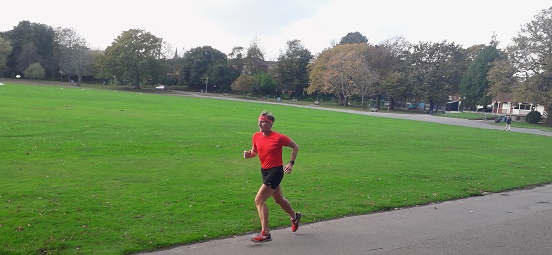
“Winning is not everything, but making the effort to win is” – Vince Lombardi

Short-to-long or long-to-short

The standard approach to marathon training has always been to build up the distance to the “20-mile run” three weeks before race day and then taper. Runners of the 1980s talked about doing the 20-mile run six times before a marathon to get the legs used to the distance but it was always about building up to the distance.

But a few years ago, I came across the idea that the Kenyans start out with running short distances at the pace they want to run their marathon and then extend the distance. I discovered this around the same time I was reading the Hansons Marathon Method which sets out ever-longer “Tempo runs” at marathon pace. These two approaches of the traditional Western build-up vs the Kenyan build-long have names in the sprint world – Long-to-short and Short-to-long respectively.


When I began running, I started out with a sort of Short-to-long approach. I went out the door at high speed and tried to hold onto it for as long as possible. Of course fatigue quickly kicked in and I gradually slowed down. This is the Short-to-long approach at its simplest – start at a particular speed and build up the distance for which you can hold it.  I’m currently using this approach with my 800m training – I began with strides of 10-20secs to get my legs used to running at speed. Then it was 200m efforts at a particular pace, subsequently progressing onto 400m then 600m efforts at the same pace.

The alternative approach of Long-to-short is one where you get used to running longer intervals at a slow speed and then gradually quicken them up. As I documented in my post about Roger Bannister, in the six months preceding his iconic moment he began running 440yd intervals at 1min06 then reduced the time by a second per month until he could run them at 56 seconds e.g. 1:06, 1:05, 1:04.

In his “The Science of Running” book, Steve Magness refers to “Top down” and “Bottom up” approaches which are the distance running equivalents of Long-to-short and Short-to-long. Below are his suggested set of workouts for the 5K parkrun distance. On the left you can see the distance is long intervals of a mile or 1km which begin at threshold pace and quicken to 10K and 5K pace as the weeks go by. On the right, everything is run at 5K pace from the beginning but starts with short intervals of 400m and lengthens out.

Top Down (Long-to-short)Bottom Up (Short-to-long)
6 x 1-mile at threshold with 1-2 min rest3 sets of (4x400m) at 5K pace
with 30sec rest, 5-mins between sets
5 x 1-mile at 10K pace with 2-3 min rest3 sets of (3x600m) at 5K pace
with 40sec rest, 5-mins between sets
3 x 1-mile at 10K pace
2 x 1000m at 5K with 3 min rest
2 sets of (3x800m) at 5K pace
with 45sec rest, 5-mins between sets
1 x 1-mile at 10K pace
1 x 1-mile at 5K
2 x 1000m at 5K with 3 min rest
2 sets of (1000, 800, 700m) at 5K pace
with 45sec rest, 5-min between sets
3 x 1-mile at 5K pace with 3 min rest5x1000m at 5K pace with 60-75sec rest

Of course these are general outlines of the approach. The truth is you still do a bit of each as you progress through your running career. Eliud Kipchoge didn’t start out sprinting as a small boy at his marathon pace of 4:40/mile and keeping lengthening it out until he could run a sub-2 marathon. He did some faster running in shorter races (his mile time is 3:50) and he did lots of general runs at slower paces to build support for what he eventually achieved.

The second truth is that neither approach is “The Way” to train. Some runners will adapt better using a Short-to-Long approach, others using a Long-to-Short. I’ve met a number of guys who were natural marathoners and benefitted hugely from the traditional Western approach to marathon training. They went out each week, covered big distances and pushed a little harder. I, myself, on the other hand have always struggled to run big distances but find the shorter stuff easier and so tag on distance when I have a longer race coming up.

Whichever way you currently approach your training, think about your preferred style and then have a think about the alternative and whether applying it might get you better results.

Update on my 800m training – Jan 2021

I noticed during the 2020 lockdown my speed and strength have been declining and, as I’m not getting any younger, I thought it would be good to try something different while I’ve still got the opportunity to maximise whatever talent is left.

I’ve been toying over the years with trying my hand at middle distance running – 800m or mile. Having always struggled at 10K and half marathons more than my training suggested I should, it’s been a slow realisation that maybe I’m built more towards middle-distance or even shorter. I met Iwan Thomas, the British 400m record holder at Eastleigh parkrun once, and noticed we’re of similar size and build at 6’2” and 13+ stone. (Obviously this isn’t to begin to suggest I could ever have challenged him). But I have all the hallmarks of being packed with speed-generating fast-twitch muscle – I build muscle easily, I sweat profusely, have high heart-rates when running at easy paces, start off too fast and love doing interval work. The only trouble is I was never fast at sprinting!

While I understand the principles behind training for 800m, I’ve never actually done it so I decided to use one of the plans from Jack Daniels’ Running Formula book. I wanted to get a sense of how he structures workouts and what volumes he uses. I’d been running forty miles per week through the autumn so went with the plan based on that mileage. I ran an 800m time trial on Dec 2nd to baseline where I was at and ran a lung-busting 2min58. Not great but a starting place.

The plan has been to run two workouts each week, on Tuesday and Thursday, and a long run on Sunday. While I’ve trained to the workouts scheduled, I’ve continued with a long run of 1hr30+ that I was doing through the autumn rather than Jack’s recommended one hour. He also recommends doing six to eight strides on two of the recovery days but again I haven’t done these. This is because I’ve found in the past it’s easy to develop my speed but, in doing so, I wipe out my endurance. I wanted to try and keep the aerobic side propped up with the long run. The six weeks of training I’ve done so far have resulted in 45 / 41 / 48 / 47 / 43 / 44 miles.

The first workout began with a total of 1,600m training (8x200m) progressing to 2,400 – 3,000m in most sessions with a peak of 3,200m. It’s been exclusively a mixture of 200m – 600m efforts with equal jog recoveries. I’m surprised at how low volume this is compared to what many runners do when training themselves.

Target timeOn targetMissedEffortsFastest
200m48s67976(15.2km)40.6s(5:27/mile)
300m1min1366(1.8km)1:05.79(5:53/mile)
400m1min3726127(10.8km)1:29.01(5:58/mile)
600m2min2644(2.4km)2:13.87(5:59/mile)
Total10310113(30.2km)
Some interval stats for those who love them!

The first few weeks created an overload and the pace of my Sunday and other runs went backwards. This was to be expected as it takes 10-14 days to recover from a new stimulus. I found myself sleeping 8-10 hours the night after big workouts and experiencing more muscular tightness than in the past. As my running form has (hopefully) improved, I’ve found myself landing more on the fore and midfoot and my calves have been taking more load. I’ve had a few aches and pains in random muscles – the inside of the right thigh, below the knee, my left glute but none of them lasted long and the slower, paced recovery days allowed them to heal. I’ve been stretching more to keep everything loose.

Once or twice, I looked at the upcoming session with dread – not because of whether it’ll hurt, but whether I can be on-target for some of the bigger efforts. That’s a real ego thing and something that isn’t good to get too judgemental about. Ultimately there was only one interval I missed by a big margin and that was in the first session of the 400s. It started on an uphill section and I took it too casual – so I learned from it. When I was younger, I’d have beaten myself up about it but now I see a missed target as feedback to whether I’m on track for training. If you start missing targets regularly then there you’re trying to do something you’re not ready for. But once I got into the training I rarely missed target and was more likely to run them too fast. The silly thing is while you can feel you’ve failed for running 48.2s and only marginally missing, you think nothing of it when you run 45 or 46s. Certainly that’s how I would have looked at it when I was younger. But with a wiser head on my shoulders, I tried to ensure efforts weren’t too fast either, there’s no use in adding extra stress when the plan is calculated to give you an optimum loading to recover from.

One of the side-effects of training with all these short intervals – especially the 200s – has been that it’s given me a chance to practice my running form, or rather to play around with it. I noticed I run faster with lower knee lift, that my left leg wasn’t straightening ‘out the back’ and my right hip was coming forward and therefore dragging the trail leg. I noticed over the past week that my left knee was tracking from side-to-side but the lower knee lift gave it more power to push down and straight through. All little things I could only figure out and experiment with by training at faster speeds than a jog. Jack Daniels says in his book that Repetition training is good for improving efficiency but I’d never experienced it to be true until this block of training.


Overall I’ve really enjoyed this training. I’ve been lucky with the weather. It was icy around New Year but I ran at lunchtime when it was warmer and lighter. Some of the sessions have been 15-20mph wind but nothing gale force. Getting out and running fast is fun even when it leads to heavy legs and gasping for breath. It leaves you feeling stronger and better able to cope with running on other days. The next phase of the plan is geared towards supporting this with longer intervals but run at a slightly, slower pace.

Marathon speed

Recently I’ve been loaned biographies about Bill Adcocks, Derek Clayton and Ron Hill. These are names from a long-forgotten past but, in the late 1960s, they were three of the best, if not the best, marathoners in the world.

Derek Clayton was the marathon world record holder for fourteen years including the whole of the 1970s. Born in Northern Ireland, he emigrated to Australia in his early twenties and set his mind on becoming the world record holder. His training regime consisted of 150-160 miles each week which enabled him to set the record, first in 1967 with a time of 2hr09min36 in Fukuoka (Japan) then improve it two years later to 2hr08min34 in Antwerp (Belgium). There was however controversy over this latter record as the course was thought to be short. Nonetheless it stood until 1981 when it was broken by Rob de Castella.

Derek Clayton looks out from the cover of “Running to the Top”. Part autobiography / part advice

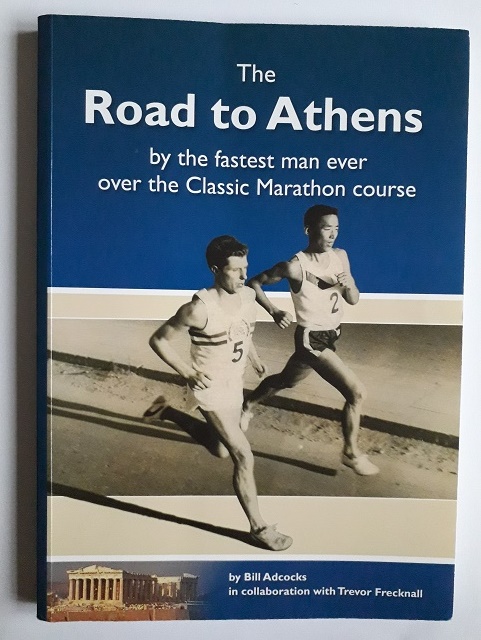
Bill Adcocks was another great marathoner and, the year after Clayton’s recordsetter, he became the sole Briton ever to win Fukuoka marathon in 2hr10min48. He was only a minute slower than Clayton and, while he never held the world record, until 2004 he held the course record for the original Marathon route in Greece with a time of 2hr11min07. Among his other accomplishments were to place 5th in the heat and altitude of the 1968 Mexico Olympic marathon and win silver at the Empire (Commonwealth) Games in 1966.

Bill Adocks running on the left.
The cover of his autobiography “The Road To Athens”

Ron Hill is better known these days as he’s continued running into the 21st century and is famed for his daily run streak that stretched from 1964 to 2017. Arguably he was slightly better than Bill Adcock at the marathon but it’s a close contest. Ron competed for Great Britain at the 1964, ‘68 and ‘72 Olympics. In 1970, he set a course record in Boston in 2hr10min30 then followed it up by winning the Commonwealth Games gold in 2hr09min28. He claimed this was the world record as it was faster than Clayton’s Fukuoka time and the Antwerp course had never been successfully remeasured.

Part two of Ron Hill’s “The Long Hard Road” – both parts are 400 pages

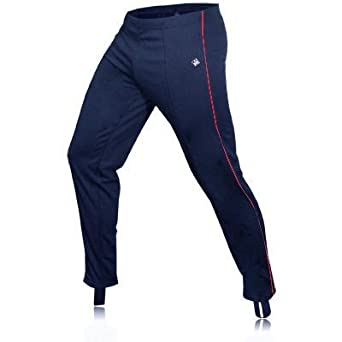
Having graduated with a PhD in textile chemistry, Ron began his own clothing line. I remember when I was a sixteen year old attendant at Broadstone Sports Centre, the other lads (Warren, Justin, Eddie, Tim) all wore RonHill Tracksters – navy blue leggings with a thin red stripe down the side and stirrup loops at the bottom. While they were tighter than the woollen tracksuits of the day, they were still looser compared to the lycra of today. Of course I had to get a pair to try and fit in with the cooler, older lads!

The legendary RonHill Tracksters. A favourite of the lads at Broadstone Sports Centre in the ’80s

What I found revealing from these books was that each of them began at clubs where they did regular intervals sessions to develop their speed. Mileage was secondary and a big week in their early years was 30-40 miles. Their best times for 400m and the mile were as follows:

400m / 440yd timeMile time
Derek Clayton52 secs4:07
Ron Hill55 secs4:10
Bill Adcock57 secs4:12
1960s world record45 secs3:51

My big takeaway is that even the best marathoners in the world, who are the most naturally talented towards endurance, could run a 400m or 440yds in under sixty seconds. Yet I know few runners entering parkruns, 10Ks or other distance events who can do this. Do you have to be freakishly endowed with speed to achieve this? I don’t believe so – simply committed to a good training programme. Of course there will be some who aren’t capable but I suspect many more could if they tried.

The related takeaway is that in being able to run 2hr10 marathons, Clayton, Hill and Adcocks were running at 5-minutes per mile. It’s an obvious statement yet most people approaching the marathon are more concerned about training for the distance than being able to run a single mile faster. To an extent, you can build decent times off general runs and progressively pushing harder but often this only leads to being a decent runner at the front of local races with times that are far off those of the best club runners.

When you think about it, it’s obvious – “if you want to run a fast distance race, you have to be fast over a shorter distance”. I know lots of people who do speedwork with the intention of getting fast for their current races but no-one who’s taken a dedicated approach to improving their speed at shorter distances before working on the distance of longer races.

When low volume training works

“Who is the only neurologist who will still be remembered one hundred years from now?”

In his 1996 book “Why Michael Couldn’t Hit”, Harold L Klawans states he often asked a sports trivia question to spark up discussion in what otherwise promised to be uninspiring lectures. Klawans was the professor of neurology and pharmacology at Rush Medical College in Chicago and his book discussed sports topics such as why basketball’s Michael Jordan failed to be successful at baseball; why Muhammad Ali was one of the few boxers to contract Parkinson’s Disease among his peers and how conditions like acromegaly, Tourette’s and ALS affected other sports stars.

The answer to his question is a trick one – it’s Sir Roger Bannister who will most certainly be remembered for many years to come, not specifically for his career in neurology, but for becoming the first man to break the four-minute mile barrier. Sadly he died in 2018, aged 88 after a long and successful life in both sport and medicine.


When Bannister ran the first sub-4 minute mile in May 1954, it was based on a low-volume, high intensity approach. In 1949 he’d run 4:11; in 1950 it was 4:09.9; in 1951 it was 4:07.8; while in 1952 he only raced the mile once as he focused on the Olympics in Helsinki where he finished 4th in the 1,500m. In 1953 he ran 4:02 and would certainly have broken the 4-min barrier under modern conditions. The tracks in those days were cinder and runners’ spikes accumulated the ash as a race went on, costing one second per lap.

Bannister’s training schedule during the winter months reached a maximum of twenty-eight miles per week but, when he was training hardest in the spring, prior to the sub-4 he was down to as little as fifteen miles per week. His sessions never exceeded 48-minutes and many were fitted into the lunch hour during his medical studies.

Once out of winter training, two of his key sessions were as follows:

  • Run 3 x 1½ miles at 4:50/mile pace which would have equated to 7-minutes of running at Threshold pace.
  • Hard intervals of 10 x 440yd in 1min06 with a 440yd jog recovery in two minutes. Twenty laps of the track taking half an hour and totalling five miles of training. Bannister stated there was no warm-up or cooldown. This training started in the October of 1953 and the time for the ten efforts was reduced by a second each month so that by the time of the record-setting mile he was running them in sub-60, sometimes as quick as 56 seconds.
Photo of p.209 of Klawans book. Archive photo according to index page.

So, this all leads to the question, if Bannister was able to train this successfully with intervals why don’t more runners train like this? I believe there are two reasons.

Firstly it’s my opinion that Bannister had decent levels of natural endurance due to his genetics. He was 6’2” and weighed 11-stone. Compare this to Britain’s 400m record holder Iwan Thomas who is as tall yet weighs 2½-stone heavier. That extra muscle is a suggestion of larger, fast-twitch muscle fibres that lack endurance. Even though we consider Bannister fast, he doesn’t have the blazing speed of Thomas whose record is under 45 seconds. Another indication of Bannister’s natural endurance is his ability to do these sessions without warmups. It’s something only a natural could do.

Secondly Bannister was exclusively a middle distance runner in the 800m / 1,500m / mile events. His five mile training sessions were the longest runs he did. Most of the runners I meet are interested in parkruns and longer. Even a parkrun is over three miles long and therefore requires significantly more endurance than a four minute run.

This is the real meat of this story. The problem with low-volume training is it doesn’t stretch the demands of the race for most runners. Even though Bannister was training low-volume he was still doing 15-30x as much training each week as his mile race. Each session was 5x as long as he was racing. Obviously the longer your race, the harder it becomes to scale up like this (a marathon runner would have to run the impossible 400 miles each week to train 15x their race distance) but more miles is generally beneficial to improving endurance for your distance races. Now compare this to the average runner entering 10K races who are running twenty miles per week and barely doing 3x the distance. As I wrote in the How to Improve series, successful training requires runners to get out there frequently to build up a base of miles.


BONUS STORY – Klawans’ book also tells the story of Wilma Rudolph who was the Olympic champion in Rome 1960 in the 100m, 200m and 4x100m relay events. She was the fastest woman in the world and yet had suffered from polio as child. This entailed walking with a heavy leg brace for much of her childhood and intensive physiotherapy, massage and heat treatments for four years up to the age of ten. Once the polio had gone and her body had regrown the nerves, which can take one to two years for the muscles of the feet, she went onto become a basketball and track star.

Given our current circumstances with Covid-19, I found it thought-provoking to read how polio is also caused by a virus. Klawans states “When I was growing up it seemed as if one day you could be playing baseball with your friends and the next day you could be paralysed for life. In Chicago, every summer, you had to stay away from crowds, especially the crowds at the beach. Otherwise polio might get you.

He explains polio existed from the time of the Egyptians but in those days was endemic, by which we mean it was always around. It was present in the water supply because there was no separation of faecal waste from drinking water. With people being exposed to the virus early on they built a resistance to it without ever knowing they’d had it. However once sanitation became the norm, it became an epidemic because people no longer grew up being exposed to it and gaining the immunity it would have brought. Of course, this is not to rally against sanitation, only to highlight how herd immunity was the endemic route to avoiding polio while the development of a vaccine was the thing that eventually wiped out the polio virus and its associated epidemics.

Photo of p.189 of Klawans book. Attributed as "Archive photos/DPA" on index page.

Streaking into 2021

With 2020 now done and dusted, it’s an understatement to say it was a difficult year for everybody. From a running perspective, the lack of races, parkruns and even club sessions left many runners questioning why they run. Personally I run because I enjoy it, the races and parkruns are side attractions where I like to test my mettle. While my year started with a rebuild of my fitness, it ended with me having run every day, failing to get faster over 5K and heading in a new direction with 800m training.

The rebuild of fitness began after I suffered a four day illness in late November 2019. It was probably a standard winter flu virus although it’s tempting to claim it was an early version of Covid-19 but realistically the timing is wrong even though some of the symptoms, like loss of taste, were the same. Anyway whatever it was, this all took place the week before the Christchurch 10K and with my aerobic fitness wiped out, I struggled round to receive the annual reward of a Christmas pudding! After that I focused on the rebuild which I knew would take about six weeks and got out running every day. I attended Christmas Day parkrun at Poole with its record attendance of over 1,300 then went to visit friends and ran Rushmoor and Frimley Lodge parkruns on New Year’s Day. By February, the legs were perking up; I was running ten miles on a Sunday at a good clip and ready to up my training.

It was my intention to run Bournemouth Bay 1/2M at the start of April and take a few days rest going into it. But with the onset of Covid-19, I delayed my entry and we ended up entering lockdown in the last week of March. As leaving the house was limited, I continued to run every day and it was a fantastic time to be out running. The roads were traffic free, almost deserted and I remember running at 10am one morning barely seeing anyone for the first mile. It was eerie and quiet like a scene from “28 Days Later”, the 2002 film where the protagonist awakes from a coma to find London deserted. But then, if you’ve seen “28 Days Later”, you’ll know 2020 wasn’t far off a real life version of it.

By the end of March I’d been running for 115 days straight and there was no sign of stopping. I decided that with lockdown in place, no races in sight and uncertainty about when the world would be back to normal, this would be my chance to create the longest run streak of my lifetime. And I mean lifetime. All being well, I’ve got a few decades ahead but I always take rest days before and often after races. If I’m still running in my 70s and 80s, I’ll still be entering races. I don’t usually go more than three months without a race.


Streakwise I’d already surpassed my previous best of 76 days so the question was how long could this one go?  I figured if I reached September I’d try to see out the whole of 2020. But that was still a long way off so I focused on now.

My standard running year is to build stamina in the winter then work on speed for 5K and 10K races in the summer. There weren’t going to be any of those coming up but I pressed on with the plan hoping, as we all did, that racing and parkrun would be back in a few months. I’d also noticed my vertical jump had dropped over the years. When I played basketball I was able to touch the ring and my jump was about 70cms, now it was 42cms at best and I felt little spring in my legs. This shouldn’t have been a surprise because I hadn’t done any dedicated running speedwork in over three years and it was over a decade since I’d been playing the sports that had built big thigh muscles for jumping. So while everybody else was following Joe Wicks’ classes on Youtube, I started my own fitness regime of hill sprints, skipping, side jumps, step-ups and depth jumps. I also started bounding, like a triple jumper, which was great fun and began to highlight some changes I needed to make to my running action.

I continued to run daily and began 5K training with a time trial at Poole Park benchmarking in at 22:05. I was twenty-five seconds slower than I’d been on New Year’s Day. My fastest kilometre had only been 4:14 and I found myself struggling to even hit 4:30 towards the end. But a benchmark is there to find out where you’re starting from and over the next six weeks I ran kilometre intervals twice per week and saw my speed pick up to reach a best time of 3:50. A second time trial at the beginning of July came in at 21:32. A 30+ second improvement isn’t to be sneezed at, but I’d also expected better from six weeks of training so there was something missing. What I didn’t immediately realise was that another rebuild was looming.


The day after the second time trial, it was obvious my body had switched over to speed mode rather than the endurance mode needed for distance running. I could feel it in my long runs where I felt like I was running fast, yet each week’s run came in within seconds of the previous weeks’. Nonetheless I thought I could train myself out of it with a more restrained approach to my interval work but I was wrong. By mid-August I had to admit defeat and think about another rebuild. There was another problem. I was struggling with many aches and pains in my ankles and feet, as well as my lower back. This is always a sign I’ve done too much fast running and need to do recovery work.

On top of all this I started a core stability programme in mid-August. I’d always thought my core was reasonably strong. Certainly whenever I planked against other people they’d struggle to hold it for as long as me and I could hold for 1-2 minutes. But I was wondering how on earth the guy who holds the record at over five hours for a plank could manage that. The longest I’d ever managed was three minutes which is a long way off. Researching I came across a statement that once you go over a minute there’s no benefit to planking for longer, and then I discovered the Big3 programme of Stuart McGill which he’d developed from working with spinal rehab patients.

I began doing the Big3 programme nightly but after a week it was too much, too soon so I backed off and let things settle down. A week later, after my Sunday long run, I bent down to untie my shoelace and felt an ache in my side that took two hours to subside. It wasn’t a bad pain just one that indicated I’d been working the core throughout my two hour run. I realised that while I may always have had a strong core, it had never been integrated into my running and was allowing me to twist and turn my shoulders and hips too much. I continued with the core stability and found an additional benefit was my golf swing became more connected.


Going into September the aches and pains in ankles and feet were becoming too much to bear. My streak was intact but I knew I wouldn’t get through four more months of daily running. I had to be honest with myself about this. It was tempting to think I could take it one day at a time but deep down I knew realistically it would be too many days. If this had been mid-November, with a month or so to go, it would have been different but not four months. I didn’t want to give up without trying to fix things before I took a rest day, so I made a deal with myself – I’d give it until October and if there was no respite from the pain by then, I’d end the streak.

Knowing the pains were a sign I was doing too much, I scaled back my daily one hour runs to forty minutes and shortened my Sunday long run to give less training to recover from. Over the first couple of weeks, the pain eased and I found myself sleeping up to nine hours each night. But despite running at over 9min/mile I returned from each run sweating. I knew from the sweat I was overcooked on the speed side. If I was to get out of this hole, I had to drop back and run even slower.

The week beginning September 21st, I dropped back to running at ten minutes per mile. The average pace of that week’s runs were 10:02/mile, 10:05, 9:48, 9:11, 9:27, 9:53, 9:25. It was a big step back when you consider my kilometre intervals had been easily faster than seven minute per mile. The following week wasn’t much faster but I was arriving home barely sweating and the aches and pains soon eased up. It was beginning to feel relaxing.

After three weeks I began to throw in a faster mid-week run at 8:30/mile and then a couple of strides into my Sunday long runs. By mid-November the midweek run was sub-8 pace and the aches and pains that had plagued me just a few months before were forgotten. Easing up the pace had allowed the muscles to recover, switch to building endurance and the pace to pick up. There was still a variance between the pace of all my runs – days of faster running needed to be followed by a day or two of slower but I was sleeping less and the general pace was improving. All the while I continued the core stability programme on Mondays and Thursdays and found my running form was transforming. Less rotation of the shoulders and hips, more glutes driving me forward.

Finally December of this difficult year rolled around. The streak was still on. I’d always had in mind to get to the 8th to achieve a year’s worth of running and that would then leave a few weeks to complete the whole calendar year. With the quiet of lockdown, I’d had time to think about my own running and why I’d struggled to run the sort of times that my training should have brought. Some years ago I half-joked that I would have been better suited to middle-distance running, or even the sprints, and now I decided to test this by trying my hand at 800-metre training.

To start off December I ran a 800m time trial in 2min58. Considering the world record is under 1min42, that’s a long way from being decent but considering I’d done no dedicated speedwork in years I figured this wasn’t terrible. The following week I began running two intervals sessions each week geared towards building speed over shorter distances. Now as we begin 2021, four weeks have been done and so far so good. My general runs are getting faster and I’m loving the interval work. I like the daily jogs but interval work has always been something I enjoyed much more than any distance run. Often what you enjoy doing is an indicator to what you’re best suited.


So that was the rollercoaster of my 2020 running. Three months spent rebuilding fitness. The following months working on strength and speed. Then back to rebuilding. The underlying positive has been one of a gradual improvement in running form through sprints, bounding and core stability work. I’ve wondered whether the need for the second rebuild was down to the revised form, the body discovering a need to rewrite all its motor programmes as lesser-used muscles began to take precedence over those that have turned out to be inefficient and overdeveloped. Could it be I’m like a beginner starting out and building up for the first time?

In the background there’s been the aim to complete a year of running every day. It never started off that way but became a goal as our circumstances change. The streak itself was never there to be a social media boast, it was a bucket list tick off so one day I’d be able to say I did it.  But I also wanted to experience it and pass on what I learnt. While the early days of my streak never felt difficult, as the year wore on I began to feel jaded. Even when I reset things in September and lowered both the pace and volume of my running I began to lose my enjoyment of running. Completing the streak began to hang over me like a dark mist. With December’s nights drawing in, shorter days, colder and wetter weather I began to struggle to feel enthusiasm to get out on my runs. The introduction of 800m training added an extra stimulus to recover from and most likely contributed to that mood.

Yet as soon as I had streaked the year, the mist lifted and I felt happier in the knowledge that I didn’t have to run if I didn’t want to. Where before I’d been thinking ahead, planning each day’s run with an eye on the run that followed, now I’m able to run in the moment. If I overdo things at any time, having a rest day is back on the table as an option. I realise run streaks are a good thing when they support your training but not when they stop you from listening to your body.

A year of running – 365 days with bonus Feb 29th for free